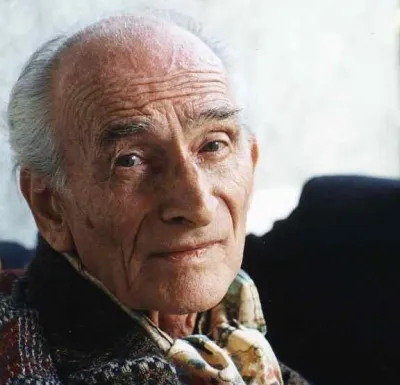
Régine
Human Design Chart
Biography
Famous for interpreting "Bits of paper,"she is also widely known for her French solo version of "I will survive" (a hit for Gloria Gaynor) and a duet version with Julia Migenes, and she played "Simone" in The Ripoux directed by Zidi.
Régine had one son, Lionel, from her first husband Leon Rothcage, whom she married when she was 16. Remarried to Roger Choukroun in 1969, they divorced in 2004. She died at the age of 92 on 1 May 2022.
Régine as a Projector 1/3 in Human Design
Projector 1/3 — Design at a Glance
Réginnes design is presented as a Projector type, characterized by a focusing aura that works like a bright flashlight. This energy targets weaknesses in her environment and allows her to immediately recognize system errors. Instead of correcting them directly - which often triggers defensive reactions in others - Réginnes mechanism shows an elegant way: she attracts through her own harmony. When she herself is a harmonious example, other people actively seek her advice without feeling attacked.
The strategy of her design consists in waiting for an honest and appreciative invitation before taking on a leadership role. This protects her from unnecessary conflicts and ensures the effectiveness of her advice. Since Projectors do not have a defined Sacral Center, Réginne does not have a constant intrinsic energy source. Her energy level fluctuates; phases of high productivity must necessarily be balanced by rest periods for regeneration to prevent burnout. Societal expectations of continuous performance often stand in opposition to this natural rhythm.
If Réginne lived according to this architecture, she was rewarded with success. If she missed her strategy and tried to lead without an invitation or ignored her need for recovery, the theme of bitterness would arise. This feeling stems from misunderstanding her role and trying to push energy against resistance instead of going with the flow of the invitation. Her design demands patience and trust in the power of her clear perception.
Splenic Authority
Réginnes design tends towards spontaneous, instinctive decision-making based on physical well-being. Her inner authority carries the defined Spleen Center - her health and alarm system. This configuration gives her a pronounced survival intelligence: she knows immediately whether a situation, environment or person is right for her in the moment. The first, spontaneous impulse serves directly to her health and allows her to rigorously distance herself from harmful influences.
This spleen voice, however, is a very fine impulse that only comes once in the moment. It can easily be ignored or drowned out by other influences. Therefore, Réginnes decision-making process requires high vigilance. Often she uses withdrawal to follow these subtle signals more clearly and not be distracted by the noise of the outside world.
Since knowledge about what is right is always only available in the moment, plans can change short-term. This makes long-term commitments difficult. Réginnes design requires a lot of space and flexibility; she avoids unnecessary commitment and prefers spontaneous arrangements. This structure ensures that her actions are always in harmony with her immediate physical intuition, rather than based on outdated strategies or external expectations.
The 1/3 Profile — Investigator / Martyr
Réginnes design is characterized by a fundamental tension between the urge for theoretical completeness and the necessity of practical experience. As a 1/3 profile, the profile of the researcher and experimenter, she lived in a permanent interplay: Line 1, influenced by Gate 58, gave her deep zest for life and the desire for comprehensive knowledge. But this energy alone was not enough; it could lead to frustration if Réginne tried to plan everything before acting.
Instead, the mechanics of her design demand the path of trial and error. Line 3, connected with Gate 18, brings a near-fanatical thoroughness into play - an impulse to check things thoroughly. While the first half of her life was often marked by fear of not knowing enough to start safely, her design allowed her to build real authority only through experimentation. Her judgments were therefore particularly trustworthy because they never remained purely theoretical but were always validated through practical correction.
Thus, Réginne acted like a scientist who is also an adventurer: she did not seek answers only in books or concepts, but had to test them in everyday life. The Neptune elevation of her design supported this process by helping dissolve old, non-functioning forms. Only when Réginne made a mistake and learned from it did her insight become stable. Her authenticity therefore arose not through perfect planning, but through the willingness to engage in the correcting process of life and gain new, tested truth from every failure.
Single Definition — Defined & Open Centers
Régine's design revealed a tendency towards existential spontaneity and constant survival pressure. As defined columns, the Spleen Center, responsible for body awareness and intuition in the present moment, and the Root Center, providing physical stress and forward drive, were prominent. Régine trusted these immediate instincts to make decisions without needing to rationalize them. The Spleen worked only in the now; its warnings did not repeat themselves, making attention to these subtle signals crucial. Simultaneously, the defined Root Center used pressure to rise materially or correct course, giving Régine a set way of dealing with stress and constantly moving forward without becoming obsessive.
In contrast, her openness in other areas was evident. The Head, Ajna, and G Centers were open, as well as the Heart, Sacral, and Solar Plexus Centers. This meant situational confusion rather than constant mental clarity; Régine tended to pick up questions from the environment and wonder if she needed to find the right answers instead of letting go of this necessity. The open Ajna Center made her susceptible to interpreting other people's concepts as her own truth or pretending uncertainty. The open G Center led to identity and direction being shaped by the environment; Régine did not actively seek a fixed self-image but was initiated by places and people that were right for her.
The open Heart Center made her susceptible to the pressure of having to prove her worth, often ending in promises she could not keep due to lacking a constant will. The undefined Sacral Center meant no constant energy flow; Régine was prone to overexerting herself through borrowed energy from others until exhaustion instead of respecting natural pauses. Finally, the open Solar Plexus Center absorbed and amplified emotions from the environment. Régine tended to personalize these feelings as her own or avoid confrontations out of fear of rejection rather than letting the emotional wave pass by itself. This openness required not identifying with the taken-on states but remaining an observer and trusting in the inner authority of the Spleen.
Channels for logical clarity and ambitious transformation.
Régine's design inclined towards constant review and optimization. She exhibited a deep, root-nourished need to perfect patterns – a mechanism that either worked as constructive problem-solving competence or, if uninvitedly active, led to critical dissatisfaction.
This attitude primarily stemmed from the Judgment Channel 58-18. This circuit connected the Root Center with the Spleen Center. Gate 58, Régine's Sun, provided an insatiable drive for 'better and more' as well as constancy in life. Gate 18 functioned as a sentry: it questioned patterns and sought corrections to balance imbalances. Logic had to prove that it had the best answers. This channel nourished the art of control through constant review against past successes or failures.
Alongside this dominant dynamic, the Transformation Channel 54-32 was at work. It connected ambition (Gate 54) with a desire for continuity and social ascent (Gate 32). Here, fear of failure or decline of the 'tribe' drove the will to rise through talent and constant effort. Transformation did not occur in isolation but required support from others to secure prosperity and positioning sustainably.
Additionally, individual gates shaped her orientation: Gate 52 demanded self-imposed pauses for pattern correction; without a clear goal, this could lead to stress. Gate 17 brought logical teaching and concern for human rights as well as succession, with doubts seen as a healthy process. Gate 44 contributed vigilance in resource management through unconditional interaction, while Gate 53 delivered the impulse towards new development cycles and pioneering – always with the risk of depression if old circles were not concluded. Régine's design was thus marked by a constant interplay between perfect correction, ambitious ascent, and cyclical renewal.
Collective Circuitry — Circuit Signature
Régine's design connected Spleen and Root Centers in two parallel circuits, showing a clear distinction between strategic analysis and tribe-oriented resource creation. In the Understanding Circuit, the Judgment Channel (18-58) was at work. This channel linked the intuitive perception of the Spleen with the energy of the Root to structure logical, rational insights free from emotional conditioning. It was about sharing strategic visions for a better future, supported by focused, 'emotionless' ratio and visual clarity.
Parallel to this existed the Ego Circuit, which also connected Spleen and Root, but through the Transformation Channel (32-54). This circuit belonged to the tribe level and emphasized cooperation as well as the joint creation of resources. Since there was no connection to the Sacral Center, constant life force was lacking; instead, this configuration required mandatory rest pauses to regenerate energy for the tribe. It was a traditional, conservative system of giving and taking within the community, separate from individual identity.
Both circuits shared the same centers but formed energetically separate streams: on one hand, future-oriented logic, on the other, resource-aware tribal cooperation. Régine's design suggested that strategic improvements and social support were not experienced as a continuous flow but as two adjacent fields of tasks each with their own rhythms and needs for rest or focus. The connection of Spleen and Root in both cases always underscored the need to synchronize inner perception with outer endurance – whether for intellectual clarity or communal stability.
Right Angle Cross of Service 4
Régines design established an existential orientation that manifested through service to others or a greater cause. Her life was less characterized by personal self-interest and more by the drive to be effective in her environment. This fundamental attitude stemmed from the configuration of the 'Right Service Cross 4'.
This specific structure within Human Design does not merely describe a tendency towards helpfulness, but rather a deeply rooted motivation to invest life energy into the process of giving and support. For Régine, this meant that fulfillment was not found in accumulating or asserting oneself, but through experiencing effectiveness in exchange with others. The energy of this cross directed her attention on how she could be useful without losing her own identity. It was a dynamic force driving her to take responsibility for the well-being of her surroundings.
The mechanics of this configuration show that the purpose of life lies in active participation in the whole. Régine lived this orientation by placing her resources and attention where they were needed. This was not self-sacrifice in a negative sense, but rather the natural consequence of her energetic foundation. Effectiveness for the environment formed the core of her experiential world. Through this focus on service, her inner compass continually realigned with the needs of the community or task she dedicated herself to. Thus, life became an ongoing process of giving, in which personal significance was affirmed and strengthened through a positive influence on others.
Saturn Return · Uranus Opposition · Chiron Return · 2nd Saturn Return — Life Cycles
Régines life journey was marked by two distinct astrological Returns that each triggered profound shifts in her focus and location. The first Saturn Return, a cycle of maturation and structuring, occurred in 1956 when she was 27 years old. At this age, she opened Chez Régine in Paris – an establishment considered the world's first discothèque. This event marked the transition from preparation to established reality; years of groundwork condensed into a viable public outcome.
Later, the Chiron Return, a fulfillment cycle where one's incarnation cross unfolds and meaning becomes tangible, took place in 1975 when she was 46 years old. Régine moved to New York for several years and lived at the luxurious Delmonico Hotel. This step was less an escape than an approach towards her inner core purpose. The geographical relocation mirrored her internal development: while the Saturn Return shaped the outer form, the Chiron Return enabled a deeper immersion into the essential aspects. Both cycles significantly defined her life phases by successively providing structure and fulfillment.
Projector · Splenic Authority — Synthesis
Régine was a Projector whose life was marked by a profound understanding of others' dynamics. Her defined Spleen Center endowed her with an intuitive intelligence, an instinctive knowledge of what would be beneficial for herself and her environment. This combined with the ability to sense pressure through the Root Center and convert it into energy – a combination that drove her to recognize and correct patterns (Channel 58-18), always in search of improvement and perfection. Her Profile as an Investigator (1/3) amplified this urge towards experimentation and deep analysis, gaining insights she then made available to others.
A central tension field in Régine's design lay between her natural ability to recognize and inspire the potential in others and the necessity of waiting for an invitation. Her open Heart and Sacral Centers meant that she was susceptible to the energies of her environment and easily exhausted, while her undefined Throat Center brought a constant search for identity and direction. This dynamic led to a quest for validation through others, yet true fulfillment came from using her unique gift of perception to create spaces where others could flourish.
2 Defined Channels
Incarnation Cross - Right Angle Cross of Service 4
Solar Return
The Solar Return shows the moment when the sun returns to its exact birth position - your personal solar year.
Life Cycles
Discover the life cycles with a detailed triple view (birth chart, cycle chart, composite).
Human Design Profile
- Type
- Projector
- Strategy
- Wait for the respectful invitation
- Authority
- Splenic Authority
- Profile
- 1/3 - Investigator / Martyr
- Definition
- Single Definition
- Incarnation Cross
- Right Angle Cross of Service 4
- Date of Birth
- 26.12.1929 21:00
- Place of Birth
- Etterbeek, BEL
Frequently Asked Questions
What was Régine's Human Design type?
What Profile did Régine have in Human Design?
What Authority did Régine have in her Human Design?
What incarnation cross did Régine have?
When was Régine born?
Discover your own Human Design
Are you also a Projector? Find out in a personal reading how to unfold your leadership qualities and recognize the right invitations.
More Personalities
Back to overviewSissy Spacek

Alain-Fournier

Anémone

Ann-Margret

Baekhyun

Balthus