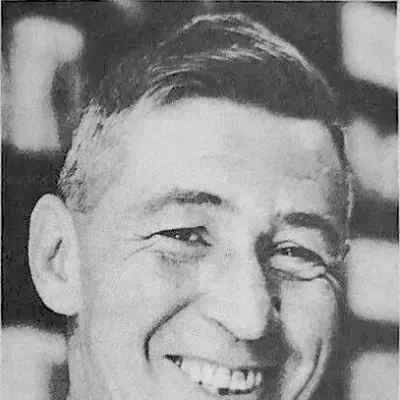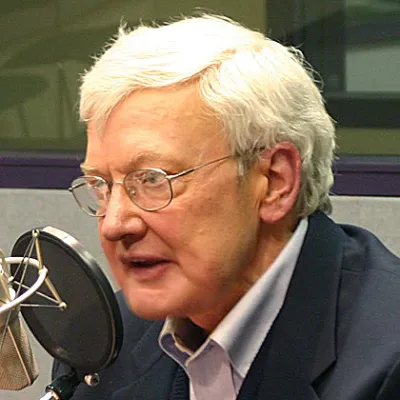
Roger Ebert
Human Design Chart
Biography
Ebert and Chicago Tribune critic Gene Siskel helped popularize nationally televised film reviewing when they co-hosted the PBS show Sneak Previews, followed by several variously named At the Movies programs. The two verbally sparred and traded humorous barbs while discussing films. They created and trademarked the phrase "Two Thumbs Up," used when both hosts gave the same film a positive review. After Siskel died in 1999, Ebert continued hosting the show with various co-hosts and then, starting in 2000, with Richard Roeper.
At age 50, Ebert married trial attorney Charlie "Chaz" Hammelsmith (formerly Chaz Hammel-Smith) in 1992. He explained in his memoir, Life Itself, that he "would never marry before [his] mother died", as he was afraid of displeasing her.
Ebert lived with cancer of the thyroid and salivary glands from 2002. In 2006, this required treatments necessitating the removal of his lower jaw, which cost him the ability to speak or eat normally and left him severely disfigured. His ability to write remained unimpaired, and he continued to publish frequently both online and in print until his death in Chicago on 4 April 2013, aged 70.
Roger Ebert — Projector with Profile 5/1
Projector 5/1 — Design at a Glance
Roger Ebert's design inclined towards precise, focused perception. As a projector, he didn't have a constant, intrinsic energy source but rather acted like a bright flashlight that shone directly on areas in the surroundings that were still in darkness. This mechanism meant that he immediately recognized systematic errors or inconsistencies in others. However, directly addressing what was wrong often provoked resistance, similar to a light beam shining directly into someone's face. Instead, his effectiveness was strongest when he attracted others with his own harmonious actions. People would come to him naturally to seek advice, drawn to his clear aura. His strategy was to wait for honest, appreciative invitations rather than imposing himself. Since his sacral center was undefined, he experienced phases of high activity followed by necessary rest periods to avoid burnout. The conventional work model that demands constant availability did not suit this rhythm. Living by this principle rewarded him with success. Ignoring the need for invitations and rest led to the non-self theme of bitterness. His design therefore required restraint and patience to effectively leverage his unique ability to lead and analyze without overburdening others or exhausting himself.
Emotional Authority
Roger Ebert's design inclined towards emotional depth and fluctuation. His inner authority carried the defined Emotions Center. This meant that he did not make decisions based on a momentary emotional impulse but let them mature. The emotional wave in his system generated a constant up and down of moods. What excited him in one moment could appear negative in the next. His immediate feeling was only a snapshot, not his final truth. Quick, spontaneous decisions based on such emotions often had negative consequences for him. Instead, his mechanism required patience. He needed time for a decision to mature, often through multiple reconsiderations. Only when the intense feelings subsided and he gained emotional distance did clarity and calmness set in. Then he was through the process. This rule applied regardless of other defined centers in his chart: the Emotions Center always took precedence in decision-making. This particularly shaped long-term decisions that could have a significant impact on his life course. Roger Ebert thus showed himself to be someone who had to take his time to reach his inner truth.
The 5/1 Profile — Heretic / Investigator
Roger Ebert's design inclined towards acting as a Hero who uses deep, self-acquired insights to help others solve problems. As a 5/1 profile (Hero/Researcher), he combined the magnetic aura of Line 5, which attracts others, with the intense, individual research work of Line 1. This configuration created an almost unavoidable dynamic: people sought him out for solutions and answers, driven by the expectation that he possessed specific knowledge.
His Line 5, influenced by Gate 12, promoted a pragmatic approach to social situations. He learned to choose the right moments for interaction and to retreat safely when necessary to conserve energy. At the same time, his Line 1, influenced by Gate 25, showed a tendency towards spontaneous, unpretentious action and selfless communication. This combination of the need to confront challenges (Line 1) and the pressure to be available as an expert (Line 5) required clear boundaries. Without these limits, the constant demand from his environment threatened to exhaust him. His design thus described a path of finding the balance between the intense, private research process and the public use of this knowledge for others, with the ability to say no being crucial for his endurance.
Split Definition — Defined & Open Centers
Roger Ebert's design showed a tendency towards constant mental pressure to question and understand connections. This configuration between the Head and Ajna Centers created a trustworthy, specific mental function. He thought continuously, which made meditation difficult but also served as an inspiration for others. His defined Heart Center gave him willpower and the desire to determine his own life. He enjoyed being successful and keeping his promises, which strengthened his self-esteem. At the same time, his defined Solar Plexus Center established emotional clarity as an inner authority. He needed time to go through his emotional wave before making decisions, as impulsiveness would have led to chaos.
In contrast, his open Throat Center showed a vulnerability to the pressure to attract attention. Without a set communication strategy, he tended to wonder if he was noticed, which could lead to unpredictable expressions. His open G Center meant that he did not carry a fixed identity but blended with his environment. He relied on others to initiate him in the right direction rather than seeking it himself. His open Sacral Center made him susceptible to excessive energy intake, leading to exhaustion if he did not set boundaries. His open Spleen Center carried a fundamental fear of survival, causing him to cling to false security. Finally, his open Root Center absorbed external stress, which could drive him into a cycle of hyperactivity to relieve this pressure. This mechanism shaped his life through the tension between inner mental and emotional structure and the susceptibility to external influences in communication, identity, and energy.
Channels for community, logical doubt and clear formulation.
Roger Ebert's design was characterized by a sharp, critical mind that consistently questioned patterns. The Logic Channel 63-4 connected his Head to his Ajna Center and fostered a mind that understood doubt as an essential part of the search for truth. He constantly filtered for consistency; only what proved verifiable and functional was considered logical. This mechanism created little room for unfounded belief and instead demanded proof through experience. Parallel to this, the Community Channel 37-40 linked his Solar Plexus to his Heart Center. Here, a deep need for belonging and fair agreements was evident. He sought his place in the whole based on mutual respect and emotional clarity, not on spontaneous impulses, but on well-thought-out, time-matured agreements that honored all involved.
Additionally, specific Gates shaped his expression and perception. Gate 12 in the Cone Center promoted a reserved, poetic quality that translated emotional moods into communication. Gate 11 contributed to visual memory and collective idea finding, while Gate 25 supported a mystical, unbiased approach to individualization. Gate 46 emphasized dedication and physical presence as a path to discoveries. On the design level, Gate 6 acted as a motor for emotional friction and growth, Gate 64 as a process for clarifying past experiences, and Gate 55 with its unstable mood swings, requiring an intuitive, independent lifestyle. This constellation formed a person standing between skeptical analysis and the desire for harmonious, genuine connection.
Tribal Circuitry — Circuit Signature
Roger Ebert's design showed a tendency towards clear, structured analysis that manifested in two separate energetic areas. As a Split Definition, he did not have a continuous connection of all centers; instead, two isolated energy fields existed.
The Understanding Circuit connected his Head Center to his Ajna Center. This Logic Channel promoted the ability to visually and strategically organize information. It was about sharing rational insights, free from emotional coloring, to guide society towards a better future. This energy focused on structure and intellect.
Parallel to this, the Ego Circuit, connecting his Heart and Solar Plexus Centers, came into play. Through the Community Channel, a dynamic relationship of giving and taking emerged here. It was not about individual ego but tribal work: mutual support and the joint creation of resources. Since there was no connection to the Sacral Center, rest periods were necessary to maintain these social energies.
These two systems – the cool, future-oriented logic on one hand and the emotional, traditional cooperation on the other – ran alongside each other without direct communication. Roger Ebert thus showed himself as someone who combined intellectual clarity with social exchange, where the emotional wave of the Solar Plexus did not directly influence the rational impulses of the Head but worked separately.
Left Angle Cross of Education 1
Roger Ebert's design carried the signature of the left cross of education. This configuration established a foundational stance characterized by the drive to structure intellectual content and make it accessible to others. It was not mere entertainment but a deep impulse to organize and convey knowledge so that it truly resonates with and is processed by the recipients.
In Human Design, this cross represents a specific energy combination aimed at clarity and didactic effectiveness. The mechanics contained therein promoted the ability to present complex connections in a way that is not only understood but also internalized. Roger Ebert thus acted as a bridge between abstract theory and practical understanding. His approach was to shape information into a form that enabled teaching without being dogmatic.
This archetypal structure shaped his way of interacting with the world: He sought ways for insights to have a lasting impact. The left cross of education emphasized the necessity that the conveyed message not only be heard but also integrated into one's own actions or thinking. For Roger Ebert, this was a central aspect of his expression. He showed himself in his role as a mediator, who was concerned that his audience not only consumed but actually learned. This dynamic ensured that his contributions often went beyond mere information and could have a transformative effect by prompting reflection and personal introspection.
Saturn Return · Uranus Opposition · Chiron Return · 2nd Saturn Return — Life Cycles
Roger Ebert's design indicated a tendency towards deep, binding intimacy that manifested in a partnership that went beyond the conventional. This became concrete in 1992, at the age of 50, when he married Charlie „Chaz“ Hammelsmith. For his Human Design, this marked the Chiron Return, a fulfillment cycle in which, if lived according to strategy and authority, the incarnation cross increasingly unfolds and its meaning becomes experiential. This was not a phase of wound healing but a bloom in which the deepest level of one's identity and life purpose came to full expression. The marriage to Chaz was thus not merely a biographical milestone but an expression of inner maturity and the realization of what Roger Ebert's design carried as his true nature and destiny. At this age, between 49 and 51 years, the mechanics of the Chiron Return became effective, transforming previously established patterns into a clear, visible form of connection and self-affirmation. The relationship thus became a mirror of a design that found its deepest resonance and authenticity in this life phase, without having to heed external expectations.
Projector · Emotional Authority — Synthesis
Roger Ebert was a projector whose life was marked by a profound need to shed light into the darkness for others. His defined Head and Ajna Centers (Logic Channel) generated a constant mental pressure to recognize and question patterns to make them accessible to others. This corresponded with his profile as a Hero/Researcher (5/1), who enjoyed sharing knowledge and offering solutions – a capability that drew him into the focus of attention. He thus lived in a constant dynamic of observation, analysis, and the urge to further his understanding, which made him a influential voice.
A central paradox in his design lay in the combination of emotional authority and the Logic Channel. While his emotional core required a letting-go of decisions, the Logic Channel pushed him towards immediate analysis and pointing out errors. This led to an internal tension between the need to take time for evaluation and the impulse to communicate his insights directly. A documented event showed that he encountered this tension in relationships, pointing to a complex interaction between his emotional center and his mental pressure.
2 Defined Channels
Incarnation Cross - Left Angle Cross of Education 1
Solar Return
The Solar Return shows the moment when the sun returns to its exact birth position - your personal solar year.
Life Cycles
Discover the life cycles with a detailed triple view (birth chart, cycle chart, composite).
Human Design Profile
- Type
- Projector
- Strategy
- Wait for the respectful invitation
- Authority
- Emotional Authority
- Profile
- 5/1 - Heretic / Investigator
- Definition
- Split Definition
- Incarnation Cross
- Left Angle Cross of Education 1
- Date of Birth
- 18.06.1942 15:30
- Place of Birth
- Urbana, IL, United States
Frequently Asked Questions
What was Roger Ebert's Human Design type?
What profile did Roger Ebert have?
What authority did Roger Ebert have?
What incarnation cross did Roger Ebert have?
When was Roger Ebert born?
Discover your own Human Design
Are you also a Projector? Find out in a personal reading how to unfold your leadership qualities and recognize the right invitations.
More Personalities
Back to overviewSissy Spacek

Alain-Fournier

Anémone

Ann-Margret

Bourvil
Hergé