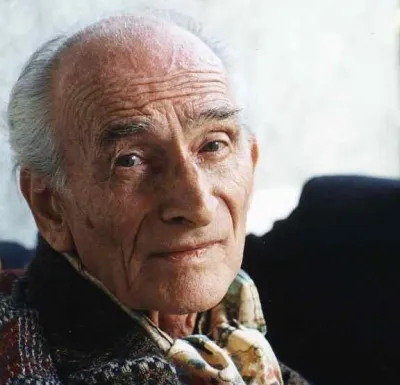
Roland Berger
Human Design Chart
Biography
Roland Berger as a Manifesting Generator 5/1 in Human Design
Manifesting Generator 5/1 — Design at a Glance
Roland Berger's design inclined towards hybrid dynamics: the ability to swiftly leapfrog action steps paired with the necessity of waiting for internal impulses. As a Manifesting Generator, he possessed constant sacral energy, allowing him to quickly draw things into his life. This speed carries the risk of rushing and multitasking if not handled carefully.
The underlying mechanics require the strategy 'React Instead of Initiate'. Roland Berger should respond to impulses from his environment before acting, always checking whether his Sacral Center clearly signaled a 'yes'. Without this validation, frustration loomed as skipped steps would need to be retraced later or parallel projects would splinter energy.
With correct application of this strategy – waiting for the inner impulse and continuously verifying resonance – his true potential emerged: a deep creative flow in 'play mode'. In this state, variety was no obstacle but fuel. His creativity sparked most intensely when he worked on various tasks with fun and ease simultaneously rather than focusing solely on one thing. This configuration describes a path to profound satisfaction through playful, impulse-driven action that unites speed and inner confirmation.
Emotional Authority
Roland Berger's inner authority resided in his defined Solar Plexus Center, requiring a specific decision strategy: patience. His perception was always colored by the current emotional wave, an ongoing rhythm of ups and downs in feelings. In moments of high enthusiasm, something appeared absolutely right; shortly after, the same thing could seem negative. These fluctuations did not mean that his judgment was lacking but rather that the emotional reaction was only a provisional snapshot – a first impression, not yet the final truth.
Spontaneous decisions based on this immediate emotion were risky and often misleading as they ignored the full context. His authority mechanics therefore demanded strict temporal distance. Only through conscious waiting, by 'sleeping on' decisions and giving himself time, could the initial emotional heat subside. This process of waiting was not a sign of hesitation but the necessary filter to gain clarity. With increasing distance from the first reaction, intense feelings subsided, calmness set in, and the true reality of a situation became visible. This approach held regardless of other defined centers; the Solar Plexus Center always took precedence in decision-making, especially for long-term steps that influenced his life path.
The 5/1 Profile — Heretic / Investigator
Roland Berger's design inclined towards oscillating between projecting solution knowledge and a deep need for inner research. As a Hero/Researcher (Profile 5/1), he exhibited the magnetic attraction of Line 5: Others sought answers to their problems from him, especially in crisis times or when encountering resistance. This dynamic activates a power presence that can be helpful but also cause discomfort if it constantly remains in focus.
Simultaneously, Line 1 demanded cyclical rest pauses for regenerating willpower. Without these phases, exhaustion threatened through excessive external inquiries – similar to a scientist who is drained after intense conferences and finds their inbox full of further questions. The challenge lay in setting clear boundaries to maintain the balance between service to others (Line 5) and research for oneself (Line 1).
When Roland Berger learned to also say 'no', he could optimally utilize his gifts: He offered solutions without neglecting his inner foundation. This configuration describes a life task aiming at both external effectiveness and internal stability – a balance of giving and taking that can only be achieved through conscious self-care.
Triple Split Definition — Defined & Open Centers
Roland Berger's design set a tendency towards constant mental pressure and reactive vitality. He was someone whose mind was always active – defined Head and Ajna Centers generated continuous inspiration, questions, and concepts without providing the energy for direct implementation. This required patience: The mental impulse had to wait until external circumstances reacted rather than initiating itself.
This intellectual activity was supported by a defined Heart Center with willpower and a defined Sacral Center with reactive energy. His strength did not lie in spontaneous starts but in his ability to respond to requests with "Yes" or "No," fully engaging his vital capacity. Parallel to this, a defined Solar Plexus acted as an emotional authority; important decisions needed time for the emotional wave to subside before clarity emerged.
In contrast to this internal structure stood three open centers requiring situational adaptation. The open G Center meant no fixed identity or direction; Roland Berger tended to blend with his environment and search for the right place rather than following a predetermined life path. The open Spleen Center made him vulnerable to survival fears and the temptation to make spontaneous decisions out of uncertainty, instead of trusting healthy intuition. Finally, the open Root Center absorbed external stress; he was conditioned to take on environmental pressure, which could lead to hyperactivity if not recognized that this adrenaline surge did not belong to him. His mechanics thus required: Express mental inspiration, wait for emotional clarity, reactively act, and protect himself from assuming foreign identities or stress waves.
Channels for charisma, clear thoughts and genuine community.
Roland Berger's design set a tendency towards quick, charismatic expression based on reaction rather than planning. This dynamic resulted from the Charisma Channel 34-20 connecting the Sacral Center with the Throat Center. The raw physiological energy of Gate 34 was channeled through the thyroid system and required immediate articulation in Gate 20. This pressure made it difficult to sit still; the speed at which generative power was translated into action often bypassed conscious reflection. Crucial here was self-endorsement: The energy could only be used for personal interests, not to satisfy external expectations. If consciousness was guided by "shoulds" rather than inner guidance, this powerful form of expression lost its inspirational effect on others.
Parallel to this, a mental structure emerged that patiently awaited inspiration instead of forcing it. The Awareness Channel 61-24 connected the Head Center with the Ajna Center. Here, sudden inspiration from Gate 61 was transformed through the rational mind of Gate 24 into individual knowledge. This process, often referred to as Satori, required a gap in thinking for new insights to emerge. Roland Berger was not designed to reflect on the past abstractly or use logical patterns for predictions but rather to recognize what is worth knowing at his own pace. The mind sought silence to distinguish the "white noise" of inspiration from mutative clarity. This combination of impulsive, reaction-based expression strength and a mental attitude that accepted knowledge as a gift shaped how he moved in the world: directly effective in the moment, but only sustainably successful when he trusted his inner guidance and did not control mental processes.
Individual Circuitry — Circuit Signature
Roland Berger's design set a tendency towards individual survival strategy based on reaction and immediate action. His chart showed three separate energetic groups: Throat and Sacral Centers were connected, Head and Ajna Centers formed another pair, Heart and Solar Plexus Centers the third. This separation meant parallel forces without direct flow between areas.
The Integration Circuit in him connected Throat and Sacral Centers through the Charisma Channel (Gates 20-34). This allowed gaining strength from reacting to life and making it effective in the present moment. It was about individual adaptability through spontaneous action competence.
The Knowledge Circuit connected Head and Ajna Centers through the Awareness Channel (Gates 24-61). Here, a focus on unique identity strengthened by innovative flashes of insight emerged. This area promoted the creation of new knowledge that could only be expressed through emotional endorsement.
The Ego Circuit connected Heart and Solar Plexus Centers through the Community Channel (Gates 37-40). As there was no connection to the Sacral Center, constant life force for this area was lacking. This implied cyclical phases of activity and necessary rest periods for resource building for cooperation and mutual support within the tribe.
Left Angle Cross of Duality 2
Roland Berger's design indicated a tendency towards a deep, structural alignment within the realm of duality and relationship dynamics. He was someone who sought not just superficial contacts in his interactions but a fundamental connection based on the principle of balance between two poles. This configuration describes a life task to understand hidden connections in relationships and stabilize them through mutual complementarity.
The Left Cross of Duality 2 acts as an inner compass for this dynamic, signaling that true harmony is not achieved through adaptation or subordination but by recognizing the independence of both partners within a unity. Roland Berger was programmed to shape situations so that both sides could articulate their needs without endangering the whole. This requires patience and clear communication about boundaries and expectations.
In his mechanics, this means he often took on the role of mediator or stabilizer in relationships, ensuring no side was overburdened. His strength lay in seeing tensions not as a threat but as a necessary part of a greater whole. Through this stance, he could build long-term connections based on respect and mutual understanding rather than dependency or control.
Saturn Return · Uranus Opposition · Chiron Return · 2nd Saturn Return — Life Cycles
Roland Berger's design shows a structure marked by cyclical phases of maturation. His energy development followed a pattern of gradual densification and necessary transformation. The first Saturn return marked the transition from an experimental phase to binding structures, laying the groundwork for long-term responsibility. This phase served to translate inner resources into external reality.
The subsequent Uranus opposition brought a necessary break. It acted as a catalyst for change by questioning established patterns and forcing new perspectives. This transit promoted the ability to free oneself from outdated bonds in order to act more authentically. The goal was not destruction but liberation from constraints that hindered growth.
With his Chiron return, Roland Berger entered a phase of fulfillment. This event signaled an increasing manifestation of his individual life purpose in everyday life. If he followed his inner authority, his existence became more meaningful and coherent. It was a process of integration where earlier experiences formed a cohesive whole.
The second Saturn return crowned this path with further confirmation. It solidified the achievements of previous decades and anchored them sustainably. This cycle underscored the importance of continuity and wisdom gained through life experience. Overall, this sequence reveals a design that gains strength through adaptability and deep self-reflection.
Manifesting Generator · Emotional Authority — Synthesis
Roland Berger's design reveals a central thread of dynamic adaptation. As an Manifesting Generator with defined emotional authority and open centers for identity, spirituality, and roots, he navigates life as a resonant vessel for external influences. He is not confined to a fixed inner compass but learns through interaction and reaction what truly aligns with him – a continuous process of balancing internal perception with the energy of his environment. The connection between sacral responsiveness and manifesting impulses strengthens this adaptive nature by enabling rapid changes that must always be validated by emotional clarity.
A central paradox in his chart lies in the tension field between the need for inner peace and the ability to manifest quickly. Defined emotional authority requires time for decision-making, while manifesting aspects push him to act swiftly. This interplay carries the risk of overlap and frustration if not enough space is created for reflection. At the same time, it allows him to gain deep insights and bring them into the world with energy – a dance between inner deliberation and outer unfolding.
3 Defined Channels
Incarnation Cross - Left Angle Cross of Duality 2
Solar Return
The Solar Return shows the moment when the sun returns to its exact birth position - your personal solar year.
Life Cycles
Discover the life cycles with a detailed triple view (birth chart, cycle chart, composite).
Human Design Profile
- Strategy
- To respond - wait for something to respond to
- Authority
- Emotional Authority
- Profile
- 5/1 - Heretic / Investigator
- Definition
- Triple Split
- Incarnation Cross
- Left Angle Cross of Duality 2
- Date of Birth
- 27.11.1937 06:30
- Place of Birth
- Berlin, Germany
Frequently Asked Questions
What is Roland Berger's Human Design type?
What Profile does Roland Berger have in Human Design?
Which Authority guides Roland Berger's decisions?
Which incarnation cross is active for Roland Berger?
When was Roland Berger born?
Discover your own Human Design
Are you also a Manifesting Generator? Find out in a personal reading how to unfold your multi-talents and direct your energy wisely.
More Personalities
Back to overviewAldair

Alizée

Angeli

Arletty

Artus

Balthus