
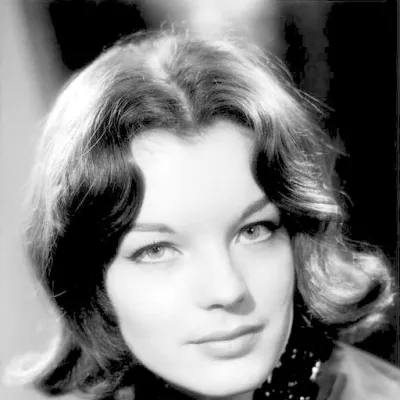
Romy Schneider
Human Design Chart
Biography
Human Design Analysis: Romy Schneider as Manifesting Generator 3/5
Manifesting Generator 3/5 — Design at a Glance
Romy Schneider's design showed a tendency towards lightning-fast action energy paired with the need for constant change. As an Manifesting Generator, she had consistent sacral energy that allowed her to skip steps and quickly pull things into her life. This hybrid configuration combined the responsiveness of a generator with the initiative power of a manifestor.
However, this speed also carried risks: Often, she would skip important stages, leading to having to backtrack later on. Such interruptions led quickly to frustration, the central non-self theme for this type. Additionally, she tended to tackle multiple projects simultaneously by reacting to various impulses at once. Without clear inner consent, this creative drive could turn negative.
The strategy was not to initiate herself but to react to life and only proceed when her sacral center gave a clear 'yes'. Regular checks to see if the energy was still there were crucial. When these conditions were met, she drew deep satisfaction from her work. Parallelism and change were then no longer disruptive factors but essential elements of her play-mode that best nourished her creativity.
Emotional Authority
Romy Schneider's design showed a tendency towards emotional depth and wave-like mood swings. She perceived the world always through the filter of her current feelings; what was passionate in one moment could appear negative in the next. This configuration stemmed from her defined Emotional Center, which also carried her inner authority. In Human Design mechanics, this authority always takes precedence over all other defined centers regardless of further features in the chart.
Her decisions were subject to a natural emotional wave. A first, spontaneous impression was not necessarily her truth but merely a snapshot. Quick judgments based on immediate emotion could often have negative consequences as they did not capture the full depth of the situation yet. For Romy Schneider, it was crucial to take time and let decisions mature. This required patience, multiple reconsiderations of important questions, and allowing hesitation. Only when intense feelings subsided and emotional distance was gained would clarity and calmness set in. This process was particularly essential for long-term life decisions to ensure that the choice made aligned with her deep inner truth rather than a passing mood.
The 3/5 Profile — Martyr / Heretic
Romy Schneider's design showed a tendency towards heroic adventure spirit and the role of the experimenting savior. As a 3/5 profile, she learned through an intense trial-and-error process before presenting acquired knowledge as solutions for others. This configuration created a strong attraction: Others projected onto her the hope to learn from her practical experiences.
Gate 46 in her profile emphasized this line of the experimenter. It threw her off balance and required adaptation through constant experimentation. The challenge was not to project success prematurely but to maintain patience with the learning process. Failure was part of the necessary steps towards clarification.
At the same time, Gate 15 with its fifth-line extreme positions came into play. In crisis times, she showed adaptability sometimes through overcompensation. Jupiter promoted growth through these intense experiences while Pluto marked the danger of falling into extreme reactions.
The combination of adventurer (line 3) and hero (line 5) meant: She had to experience everything herself to later authentically support others. This path was painful when public attempts failed, but it built the treasure trove of life experience that shaped her aura. Her design required accepting mistakes as teachers rather than ego failures.
Triple Split Definition — Defined & Open Centers
Romy Schneider's Human Design profile indicated a tendency towards constant mental activity and deep emotional experiences. She was someone who constantly felt an inner pressure to question things and form concepts – an effect of her defined Head and Ajna centers. However, this mental flow wasn't directly linked to energy for action; rather, it served to inspire or mentally motivate others instead of possessing the ability to act herself.
Her personality was also marked by a clear identity (defined G Center) and strong willpower (defined Heart Center). She had a reliable inner direction and the drive to control her life and resources. At the same time, she possessed immense vital energy (defined Sacral Center), which was only correctly available in response to external impulses. Her decisions were also influenced by an emotional wave (defined Solar Plexus Center), meaning clarity was achieved after waiting for emotional currents.
In contrast, her open Spleen center revealed a vulnerability to conditioned fears and a lack of spontaneous awareness of health or well-being. She tended to cling to people with defined spleens to gain a sense of security, often leading to unhealthy dependencies. Spontaneous decisions were risky for her as her system absorbed impulses from the environment rather than generating them itself. Her design therefore required patience: waiting for emotional clarity and responding to external requests to avoid depleting her sacral energy through hasty mental or impulsive actions.
Channels for inspiration, rhythm, pioneering spirit, emotion and vision.
Romy Schneider's Human Design profile indicated a tendency towards public, creative self-expression. The Inspiration channel 1-8 connected the G Center with the Throat Center; Gate 1 enabled courageous presence while Gate 8 showcased contributions. She was designed to gain attention through exemplary living and inspire others without words.
Her energy was carried by the Beat channel 14-2, linking her Sacral Center with her G Center. Gate 14 provided resource competence, Gate 2 directed movement through space and time as higher knowledge. This tantric channel endowed her with a powerful aura that strengthened new directions by trusting reactions from within.
The Initiation channel 51-25 connected the Heart Center: Gate 51 brought competitive shock, Gate 25 universal love. This promoted individualization; she awakened competition in others and survived mystical initiation shocks through authentic living.
Emotional depth was evident in the Feelings Release channel 39-55 between Root and Solar Plexus Centers. Gate 39 provoked, Gate 55 reflected the mind. She lived in the alchemy of her emotional wave, between joy and melancholy, to experience true spirituality.
Mentally, the Abstraction channel 64-47 from Head to Ajna Center worked. Gate 64 brought confusion, Gate 47 understanding. She filtered experiences through mental images, sought stories, and found clarity only patiently in the flow of time.
Additionally, priority gates shaped her existence: Gate 46 demanded dedication to the body as a temple; Gate 15 adapted to collective rhythms; Gate 10 integrated genetically fixed behavior. On the personality level, Gate 40 expected recognition for willpower, while Gate 49 called for principles and sacrifice in the lineage. In her design, Gate 24 supported mental renewal, Gate 52 silent concentration on pattern correction, Gate 31 energetic transmission of identity, and Gate 56 narrated mental processes figuratively.
Individual Circuitry — Circuit Signature
Romy Schneider's Human Design profile indicated a tendency towards pulsating, acoustic creativity paired with deep, individualistic constancy. As a Triple Defined person, she carried three separate, parallel existing energy blocks that did not flow directly into each other.
In the Knowledge Circuit, the Inspiration channel connected the Throat Center to the Identity Center and further to Sacral Energy – a direct stream from expression over self-worth to life force. Parallel to this, an isolated connection between Solar Plexus and Root Centers worked in the same circuit, triggering emotional waves without directly feeding them into the expression flow. The Focusing Circuit strengthened her inner stance: Through the Initiation channel, it connected Identity Center directly with Heart Center. This created a fortified, courageous personality with strong convictions but lacking the ability to carry these outwards through Throat Center. Finally, the Meaning-Finding Circuit formed a third independent block: The Abstraction channel linked Head and Ajna Centers. Here lay a cyclical energy for reflecting on the past and finding meaning behind experienced events, visually and emotionally descending structured. These three separate systems – Expression/Sacral Power, inner constancy/Heart, and reflective meaning-finding – shaped Romy Schneider as someone living in closed, strong energetic islands without these islands forming a direct bridge between them.
Right Angle Cross of the Vessel of Love 3
Romy Schneider's design laid a deep, often unspoken longing for true connection. She did not seek superficial recognition but rather a space where she could fully open up and feel supported at the same time. This fundamental approach stemmed from the configuration of the Love Vessel right cross 3.
In Human Design mechanics, this pattern describes a specific emotional dynamic: the need to share one's innermost truth and vulnerability with a trusted person in order to draw strength from it. It is not about dependency but rather the courage to be transparent. Romy Schneider showed herself as someone who understood this intimacy as a source of her authenticity. She needed relationships that allowed her to take off her mask and fill "the vessel" – her emotional core – with others, and in turn, be filled by them.
This mechanism worked as an inner compass: where superficial interaction prevailed, she felt empty; where genuine emotional resonance occurred, she came alive. The right cross emphasized the active side of this dynamic – giving love and trust as a path to self-affirmation. It was not passive waiting for rescue but rather a conscious act of surrender in relationships that allowed her to be herself. This configuration shaped her way of seeking closeness: intensely, vulnerably, and always searching for a mirror that affirmed her true nature without judging or changing her.
Saturn Return · Uranus Opposition — Life Cycles
Romy Schneider's design indicated a tendency towards deep structural breaks that often became visible through personal relationships or career reorientations. In 1966, at the age of 28, she married Harald Meyen and their son David Christopher was born – a classic first Saturn return moment. During this cycle, years of groundwork condensed into solid results; her design shows how inner maturity often manifests in stable life structures, whether through partnership or parenthood.
Later, in 1978 at the age of 40, she worked with Claude Sautet for the fifth and final time on "A Simple Story". This fell during the Uranus opposition, a cycle of radical liberation from outdated patterns. Her design did not merely describe change but a necessity to break free to become more authentic. Working with Sautet marked the end of a phase and simultaneously the step into new creative freedoms, driven by the inner dynamics of the Uranus influence, which releases old bonds to make room for what is essential.
Manifesting Generator · Emotional Authority — Synthesis
Romy Schneider lived a life marked by profound inner dynamics. As an Manifesting Generator (MG), she had the ability to quickly initiate and bring things to fruition, driven by sacral energy. This speed was tempered, however, by her emotional authority—a constant weighing of options, a necessity to let decisions ripen so as not to act impulsively. Her Profile as Explorer/Hero (3/5) amplified this trait: she gathered experiences through personal experimentation and shared them with others in ways that inspired and attracted people. The defined connection between Head Center and Ajna Center created a persistent mental pressure to question things and seek understanding, fueling her creative expression (Channel 1-8).
A central paradox lay in the tension between her impulse for quick initiation as an MG and the need for emotional clarity. She oscillated between the desire to create something swiftly and the need to thoroughly consider decisions, leading to internal ups and downs. This manifested in phases of intense activity followed by periods of reflection—a pattern rooted in the Knowing Circuit that led her to forge her own paths and spark transformation. Notable events in 1966 and 1978 reflect this dynamic: quick bindings/decisions followed by phases of self-discovery and creative realignment.
5 Defined Channels
Incarnation Cross - Right Angle Cross of the Vessel of Love 3
Solar Return
The Solar Return shows the moment when the sun returns to its exact birth position - your personal solar year.
Life Cycles
Discover the life cycles with a detailed triple view (birth chart, cycle chart, composite).
Human Design Profile
- Strategy
- To respond - wait for something to respond to
- Authority
- Emotional Authority
- Profile
- 3/5 - Martyr / Heretic
- Definition
- Triple Split
- Incarnation Cross
- Right Angle Cross of the Vessel of Love 3
- Date of Birth
- 23.09.1938 22:05
- Place of Birth
- Wien, Austria
Frequently Asked Questions
What was Romy Schneider's Human Design type?
What Profile did Romy Schneider have in her Human Design chart?
What Authority did Romy Schneider have in her Human Design?
What incarnation cross was assigned to Romy Schneider?
When was Romy Schneider born?
Discover your own Human Design
Are you also a Manifesting Generator? Find out in a personal reading how to unfold your multi-talents and direct your energy wisely.
More Personalities
Back to overviewSissy Spacek

Aldair

Alizée

Anémone

Angeli

Ann-Margret
