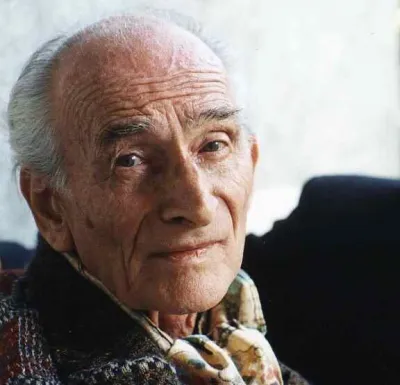
Photo: Wikimedia Commons
Ross Rebagliati
Human Design Chart
Biography
Rebagliati was stunned and Canada traumatized when marijuana traces were found in his blood and his medal was stripped from him. He claimed that he was not a user but was constantly exposed to second-hand smoke when in the locker-room with other snowboarders. The Olympic tribunal reconsidered and restored his medal a few days later on the grounds that marijuana is not specified as a control substance in the rules of snowboarding.
Rebagliati signed a lucrative contract to be spokesman for the Roots Sporting Goods chain. Since retiring from snowboarding, Rebagliati has become an entrepreneur in the cannabis industry.
Ross Rebagliati is the father of three children and resides in Kelowna, British Columbia, with his wife Ali.
Ross Rebagliati as a Manifesting Generator 1/3 in Human Design
Manifesting Generator 1/3 — Design at a Glance
Ross Rebagliati's design tended towards lightning-fast implementation, which only proved satisfying in the long run when it was based on a clear inner resonance. As a Manifesting Generator, he had constant sacral energy, allowing him to quickly draw things into his life. This hybrid configuration combined the endurance of a Generator with the direct effectiveness of a Manifestor.
The challenge lay in the speed: Ross Rebagliati tended to skip steps or start multiple projects simultaneously. He was only successful when he did not initiate but responded to impulses and confirmed his sacral center. Without this confirmation, the speed led to frustration and the need to catch up on missed steps.
His optimal functioning required a 'play mode'. In this state, he could utilize variety and parallel work without overloading himself. The strategy was to regularly check if his inner authority still supported the current path. Only through this constant feedback loop between impulse and reaction could he transform his creative power into deep satisfaction, rather than blocking himself through impatient pushing forward. His design thus showed itself as powerful but dependent on the discipline of reaction rather than blind action.
Sacral Authority
Ross Rebagliati's design tended towards spontaneous, physical reaction. He was someone who did not make decisions through prolonged thinking but through an immediate inner response to external stimuli. This mechanism is the sacral authority, which is only available to the Generator type. Here, the decision-making process simplifies as strategy and inner authority are identical: reacting to life rather than planning it.
This authority manifested as a 'gut feeling' or a sudden surge of energy. Ross Rebagliati could pay attention to bodily sounds like grunts, hums, or a loud 'mm'. Such signals indicated whether his sacral motor had started. If this was the case, he felt vital and alive. Then, it seemed he had an inexhaustible supply of energy that allowed him to accomplish tasks with great enthusiasm. His design promoted a life marked by joy and satisfaction, without the need for strict purposefulness.
Additionally, the active spleen center acted as a supporting authority. As it might be directly connected to the sacral center, it enabled Ross Rebagliati particularly quick and spontaneous reactions. He had an immediate access to his physical well-being and instinctive perception. This combination allowed him to reliably be guided by these deep, physical impulses, making his actions authentic and direct.
The 1/3 Profile — Investigator / Martyr
Ross Rebagliati's design tended towards a dual approach: intense, cautious preparation on one side and bold, practical experimentation on the other. As a 1/3 profile, the Investigator and Explorer, he was geared towards acquiring knowledge not only theoretically but validating it through direct contact with reality. The Line 1 in his profile emphasized detail work, routine, and a meticulous examination of the basics. This created an inner discipline where Neptune's creativity and Mars' energy were carefully channeled to avoid hasty conclusions.
At the same time, Line 3 drove him to accept errors as a necessary part of the learning process. For Ross Rebagliati, trial and error was not a sign of failure but the mechanism through which he gained real insights. When he decided on something, he had thoroughly examined it in detail and also tested it in practice. This combination of thorough research and willingness to err in implementation made his judgment trustworthy. He showed himself as someone who worked out his convictions through personal experience rather than blindly accepting them. His strength lay in learning from the imperfections of everyday life and transforming these lessons into solid knowledge that he could then share with others.
Split Definition — Defined & Open Centers
Ross Rebagliati's Human Design shows a tendency towards constant physical presence and clear communication. His defined Throat Center acted as a focal point, transforming messages from the body into the world. This voice did not speak from abstract thoughts but from a reliable source: his defined Sacral Center. As a guardian of immense vitality, Ross had a constant energy flow that felt like an inner hum. His truth lay in the reaction; only through an affirmative response from the Sacral did energy become available to complete actions with endurance. Initiated steps without this sacral confirmation often led to frustration, as the generative power was missing.
This physical grounding was complemented by his defined Spleen Center, which provided for spontaneous intuition and existential well-being in the "now." Ross tended to trust these sudden, non-rational warning signals that protected his survival and health. His defined Root Center also provided a firm, adrenalized push that propelled him forward in the material world and helped him deal with stress in a specific, corrective way.
At the same time, his design revealed areas of receptivity. His open Head Center meant that Ross did not have constant mental pressure. He tended to be influenced by doubts and confusion from others when he did not trust his inner authority. Instead of having his own constant inspiration, he was open to new ideas but could easily get caught up in endless questions that were not his own. Similarly, his open Ajna Center meant that Ross absorbed concepts and opinions from his environment without identifying them as his personal truth. His mind functioned as a classroom, flexibly responding to intellectual stimulation rather than having a fixed, dogmatic way of thinking.
His open G Center showed that Ross did not have a fixed identity or direction. He tended to blend with his environment and borrow identity from others. His task was to find the right place where he felt comfortable, rather than actively pursuing a fixed goal. His open Heart Center lacked constant willpower; Ross was vulnerable to the pressure of proving himself and tended to make promises he could not keep due to energy deficiency. Finally, his open Solar Plexus Center absorbed the emotions of his environment. Ross felt these feelings intensely but had to learn not to personalize them to avoid being overwhelmed by emotional waves from others.
Channels for powerful action and enduring transformation.
Ross Rebagliati's Human Design shows a tendency towards intense, self-reinforcing activity, characterized by the Channel of Charisma 34-20. This channel connects the physiological energy of the Sacral Center with the expression in the Throat Center. The resulting power allows for sustained activity over longer periods, but it requires engaging only in things that truly please one. Without this inner guidance, the energy can become obsessive or chaotic. Ross Rebagliati demonstrated someone who maintained his vitality through self-absorption in satisfying activities, which allowed him to inspire others naturally without being available to everyone.
At the same time, the Channel of Transformation 54-32 was at work, driving ambition through persistent effort. Driven by the fear of failure and the desire for recognition, he sought ways to rise through talent and competence. This channel promotes the urge to work harder than others to prove one's worth and gain the support of the "tribe" – the community or organization. The combination of the immediate actionability of the Charisma Channel and the strategic ambition of the Transformation Channel created a dynamic energy aimed at improving positions and creating stability.
Additionally, Gates like Gate 62 (Logic, Details) and Gate 61 (Inner Truth, Silence) contributed to his personality by fostering a focus on pattern recognition and self-awareness. Gate 27 (Care) and Gate 23 (Communication) added a genetic role of care and the ability to integrate otherness through explanation. This configuration underscores the necessity of channeling one's generative power through logical structure and inner clarity to achieve sustainable results.
Individual Circuitry — Circuit Signature
Ross Rebagliati's Human Design shows a tendency towards separate, parallel energy fields. In his design, there are two non-connected groups: one linking the Throat Center with the Sacral Center, and the other linking the Spleen Center with the Root Center. This means that energy flows were not continuous but appeared as isolated segments.
In his Ego Circuit, Ross Rebagliati has the Transformation Channel (32-54), connecting the Spleen and Root Centers directly. This circuit belongs to the Family Group and emphasizes cooperation and the joint creation of resources. Since there is no connection to the Sacral Center, there was no constant life force; instead, periods of rest were necessary to generate energy for the family. The dynamics focused on mutual support and a balanced relationship of giving and taking.
Parallel to this, the Integration Circuit operates through the Channel of Charisma (20-34), linking the Throat Center with the Sacral Center. This configuration is about securing one's own survival and self-empowerment. Energy was gained through reactions to life, guided by proper behavior and intuitive knowledge, and was effective in the present moment. This setup promoted the highest individuality and acoustic expressiveness.
Thus, Ross Rebagliati appears as someone who, on one hand, is capable of acting and communicating through intuition and reaction in the here and now, while on the other hand, he relies on cyclical rest to gather resources in cooperative structures. The divided definition prevented a single, continuous flow; instead, these two distinct areas – individual survival and family-oriented cooperation – had to be experienced and integrated as separate, coexisting forces.
Right Angle Cross of Maya 2
Ross Rebagliati's design points to a tendency towards a deep, often unspoken connection to spiritual or archetypal structures. This configuration, the right cross of the Maya 2, describes an inner orientation that aims less at external recognition or logical proof, but at the experience of a fundamental, almost mythic truth. It is an energy that works in the background and creates a quiet, yet persistent presence that attracts or touches others unconsciously, without actively bringing it about.
This mechanism does not mean that Ross Rebagliati acted as a prophet or teacher, but that his inner compass was directed towards a dimension beyond the everyday. The energy of this cross promotes a stance of humility and listening, as true insight often comes from silence or unconscious processes. It is about the ability to sense the invisible and to translate this feeling into a personal integrity that is not explained but lived.
Without a specific event given, the description remains limited to this structural inclination: a person whose life is marked by an inner, calm force that does not speak loudly, but still possesses its own, hard-to-define aura. This energy requires space and time to unfold naturally, rather than seeking quick results or external confirmation. It manifests in moments of clarity, where the complexity of life is reduced to a simple, almost primordial truth.
Saturn Return · Uranus Opposition · Chiron Return — Life Cycles
Ross Rebagliati's design points to a tendency towards intense, often polarizing tests in early adulthood, where external recognition and internal confirmation were closely linked. This was concretely shown in 1998, at the age of 27, when he became an Olympic champion in giant slalom – a performance initially questioned by disqualification, then later confirmed. For his design, this first Saturn return marks the transition from searching to structural anchoring. The Saturn return acts here as a mechanism that tests years of groundwork and internal attitudes to determine what is sturdy enough to stand as one's own, undeniable reality. The initial disqualification followed by reconfirmation reflects the typical Saturn dynamics: a seeming rejection or test that ultimately serves to strengthen one's position and performance, transforming mere hope into factual weight. Ross Rebagliati showed himself in this phase as someone whose success depended not only on athletic performance but on the ability to maintain his structure under extreme pressure and external criticism. The Saturn return condenses this groundwork into a result that, though contested, is ultimately stable and recognized. It is less about the victory itself than about the confirmation that one's way of acting and being holds up to reality, even when initially questioned.
Manifesting Generator · Sacral Authority — Synthesis
A central red thread in this design is the dynamic connection between initiation and reaction. The configuration as a Manifesting Generator (with defined sacral center and connection to the Throat Center) points to a core essence that possesses both the ability to initiate things and the necessity to respond to external impulses (Sacral Authority). This combination, reinforced by the Channel of Charisma, suggests a person driven by an inner urge to set energy in motion, but whose true strength lies in directing this energy to the right opportunity. The profile as Researcher/Experimentor underscores this process of testing and learning, where accumulated experience forms the basis for effective action.
The central paradox lies in the tension between speed and thoroughness. The design allows for quick responses to opportunities and initiating things, but also carries the risk of skipping important steps (Manifesting Generator). This is further emphasized by the 1/3 profile, which connects the urge to experiment with the need for grounded knowledge. The ability to act quickly thus stands in contrast to the necessity of thorough examination and validation, requiring an ongoing confrontation with one's own pace and the quality of implementation. A documented event where a quick reaction and subsequent correction were necessary seems to illustrate this dynamic.
2 Defined Channels
Incarnation Cross - Right Angle Cross of Maya 2
Solar Return
The Solar Return shows the moment when the sun returns to its exact birth position - your personal solar year.
Life Cycles
Discover the life cycles with a detailed triple view (birth chart, cycle chart, composite).
Human Design Profile
- Strategy
- To respond - wait for something to respond to
- Authority
- Sacral Authority
- Profile
- 1/3 - Investigator / Martyr
- Definition
- Split Definition
- Incarnation Cross
- Right Angle Cross of Maya 2
- Date of Birth
- 14.07.1971 07:00
- Place of Birth
- North Vancouver, CAN
Frequently Asked Questions
What is Ross Rebagliati's Human Design type?
What profile does Ross Rebagliati have?
What authority guides Ross Rebagliati?
What incarnation cross does Ross Rebagliati have?
When was Ross Rebagliati born?
Discover your own Human Design
Are you also a Manifesting Generator? Find out in a personal reading how to unfold your multi-talents and direct your energy wisely.
More Personalities
Back to overviewAldair
Alizée

Angeli
Arletty
Artus

Balthus