
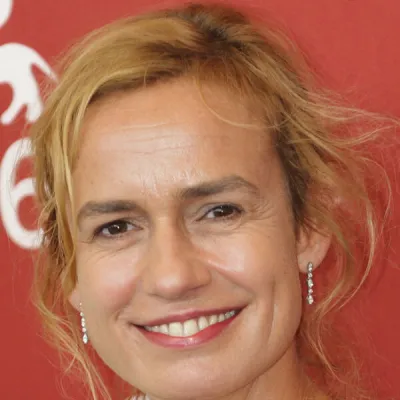
Sandrine Bonnaire
Human Design Chart
Biography
The Human Design of Sandrine Bonnaire: Generator 4/6
Generator 4/6 — Design at a Glance
Sandrine Bonnaire demonstrated a fundamental attitude of endurance based on a deep, sacral energy source. Her design suggested that her strength did not lie in constant initiative or initiation but rather in the ability to respond to external impulses. She worked like a workhorse: extremely strong and resilient, provided she received the right signals from her environment.
This dynamic stems from her type as a Generator. Generators possess much energy to make things tangible in life, yet this process works differently than for other types. The motto here is not 'initiate' but 'respond'. When Sandrine Bonnaire responded to a signal from life and her inner center gave the confirmation sign 'Yes! Let's get started!', she could act with full force. In this state of reaction, deep satisfaction and a sense of true fulfillment set in.
However, danger lurked when deviating from this strategy. If she tried to initiate things instead of waiting or had to suppress her heart projects despite the energy being there, frustration resulted. This constant working against the grain often led to a noticeable energy drain up to burnout. Her life task was not to ignore this inner urge and at the same time not anticipate it but patiently wait for the right moment of confirmation to effectively use her enduring strength.
Emotional Authority
Sandrine Bonnaire appeared as someone who did not act immediately on important decisions but consciously needed time to gain clarity. Her design indicated a tendency to initially sit out spontaneous impulses and only act after a maturation phase when the emotional wave had subsided.
This approach stems from her emotional authority, carried by the defined Solar Plexus Center. In Human Design mechanics, this authority is always effective when this center is colored - regardless of other definitions in the chart. She was subject to a natural emotional wave with permanent ups and downs. The world appeared to her through the lens of current mood: A project could seem inspiring at one moment and completely negative the next. These feelings were merely snapshots, not ultimate truth.
Quick decisions based on emotion risked being based on misleading impressions and having negative consequences. Instead, her system required patience and conscious 'sleeping over' of choices. By taking time to ask herself repeatedly, she gained emotional distance. Only when intense emotions faded did calmness set in. This process was particularly crucial for long-term decisions with significant influence on her life course as it ensured that her choice was based on deeper insight rather than fleeting mood.
The 4/6 Profile — Opportunist / Role Model
Sandrine Bonnaire exhibited a fundamental attitude characterized by an inner tension between the need for belonging and the call to wise distance. Her design indicated that she experimented freely in the first three decades of life, with Line 6 still acting like a Line 3. This promoted intense experimentation in relationships and friendships, driven by the energy of Gate 16, which understands itself as a leadership figure in the transpersonal realm. This position requires understanding the other side and waits for the right moment to discover talents and genuinely support others.
However, with the activation of Line 6, a characteristic contradiction emerged: The desire to be part of a community (Line 4) conflicted with the urge to withdraw to contemplate the meaning of life (Line 6). This conflict between heart and head shaped her development. In later years, she was expected to take on the role of a wise model that works through cooperation. She had to learn to carefully protect her big heart not to open up to the wrong people. The goal-oriented nature of Gate 37 directed this process towards the collective and questions beyond material values, where projects served to help others recognize their own purpose.
Triple Split Definition — Defined & Open Centers
Sandrine Bonnaire revealed herself as someone who possessed a rare inner completeness: her design combined defined Ajna (constant thinking), defined Throat (expression), defined Heart (will) and defined Sacral Center (vitality). This closed loop created an autonomy where concept, word, intention, and energy seamlessly intertwined. She was her own source for action and resistance, barely susceptible to external influence in these areas. Supporting this structure were the defined Solar Plexus (emotional depth) and the defined Spleen (intuitive security in the moment).
However, this immense inner stability stood in tension with her open centers. Her open G Center meant that her identity was situational; she reflected the environment rather than following a fixed internal direction. Often, she tended to question who she really was or where her true love lay instead of simply being at the right place. Additionally, her open Root Center absorbed external stress, leading to a feeling of pressure that wasn't hers. Her strong inner motor from Heart and Sacral Centers risked fighting against this foreign resistance or trying to enforce a fictional identity. The challenge was not to waste her own power in combating the absorbed pressure but instead to channel it through emotional clarity (Solar Plexus authority) and reactive waiting (Sacral strategy) to avoid frustration.
Channels for logical acceptance, intuitive power and community.
Sandrine Bonnaire demonstrated a fundamental stance that combined logical order, intuitive awareness, and need-based relationship work. Her design tended towards structuring information mentally before expressing it verbally. The channel of acceptance 17-62 connects the Ajna Center with the Throat Center through Gate 17 (opinions) and Gate 62 (details). This configuration means that Sandrine Bonnaire translated visual patterns into language to create understanding. Anything she could not logically integrate into her internal system, she did not understand; this created a permanent pressure to communicate her organized opinions as soon as the listener's receptivity was given.
At the same time, there was a deep survival intelligence at work. The channel of power 34-57 connects the Spleen Center through Gate 57 (intuitive insight) to the Sacral Center and then to Gate 34 (power). This connection reinforced her ability to be aware of danger and react spontaneously. Sandrine Bonnaire could thus make decisions in fractions of a second to protect herself, tuning into the vibrations of her environment rather than mental deliberation.
In interpersonal dynamics, she sought clear agreements. The channel of community 37-40 connects the Solar Plexus Center with the Heart Center through Gate 37 (friendship) and Gate 40 (solitude). This shaped her way of building bridges between individuals by waiting for a personal invitation to become part of an organization or community. She understood the need to seal a good deal where everyone had an honorable place and contributed voluntarily, without hierarchical structures.
Individual Circuitry — Circuit Signature
Sandrine Bonnaire was marked by three separate, non-interconnected energetic streams. The Mind Circuit connected her Ajna with the Throat Center (Channel 17-62). This allowed her to articulate logical and strategic insights in a structured manner – an “emotionless ratio” that is free from emotional conditioning and aims to improve things for the future.
Parallel to this, the Ego Circuit worked through Channel 37-40 between Heart and Solar Plexus Centers. Here it was not about individual ego but clan dynamics: mutual support based on the principle of “today I give, tomorrow you give”. Since this circuit does not connect with the Sacral Center, such resource-oriented cooperation necessarily required pauses for regeneration.
A third isolated stream was the Integration Circuit (Channel 34-57), which connected the Sacral with the Spleen Center. This underscored her individual survival strategy: drawing power from reacting to life and guiding it through intuitive knowledge in the present moment.
The tension lay in the coexistence of these separate systems: the future-oriented, rational structuring of the mind stood opposite the clan-based necessity for emotional reciprocity as well as the individual, intuitive intuition in the now. None of these energies flowed directly into each other; they existed as parallel forces that shaped her design.
Right Angle Cross of Planning 2
Sandrine Bonnaire revealed herself as someone who made inner order and strategic preparation the compelling precursor to any action. For her design, it was essential to develop plans and carefully structure resources before taking an initiative. This trait stemmed from her configuration of the right cross of Planning 2. This structure placed a clear focus on efficiency and the conscious avoidance of chaos through thorough planning. She did not act impulsively or chaotically but sought a stable foundation for her actions. The mechanics of this design emphasized the necessity to map out the path ahead to gain action security. Without this preparatory phase, her energy would have been scattered and ineffective. Instead, she used the time of planning to create clarity and foresee obstacles. This allowed her to proceed with deliberation and purposeful direction. The inner structuring was not just a means to an end but an integral part of how she moved through the world. She relied on this methodical approach to exercise control over her environment and projects. Through this discipline, she avoided unnecessary friction and secured a smooth flow for her undertakings. Her strength did not lie in spontaneous improvisation but in the ability to think through complex processes ahead of time and prepare accordingly.
Saturn Return · Uranus Opposition · Chiron Return · 2nd Saturn Return — Life Cycles
In this phase of her life, Sandrine Bonnaire showed a deepened self-understanding that was less marked by external suddenness than by inner maturation. Her staging of “Elle s’appelle Sabine” in 2007 at the age of forty exemplified this period: a moment of clear positioning and creative sovereignty based on years of internal condensation.
This work corresponds to the Uranus opposition, a cyclical transition from the first half to the second half of life. In Human Design mechanics, this point does not mark chaotic upheaval but fundamental stabilization of self. Earlier restlessness or striving for new identity gives way to deeper integration of one’s nature. It is a cycle of inner growth dynamics in which the person no longer struggles against the current of life but harmonizes with it.
For Sandrine Bonnaire, this meant that her artistic expression now flowed from a stable, mature source. The staging was not a sudden impulse but the visible result of this internal maturation process. She did not act out of necessity to prove herself or reinvent herself but from the security of her own structure. This transition enabled her to carry her experiences and insights into the world with greater clarity and less inner resistance. Thus, the Uranus opposition fostered an attitude of calmness and trust in her path, which was concretely reflected in her work as a director.
Generator · Emotional Authority — Synthesis
Sandrine Bonnaire seems marked by a deeply rooted need for authenticity and a capacity to recognize patterns and logically organize them (Gate 17/62). This mental clarity, combined with the intuitive perception of the body (Channel 34-57), allows her to respond spontaneously to life and gain energy from this response. The constant search for meaning and the ability to form connections (Gate 37/40) seem central aspects of her way of living, always focusing on building a sustainable community.
A central paradox in her design lies between the need for inner clarity and the open nature of her G Center. While she has a strong desire to define her own identity and find meaning in life, she is also open to the influences of others and must learn to integrate these without losing herself. This tension field between self-discovery and adaptation shapes her path by continually prompting her to reassess who she is and where she belongs.
3 Defined Channels
Incarnation Cross - Right Angle Cross of Planning 2
Solar Return
The Solar Return shows the moment when the sun returns to its exact birth position - your personal solar year.
Life Cycles
Discover the life cycles with a detailed triple view (birth chart, cycle chart, composite).
Human Design Profile
- Type
- Generator
- Strategy
- To respond - wait for something to respond to
- Authority
- Emotional Authority
- Profile
- 4/6 - Opportunist / Role Model
- Definition
- Triple Split
- Incarnation Cross
- Right Angle Cross of Planning 2
- Date of Birth
- 31.05.1967 12:30
- Place of Birth
- Gannat, France
Frequently Asked Questions
What is Sandrine Bonnaire's Human Design type?
Which Profile does Sandrine Bonnaire have?
What Authority guides Sandrine Bonnaire?
What incarnation cross does Sandrine Bonnaire have?
When was Sandrine Bonnaire born?
Discover your own Human Design
Are you also a Generator? Find out in a personal reading how to use your sacral energy correctly and discover deep satisfaction.
More Personalities
Back to overviewSissy Spacek

Aaliyah

Alexia

Anémone

Angèle

Ann-Margret
