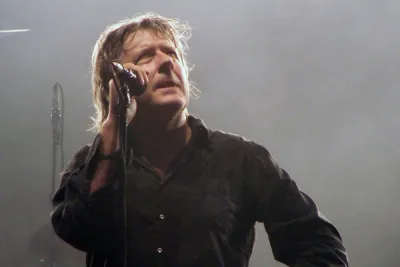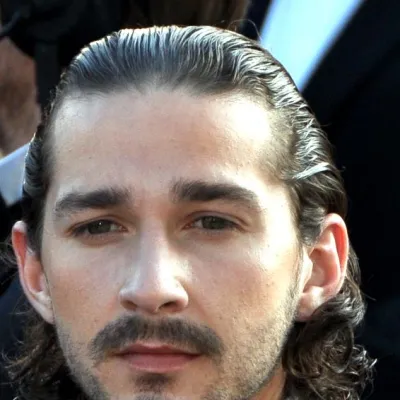
Shia LaBeouf
Human Design Chart
Biography
In 2002 he landed a leading role in a Disney Channel series, "Even Stevens," and, a year later, at age 16, he won an Emmy for the role. An only child of divorced parents, he has had roles in episodes of several popular TV series such as "Touched by an Angel" and "ER." His first role was in one episode of "Caroline in the City" in 1995.
He earned a mug shot on November 4, 2007 when he was arrested in a Chicago Wal*Mart store for misdemeanor criminal trespassing. A security guard, believing LaBeouf to be intoxicated, asked him to leave. When LaBeouf refused, the police were called in.
His other films include "Indiana Jones and the Kingdom of the Crystal Skull" (2008), "Transformers: Revenge of the Fallen" (2009), "Wall Street: Money Never Sleeps" (2010), and "Transformers: Dark of the Moon" (2011).
Human Design Analysis: Shia LaBeouf as Projector 4/6
Projector 4/6 — Design at a Glance
Shia LaBeouf's design tends towards a focused, penetrating presence. As a projector, his aura acts like a bright flashlight, directed specifically at weaknesses in his surroundings or in other people. This configuration allows him to immediately recognize flaws in systems or relationships, as his gaze shines directly into the 'darkness' of others.
The challenge of this design lies in the way of communication: If these insights are expressed uninvited or too directly, the other person may perceive it as aggressive or unpleasant – similar to light shining directly into someone's face. The optimal strategy for Shia LaBeouf was therefore to not take the initiative himself, but to wait for a respectful and honest invitation from the outside. Through this restraint and waiting for the invitation, he could convey his clarifying insights in a way that was perceived as helpful and attractive, rather than as criticism.
Projectors do not have a defined Sacral Center, which means they lack a constant, intrinsic source of life energy. Instead, they experience phases of high activity, followed by necessary rest phases to avoid burnout. A life in harmony with this strategy – that is, waiting for the invitation and conserving energy – leads to the projector being successfully rewarded. If he deviates from this, the non-self theme of bitterness, a feeling of injustice and not being valued, arises from the frustration over lack of recognition or ignoring his own strategy.
Emotional Authority
Shia LaBeouf's design tends towards intense, wave-like emotional fluctuations. His inner authority is Emotional Authority, carried by the defined Emotional Center. In Human Design mechanics, this authority is prioritized: Whenever the Emotional Center is defined, it takes the lead in decision-making, regardless of other defined centers in the chart. Shia LaBeouf was therefore constantly under the influence of an emotional wave that filtered his perception of the world through the current mood. The same situation could appear inspiring in one moment and negative in the next. These feelings were, however, only snapshots, not ultimate truth. Quick, spontaneous decisions made directly from such an emotional peak carried the risk of later proving to be wrong. The strategy of his design lay in waiting. Through conscious hesitation and multiple 'sleeping on' decisions, he could let the intense feeling waves subside. Over time, he gained emotional distance, leading to deeper clarity and calmness. This process of maturation was particularly crucial for long-term, life-changing steps. Shia LaBeouf showed himself to be someone who needed patience to distinguish his true inner truth from passing moods and to make grounded judgments.
The 4/6 Profile — Opportunist / Role Model
Shia LaBeouf's design tends towards experimental behavior in his early decades, driven by a strong desire for connection and testing various roles in relationships and friendships. This phase reflects the effect of Line 3, which dominates in the first thirty years of a 4/6 profile. Over time, however, an inner conflict became apparent: the desire for belonging to a community (Line 4) stood in contradiction to the urge to withdraw to think about the meaning of life and adopt a higher perspective (Line 6). This often creates confusion between the 'heart', which seeks closeness, and the 'head', which needs distance.
His chart also points to a capacity to seize favorable opportunities to collect material resources in service of higher principles, supported by the energy of Gate 45. At the same time, he carries the potential for metamorphosis and the creation of new societal models, represented by Gate 22. This configuration promotes nonconformist openness and the development of leadership qualities through social interaction. In later years, it is expected that he will act as a wise role model and stand out through cooperation with others. His large heart remains cautious to avoid opening up to the wrong people and getting hurt. The effectiveness of his design unfolds particularly when he undertakes material actions that benefit his 'tribe' – his community – and provide a clear advantage.
Triple Split Definition — Defined & Open Centers
Shia LaBeouf's Human Design profile indicates a tendency towards constant internal activity, driven by defined centers for Thinking, Communication, Identity, Willpower, Emotion, and Stress. His Ajna Center ensures continuous mental processes, while the Throat Center translates these concepts into words and actions. The defined G Center provides a firm sense of self-identity and direction, supported by the Willpower of the Heart Center, which allows him to keep promises and determine his own resources. His emotional authority in the Solar Plexus Center requires patience to find clarity in the wave movement, while the Root Center provides the necessary pressure for forward movement.
At the same time, his chart reveals specific vulnerabilities through undefined centers. The open Head Center makes him susceptible to mental pressure and the temptation to take on questions from others or seek inspiration that does not come from him. The open Sacral Center means no constant energy flow; he is sensitive to the energy of his environment and tends to overextend himself on borrowed energy rather than relying on his own generative power. The open Spleen Center leads to a fundamental survival anxiety and the risk of making spontaneous decisions or clinging to unhealthy situations just to simulate a sense of security. This configuration shows a tension between a strong internal structure and the need to carefully filter external influences on vitality and intuition.
Channels for clarity, pioneering spirit and emotional release.
Shia LaBeouf's Human Design profile indicates a tendency towards analytical precision and emotional provocation. His mind is constantly engaged in ordering details into a mental system; anything he cannot logically integrate into his worldview remains incomprehensible. This mechanism is shown through the Accepting Channel 17-62, which translates visual patterns (Gate 17) into precise language and concepts (Gate 62). He possesses the ability to structure complex connections in such a way that they become understandable to others, enjoying explaining his opinions in detail.
At the same time, a deep, pulsating emotional wave fluctuates between joy and melancholy. The Channel of Emotional Release 39-55 connects the energy of provocation (Gate 39) with the mind (Gate 55). Shia LaBeouf can through his moodiness provoke and perceive the minds of others. His impact is strongly dependent on his current mood; authentic living in this emotional alchemy allows him to explore the depths of his mind, while ignoring these waves can lead to inner insecurity.
A third aspect is the ability to initiate through competition. The Channel of Initiation 51-25 connects the ego shock (Gate 51) with the universal love of the Higher Self (Gate 25). Here lies a natural competitiveness aimed at recognizing and reinforcing the potential for individuation. If he approaches situations correctly, this competition leads to expansion and new levels of consciousness. It awakens the competitiveness in others to mutate and strengthen them, provided he is invited to deliver this 'shock'.
Additionally, he carries Gates that embody tribal dynamics (Gate 45), the understanding of collective meaning (Gate 47), the grace of waiting (Gate 22), and the ability to innovate (Gate 26). These configurations shape him as someone who combines logical clarity with emotional depth and an impulse towards individual differentiation.
Individual Circuitry — Circuit Signature
Shia LaBeouf's Human Design profile is characterized by three separate, coexisting energetic poles. One pole connects the Ajna with the Throat Center. This creates a direct line from visual strategy to verbal expression. Here it is about sharing logical, rational insights, free from emotional coloring, to improve structures. A second, isolated pole connects the Identity with the Heart Center. This strengthens a firm, courageous personality with strong inner convictions. Since this area is not connected to the Throat Center, these deep convictions often remain unspoken but act strongly individualistic. The third, also isolated pole connects the Solar Plexus with the Root Center. This generates pulsating, acoustic emotional waves. This energy serves to release emotions and generate new, transformative impulses, without directly transitioning into logical expression or inner identity. The three areas – rational communication, silent inner strength, and emotional transformation – function as parallel, non-interconnected systems.
Right Angle Cross of Rulership 2
Shia LaBeouf's design points towards a tendency towards a certain kind of influence and leadership that relies less on direct control and more on subtle guidance. This configuration, known as the right-hand ruling cross 2, describes a structure where authority is not established through loud demands but through the ability to guide others in a certain direction without them feeling coerced. It is a mechanism aimed at bringing order and structure to social or professional environments by setting the right impulses at the right time. Shia LaBeouf has shown himself to be someone who could use this form of indirect leadership to shape his environment. The energy of this cross often works in the background, creating frameworks within which others can act. This does not mean that Shia LaBeouf always had to be in the spotlight, but that he had the ability to steer processes so that they aligned with his will or goals without him having to constantly intervene himself. This kind of leadership is subtle and requires a deep understanding of how people react to certain signals. Shia LaBeouf's chart shows that this ability played a central role in his way of interacting with the world and asserting his own intentions by using the dynamics of his environment rather than fighting against them.
Saturn Return · Uranus Opposition — Life Cycles
Shia LaBeouf's design points towards sudden, radical shifts in direction when internal tensions reach a critical point. This dynamic was evident in 2012, at the age of 26, when he announced his intention to focus on independent films in the future. This step marked his first Saturn return, a cycle in which years of groundwork often condenses into a solid new foundation for life. The decision was not a random break but the crystallization of a long-held inner truth that now became publicly effective.
However, his design also sowed the seeds for explosive discharges when internal energy could not be channeled. This presented itself in 2026, at the age of 40, during the Uranus opposition. In this conflict year, he attacked several people in New Orleans outside a bar. The Uranus opposition represents a phase of extreme inner disintegration and unexpected crises, in which the system often overreacts to enforce balance. The physical altercation was the external form of an internal overload, a moment when control was completely lost. Both events – the conscious realignment and the uncontrolled explosion – illustrate the range of his mechanical expression forms: from structured consolidation to chaotic discharge.
Projector · Emotional Authority — Synthesis
A central red thread in this design is the dynamic interaction between the drive to recognize and name patterns (Channel 17-62, defined Ajna Center) and the emotional depth required for decision-making and expression (Emotional Authority, Knowledge Circuit). This combination leads to an internal processing aimed at understanding the world and communicating these insights – a constant filtering and ordering of information to put it into words. The profile as a networker/role model suggests that this process is not only for personal understanding but also for connecting and guiding others, with the early years marked by a spirit of experimentation until line 6 takes on the role of the wise observer.
The central paradox lies in the tension between the need for acceptance and the ability to recognize and name mistakes (Projector Type, Gate 17). While the bright light that shines on the dark can bring clarity, it can also potentially meet resistance. The emotional wave pattern intensifies this dynamic, as the perception and evaluation of situations constantly shift. The observed crises (2012, 2026) seem to be expressions of this inner disintegration – the desire to be authentic and separate colliding with the need for connection and recognition.
3 Defined Channels
Incarnation Cross - Right Angle Cross of Rulership 2
Solar Return
The Solar Return shows the moment when the sun returns to its exact birth position - your personal solar year.
Life Cycles
Discover the life cycles with a detailed triple view (birth chart, cycle chart, composite).
Human Design Profile
- Type
- Projector
- Strategy
- Wait for the respectful invitation
- Authority
- Emotional Authority
- Profile
- 4/6 - Opportunist / Role Model
- Definition
- Triple Split
- Incarnation Cross
- Right Angle Cross of Rulership 2
- Date of Birth
- 11.06.1986 00:14
- Place of Birth
- Los Angeles, CA, United States
Frequently Asked Questions
What is Shia LaBeouf's Human Design type?
What Profile does Shia LaBeouf have in Human Design?
What authority does Shia LaBeouf have?
Which incarnation cross is Shia LaBeouf associated with?
When was Shia LaBeouf born?
Discover your own Human Design
Are you also a Projector? Find out in a personal reading how to unfold your leadership qualities and recognize the right invitations.
More Personalities
Back to overviewSissy Spacek

Alain-Fournier

Anémone

Ann-Margret

Arletty
Arno