
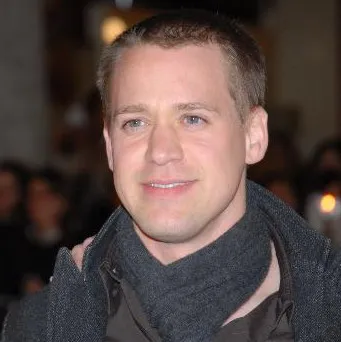
T. R. Knight
Human Design Chart
Biography
He received a Drama Desk Award nomination for his performance in MCC Theater's Scattergood in 2003.
On 5 October 2013, Knight married Patrick B. Leahy, a ballet dancer and writer, in Hudson, New York. They had been together for three years.
T. R. Knight — Generator with Profile 2/4
Generator 2/4 — Design at a Glance
T. R. Knight revealed himself as someone with immense inner endurance and strength, comparable to a workhorse ready to carry heavy loads – provided he has the right energy for his task. His design tends towards making things in life concrete through quick reactive actions rather than constant initiative-taking.
As a Generator, he possessed abundant sacral energy that was primarily released when responding to impulses from his environment. The motto for him was clear: Not initiating but reacting. When his inner self signaled a clear 'yes', he could respond with full power and push projects forward successfully. However, if he did not live by this principle – such as doing things he didn't really want to do or being kept away from his heart project – frustration and energy depletion were imminent.
The greatest threat to his well-being lay in wasting his strength or aligning himself against his inner drive towards what was truly important. Conversely, if he listened to the signals of his gut and responded accordingly, his design rewarded him with a deep sense of fulfillment. His strength thus lay not in forcing the first step but waiting until life posed a question that his sacral energy could enthusiastically answer.
Sacral Authority
T. R. Knight's design inclined towards clear, physically anchored decision-making. As a Generator, he possessed Sacral Authority, meaning his strategy and inner guidance impulses were identical: reacting to external stimuli rather than active initiative-taking. This congruence greatly simplified his process as there was no cognitive dissonance between the 'how' of action and the source of decision.
His responses did not come through intellectual deliberation but as immediate physical resonance – a gut feeling or an energy surge. Such reactions often manifested in vocal expressions like grunts or affirming sounds ('Mhm'), signaling whether something generated or blocked energy. When his Sacral Center was engaged, he felt vital and energized; this enabled him to perform tasks with great enthusiasm and without compulsive purposefulness. The joy of the work itself was thus the central drive, not an external goal.
Moreover, his activated Spleen Center acted as a supportive instance for Sacral Authority. This endowed him with the ability to react especially quickly and spontaneously. Through direct access to his instinctual perception, he could reliably rely on his physical well-being. This combination of sacral affirmation and spleen-induced intuition shaped a lifestyle in which T. R. Knight was born to go through life with satisfaction and fully immerse himself in his activities, guided by deep bodily truth.
The 2/4 Profile — Hermit / Opportunist
T. R. Knight's design inclined towards a pendulum need for withdrawal and community. As a 2/4 Profile known as 'Natural Talent / Networker', he constantly oscillated between the impulse of Line 2 – the hermit who must be alone – and Line 4, which desires time with favorite people. This tension required clear communication: T. R. Knight had to signal externally when he sought company and when he wanted undisturbed 'cave' time. During this Me-Time, he delved into internal processes to gain clarity. Only once this need was satisfied did he return to reflect on his network's knowledge and develop brilliant ideas.
This pattern was marked by specific energetic qualities. The second line of Gate 17 brought discernment and projection outward. Here a polarity between shyness and the urge, either to serve or rule – with service being a prerequisite for any form of leadership – was evident. Simultaneously, the fourth line of Gate 58 demanded focus and externalization of pressure. This energy was specialized but also receptive to many impressions, which could lead to instability without concentration. For T. R. Knight, it was therefore crucial to remain focused to stay healthy and let received information flow meaningfully into his network.
Single Definition — Defined & Open Centers
T. R. Knight's Human Design profile suggests a powerful, physically felt presence that arises less from mental planning than from immediate reactions to life. His defined Sacral Center generates a constant vital energy source that drives him to engage in tasks that bring deep satisfaction. However, this energy is reliably available only when he does not initiate but waits for life to ask or challenge him – his inner 'yes' or 'no' response is the only way to avoid exhaustion and frustration.
This reactive capability was supported by his defined Spleen Center, which gave him spontaneous intuitive authority. It allowed him to make decisions in the present moment based on an instinctive sense of health and well-being without having to rationalize them. His also defined Root Center provided the necessary adrenergic pressure to move forward in the world and master existential challenges by connecting this energy with his intuitive Spleen intelligence.
At the same time, T. R. Knight was receptive to external influences through several open centers. His open Head Center made him vulnerable to mental confusion and the pressure to find answers to questions that were not his own. The open Ajna Center meant that his conceptual thinking was flexible but did not produce a consistent personal truth; he tended to adopt ideas from outside rather than generate them himself. His open Throat Center drew attention when he spoke, yet attempting to actively seek attention often led to stress and unpredictable outcomes.
Especially defining was his open G Center, which did not give him a fixed identity or life direction. Instead, he learned through interaction with his environment and the people in it who he could be in different contexts. He tended to question whether he was in the right place as false environments confused him. His open Heart Center also meant that he was not designed to make promises or prove his worth by willpower; attempting to do so would plunge him into a cycle of disappointment and self-doubt. Finally, his open Solar Plexus absorbed the emotions of his environment, requiring him to learn how to distinguish between his own feelings and those of others to avoid emotional overload.
Channels for focus, judgment and transformative ambition.
T. R. Knight exhibited a profound, almost meditative ability to focus paired with an unrelenting drive to question and perfect patterns. His design laid the groundwork for precise, detail-oriented work always accompanied by a critical instance seeking errors to correct.
This attitude stems from the Concentration Channel 52-9, which connects the Root Center with the Sacral Center. Through Gate 52 of Non-action and Gate 9 of Focusing, a calm pressure arises to stay still and keep distractions at bay to concentrate energy on details. This formative energy allows him to fully commit to a task until it is logically confirmed or refuted. Simultaneously, the Judgment Channel 58-18 connects the Root Center with the Spleen Center. Gate 58 of Liveliness drives the desire for 'better and more', while Gate 18 of Correcting checks what is healthy and in balance. This channel functions as a sentry checking patterns to maintain joy in life – yet only effectively when asked to contribute his solutions.
Additionally, the Transformation Channel 54-32 shaped his drive for recognition through competence. Connecting Gate 54 of Ambition and Gate 32 of Continuity, this energy propelled T. R. Knight to work up through talent and consistent effort motivated by a desire to be seen and support the clan.
Individual Gates complemented this picture: Gate 17 brought logical teaching and succession into play, while Gates like 38 (Struggle for Integrity) and 39 (Provocation towards Mutation) created internal tensions processed through analysis and re-evaluation. Genetic Gates 60, 41, and 53 added themes of limitation, emotional evolution, and the pioneer spirit, while Gate 50 protected traditional values and Gates 5 and 14 steered rhythm and skillful handling of power.
Collective Circuitry — Circuit Signature
T. R. Knight's design points towards a structured, emotionless ratio aimed at logically improving things and leading to a better future. This was evident through the Understanding Circuit: The Concentration Channel (9-52) connected the Sacral, Root, and Spleen Centers directly. This connection created a continuous flow between life force (Sacral), immediate reaction (Root), and intuitive perception (Spleen). T. R. Knight used this energy to share rational insights free from conditioning. Simultaneously, the Judgment Channel (18-58) within the same circuit, also connected with these three centers, emphasized strategic focus.
A second aspect of his design concerned cooperation and creating resources together, carried by the Ego Circuit. Here, the Transformation Channel (32-54) linked the Spleen to the Root Center. Given T. R. Knight's simple definition, these centers should be understood as a single cohesive whole across both circuits: Sacral, Root, and Spleen form one energetic group. However, in the Ego Circuit, there was no direct connection to the Sacral Center within this specific circuit, meaning that pauses were necessary for resource creation to avoid exhaustion. The energy of the Ego Circuit focused on mutual support and traditional values without directly harnessing the life force from the Sacral Center in this context. Thus, T. R. Knight showed a duality: on one hand, future-oriented logical structuring through the Understanding Circuit; on the other, earthly cooperative resource creation with necessary pauses in the Ego Circuit – both supported by the direct connection of intuition (Spleen) and action (Root).
Right Angle Cross of Service 1
T. R. Knight revealed a fundamental disposition that was less about personal assertiveness and more about supporting others. His design bore the signature of the 'Right Cross of Service', a configuration that shifts focus away from ego to collective tasks. This structure does not imply passive submission but rather an active, often quiet dedication to the welfare of the community or a larger whole.
People with this expression find their deepest satisfaction not in individual achievements under the spotlight but in the effectiveness of their contributions for others. They act as stabilizing forces that contribute behind the scenes or directly to ensure systems and relationships function smoothly. The impulse is to serve without necessarily demanding recognition; the value lies in the action itself and in the relief it provides others.
This orientation does not mean ignoring personal needs but rather defining and fulfilling them through this serving role. T. R. Knight thus moved within a space where authenticity was expressed through reliability and care. His presence had a calming and connecting effect, as he tended to fill gaps and offer support where it was most needed without emphasizing his own identity as separate.
Saturn Return · Uranus Opposition · Chiron Return — Life Cycles
T. R. Knight's design set a tendency towards structural anchoring followed by profound transformation later on. This dynamic became evident in 2003: at the age of 30, he was nominated for a Drama Desk Award. This marked his first Saturn Return, a cycle where years of groundwork and inner discipline often culminate in tangible external success. The nomination was no coincidence but the visible fruit of a phase of consolidation that laid the foundation for future steps.
Ten years later, another force became active: in 2013, T. R. Knight married Patrick B. Leahy. At age 40, he found himself at his Uranus Return (the opposition to natal Uranus), a period often marked by sudden shifts or the redefinition of bonds. Here, the energy manifested not as destruction but as conscious solidification of a partnership amidst personal changes. The contrast between early career-oriented success and later relationship-focused decisions underscores the development line of his design: from creating individual stability to integrating new degrees of freedom in private life. Both events illustrate how astrological cycles can shape concrete milestones in life – once through recognition of achievement, once through confirmation of intimacy.
Generator · Sacral Authority — Synthesis
A central red thread in this design is a deep connection to sacral energy and the resulting need for authentic engagement. The defined sacral authority (Sacral Center) implies a constant, vital life force that, however, hinges on conditions: this energy stands ready only for activities truly aligned with gut feelings. The profile as a natural talent and networker (Lines 2/4) reinforces this aspect by describing an interplay between internal processes of self-discovery and the need to connect and exchange with others – both require proper energy alignment. The channel of concentration (Gate 52/9) underscores the ability to focus this energy when distractions are avoided, to design and improve things in detail.
The central paradox lies in the tension between a desire for withdrawal and self-reflection (Line 2) and a wish for community and exchange (Line 4), fueled by sacral energy that is only available with genuine inner resonance. This leads to constant weighing: when is it time for internal reflection to recharge one's own energy, and when is the right moment to use this energy in exchange with others? The documented events – an award (2003) and a relationship event (2013) – could be interpreted as expressions of this dynamic: recognition for focused work and the decision for deeper connection, each as a result of sacral response.
3 Defined Channels
Incarnation Cross - Right Angle Cross of Service 1
Solar Return
The Solar Return shows the moment when the sun returns to its exact birth position - your personal solar year.
Life Cycles
Discover the life cycles with a detailed triple view (birth chart, cycle chart, composite).
Human Design Profile
- Type
- Generator
- Strategy
- To respond - wait for something to respond to
- Authority
- Sacral Authority
- Profile
- 2/4 - Hermit / Opportunist
- Definition
- Single Definition
- Incarnation Cross
- Right Angle Cross of Service 1
- Date of Birth
- 26.03.1973 02:58
- Place of Birth
- Minneapolis, MN, United States
Frequently Asked Questions
What is T. R. Knight's Human Design type?
What Profile does T. R. Knight have in Human Design?
Which Authority guides T. R. Knight?
What incarnation cross is T. R. Knight associated with?
When was T. R. Knight born?
Discover your own Human Design
Are you also a Generator? Find out in a personal reading how to use your sacral energy correctly and discover deep satisfaction.
More Personalities
Back to overviewSissy Spacek

Aaliyah

Alexia

Anémone

Angèle

Ann-Margret
