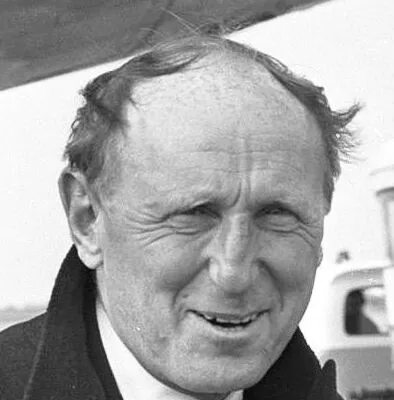
Tariq Abdul-Wahad
Human Design Chart
Biography
Human Design Analysis: Tariq Abdul-Wahad as Projector 3/5
Projector 3/5 — Design at a Glance
Tariq Abdul-Wahad's design points to an aura that focuses on identifying system errors immediately. His Human Design type is the Projector, whose energy acts like a bright flashlight: it shines directly onto areas in the environment that are 'in the dark', bringing light to others' darkness. This configuration allows him to see instantly what is wrong or inefficient.
However, this design's mechanics warn against direct criticism. If Tariq Abdul-Wahad points out these errors as if shining a bright light into someone else's face, it often leads to resistance and anger. Instead, his design suggests an elegant approach: by setting a harmonious example himself. By living functional patterns, his aura becomes attractive; others come to him of their own accord and ask for his insights. The central strategy is therefore to wait for a genuine invitation before exercising his leadership role.
Since his Sacral Center is undefined, Tariq Abdul-Wahad does not have a constant intrinsic energy source. Instead, he experiences phases of high activity followed by necessary rest periods to avoid burnout – a rhythm often ignored in conventional work routines. Living according to this design rewards him with success; deviating from it leads to the non-self theme 'Bitterness'.
Emotional Authority
Tariq Abdul-Wahad's design points to an emotional depth and cyclical perception tendency. His inner authority resides in his defined Solar Plexus Center, meaning that his decision-making is inseparably linked to navigating through emotional waves. For him, this emotional authority takes precedence over all other defined centers regardless of further configurations in his chart.
This center subjected him to a constant up and down of emotions. The world appeared colored by his current mood: at one moment he could be totally enthusiastic, the next he saw the same thing negatively. His immediate feeling was only a snapshot, not a guaranteed truth value. Quick, spontaneous reactions from this emotional heat proved unreliable and could have negative consequences.
Clarity emerged for Tariq Abdul-Wahad through time. He needed the process of 'sleeping on it' to let intense feelings subside and gain emotional distance. Only when these waves had subsided did calmness set in, allowing him to make a well-founded decision. This mechanism primarily affected long-term life decisions where patience and repeatedly questioning initial impulses were crucial for later success.
The 3/5 Profile — Martyr / Heretic
Tariq Abdul-Wahad's design points to a tendency towards self-responsible experimentation that made him the problem-solving hero for others. His Profile 3/5, the experimenter and hero, defines this path: he believes nothing blindly but must test everything through personal experience. This Line 3 forces him to break illusions and learn from mistakes – a process often publicly visible.
The practical wisdom gained establishes him in the role of the Saver (Line 5), whose solutions are sought after during crises. Yet, here lies the tension: while Line 3 feeds his ego through public presentation, Line 5 demands privacy and strict timing for revealing knowledge. Revealing too early leads to confusion; withdrawal is necessary for reflection.
Tariq Abdul-Wahad thus showed himself as someone who shares his wealth of life experiences but had to learn to keep the secret until the right moment. His charm and attractiveness to others directly result from this ability to solve problems through personal failure. The challenge always lay in balancing the need for recognition by the 'tribe' with the necessity of inner distance to avoid falling into projections or confusion of others. His design demanded assertiveness to maintain his own boundaries against external expectations.
Split Definition — Defined & Open Centers
Tariq Abdul-Wahad's Human Design profile indicates a tendency towards self-determined action capability, guided by clear willpower and emotional depth. His defined Heart Center endowed him with the capacity for resource control and the need to keep promises; he tended to set his own pace and seek recognition for his contributions. Simultaneously, his defined Solar Plexus acted as an emotional authority: truth revealed itself not in the present moment but through waiting out the emotional wave until clarity emerged. This tension between immediate willful determination and the necessity of letting emotions run their course shaped his decision-making processes.
Additionally, his defined Spleen Center provided spontaneous intuition in the here and now, prioritizing health and well-being, while his defined Root Center delivered a constant pressure to handle stress. This combination allowed him to perceive existential warning signals while also possessing the necessary drive for material advancement.
In contrast, his open centers made him vulnerable to mental confusion or adopting foreign opinions as personal truth; he tended to get entangled in matters that were not his own business. His open G Center meant a flexible identity: he sought no fixed direction but was initiated by places and relationships, often experiencing false environments as inner unrest. The open Sacral Center led to unstable energy; he relied on reacting to the life force of others without having consistent generative power himself, which could lead to overloading through 'borrowed' energy. Finally, his open Throat Center attracted attention without him actively seeking it, provided he waited for the right timing.
Channels for instinctive devotion and emotional waves.
Tariq Abdul-Wahad's Human Design profile indicates a tendency towards instinctive entrepreneurship: recognizing and persuasively selling tribal needs. This attitude was shaped by the Channel of Devotion 44-26, connecting the Spleen Center with the Heart. Through Gate 44 (Awareness), he had an acute sense for what people needed – often before they knew it themselves. Gate 26 (Egotist) provided the willpower to implement these insights. As a capitalist, he used historical memory to position products or ideologies as improvements and benefit his tribe. He acted as a promoter at the forefront, generating resources while the production team profited from them. His strategy was to wait until the market recognized his gifts and invited him to promote himself on behalf of the tribe; this recognition gave him the necessary platform.
Alongside this business acumen, the Channel Release Emotions 39-55 came into play. It connected the Root Center with the Solar Plexus through Gate 39 (Provocation) and Gate 55 (Mind). This generated a pulsating emotional wave between joy and melancholy. Tariq Abdul-Wahad could provoke others' minds to reveal who aligned with his mood. He was not a victim of these moods but used them to appear authentic; in the right mood, he conveyed an alluring warmth or passionate sadness.
Additional energies came from Gate 24 (mental mutation and renewal), Gate 33 (reflection and withdrawal) as well as Gate 19 (resources, territory, spirituality). Gate 28 demanded decisions here and now regarding risks, while Gate 37 supported organic community structures. Gate 50 provided protective reflexes and traditional values. Gate 32 aimed for material continuity, Gate 53 enabled new developmental cycles as a pioneer, and Gate 18 focused on collective correction and human rights without taking authority conflicts personally.
Individual Circuitry — Circuit Signature
Tariq Abdul-Wahad's Human Design profile indicates a tendency towards two parallel but not directly connected power fields. As Split Definition, these existed as separate focal points: one side pulsing with the urge for individual transformation, the other conservatively focused on cooperation and resources within the collective.
The Knowledge Circuit in Tariq Abdul-Wahad linked his Solar Plexus to his Root Center. This channel (55-39) allowed emotional waves to be released. The energy worked acoustically and creatively, driven by the need to strengthen and express a unique identity through new insights. This happened in rhythmic impulses that heralded change.
Parallel to this, the Ego Circuit connected his Heart with his Spleen Center (Channel 26-44). Here it was not about individual ego but tribal dynamics: cooperation and building material resources. The energy of this field was traditional and required pauses since there was no direct connection to the Sacral Center – constant life force was missing, so rest phases were necessary for regenerating shared power.
The dynamic lay in the tension between innovative, emotionally driven self-expression (Knowledge) and disciplined, resource-oriented cooperation within a group (Ego). Tariq Abdul-Wahad showed himself through this configuration as someone seeking both inner development while also keeping an eye on his community's well-being, with each area requiring different rhythms and needs.
Right Angle Cross of the Four Ways 3
Tariq Abdul-Wahad's design is structured by the presence of the Right Cross of the Four Paths 3. This configuration serves as a central organizational element within his Human Design, influencing how he integrates internal processes and external circumstances. Since the specific mechanical effect of this cross is not detailed in the available data, its concrete manifestation or practical utility for Tariq Abdul-Wahad cannot be further specified. It remains as a structural marker indicating a particular energetic architecture whose precise dynamics lie outside the scope of the provided information framework. The design thus points to this specific cross configuration without allowing for additional interpretive conclusions about its behavior or impact in everyday life. Mentioning this element serves to fully illustrate the chart-based conditions, where the lack of descriptive depth prevents a closer classification within daily action patterns. Tariq Abdul-Wahad carries this structure as part of his energetic signature, whose full meaning cannot be deduced from the given facts.
Saturn Return · Uranus Opposition · Chiron Return — Life Cycles
Tariq Abdul-Wahad's design was marked by two clear structural turning points that shaped his life path. The first Saturn return around age 30 often signified a phase of consolidation and hard testing. For Tariq Abdul-Wahad, this occurred in 2004: he concluded his final season with the Dallas Mavericks without playing time. This crisis highlighted the saturnine mechanics where old structures are reviewed and unnecessary burdens must be shed before a new, sustainable foundation can emerge.
The second major event was the Uranus opposition around age 40, a cycle often associated with sudden changes, liberation, and new perspectives. In 2013, at age 39, Tariq Abdul-Wahad became the coach of the student team at Lincoln High School in San Jose. This career shift illustrates the uranian dynamics: following the previous crisis, this cycle enabled a radical directional change towards a new role that was less focused on external success and more on inner development and knowledge sharing. Both cycles demonstrate how planetary influences shaped concrete life events – first through Saturn's pressure, then through Uranus' liberating openness.
Projector · Emotional Authority — Synthesis
Tariq Abdul-Wahad navigates his life through a dynamic tension between the need for deep understanding and the ability to immediately apply this knowledge. His design as a Projector, paired with emotional authority and an Explorer/Hero profile, points to someone who loves analyzing systems (Gate 44) to then offer practical solutions based on experience (Line 3). This combination is reinforced by his open connection to the Throat Center – a natural gift that allows communication only when carried by invitation or the right moment. He is an observer who recognizes potential in others and whose knowledge proves itself through practical action.
A central paradox lies in how Tariq takes in energy and expends it. His defined Heart Center gives him willpower and control over resources, while his open centers (Sacral, G, Ajna) make him receptive to external influences. This leads to constant adaptation to the environment but also challenges maintaining a unique, authentic identity. He is both an independent thinker and a mirror of those around him – a field of tension between self-assertion and the need for recognition.
2 Defined Channels
Incarnation Cross - Right Angle Cross of the Four Ways 3
Solar Return
The Solar Return shows the moment when the sun returns to its exact birth position - your personal solar year.
Life Cycles
Discover the life cycles with a detailed triple view (birth chart, cycle chart, composite).
Human Design Profile
- Type
- Projector
- Strategy
- Wait for the respectful invitation
- Authority
- Emotional Authority
- Profile
- 3/5 - Martyr / Heretic
- Definition
- Split Definition
- Incarnation Cross
- Right Angle Cross of the Four Ways 3
- Date of Birth
- 03.11.1974 02:50
- Place of Birth
- Maisons Alfort, France
Frequently Asked Questions
What is Tariq Abdul-Wahad's Human Design type?
What Profile does Tariq Abdul-Wahad have in Human Design?
What Authority guides Tariq Abdul-Wahad?
Which incarnation cross is active for Tariq Abdul-Wahad?
When was Tariq Abdul-Wahad born?
Discover your own Human Design
Are you also a Projector? Find out in a personal reading how to unfold your leadership qualities and recognize the right invitations.
More Personalities
Back to overviewSissy Spacek

Alain-Fournier

Aldair

Anémone

Ann-Margret

Bourvil