Photo: Wikimedia Commons
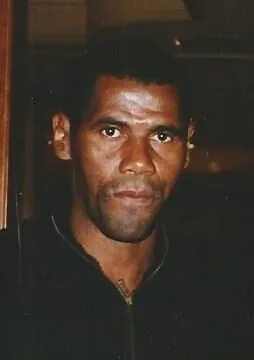
Terje Pedersen
Human Design Chart
Biography
At the 1960 Summer Olympics he progressed from the qualifying round, but did not start in the final. At the 1964 Summer Olympics he did not qualify for the final. He became Norwegian champion in the years 1960 and 1962–1964.
Terje Pedersen as a Generator 1/3 in Human Design
Generator 1/3 — Design at a Glance
Terje Pedersen's design suggests a tendency towards great endurance, comparable to a workhorse that possesses immense strength as long as it has energy for its task. As a Generator, he had a lot of sacral energy, which was specifically released: not through spontaneous initiative, but through reacting to signals from life. His strategy was to wait until his sacral center gave a clear "yes" and then to respond to that.
This mechanism presented two central stumbling blocks. On one hand, there was the threat of frustration and energy loss if he did things he had no desire to do and thus wasted his strength. On the other hand, there was conflict potential if he was prevented from working on his heart project, even though he still wanted to continue working with full power. If Terje Pedersen lived in harmony with this design by reacting rather than initiating, it rewarded him with a feeling of deep fulfillment. If he, however, initiated against his nature, he encountered ongoing frustration. His path to satisfaction therefore did not lie in constant pushing forward, but in trusting the inner response that came from the gut as soon as a fitting opportunity arose.
Emotional Authority
Terje Pedersen's design showed a tendency towards emotional depth and wave-like decision-making. He appeared as someone who fluctuated emotionally, with the world always appearing through the lens of his current mood. In one moment, he could be enthusiastic about something, and in the next, view the same thing negatively. This emotional wave was not a mistake but his inner authority: the defined Solar Plexus Center.
In Human Design mechanics, this authority is always prioritized, regardless of other defined centers. This means that Terje Pedersen's momentary emotional reaction was just a snapshot and not necessarily his truth. Quick, spontaneous decisions based on emotions could therefore have negative consequences, as they were based on transient states.
The mechanics required patience. The more time he took to let a decision mature, the deeper and more comprehensive his understanding could become. This meant reconsidering decisions multiple times and taking the time to wait until the intense feelings subsided. Only then did he gain emotional distance, and clarity and calmness would set in. This process was particularly essential for long-term, life-defining decisions. By waiting for emotional clarity rather than acting on the first impulse, Terje Pedersen could make decisions that aligned with his true inner truth, rather than being guided by passing moods.
The 1/3 Profile — Investigator / Martyr
Terje Pedersen's design inclined towards persistent research and practical experimentation. As a 1/3 Profile ("Researcher/Experimentor"), he demonstrated a person who always linked theoretical knowledge (Line 1) with the necessity of testing (Line 3). His inner drive was to gain self-experienced insights through trial and error. This configuration meant that his judgment on a matter or activity was only valid if he had both intellectually understood and practically tested it to the core.
The mechanics of his design included the "Law of Necessity" (Gate 49), recognizing that real change requires support and emotional patience to avoid harmful consequences. Parallel to this, the energy of Line 3 (Gate 43) demanded adaptability and the willingness to engage connections and tolerate criticism to learn through experience. For Terje Pedersen, it was essential to resist the urge to act immediately before the knowledge was ripe. His strength lay in synthesizing revolutionary impulse with patient, often flawed practice, ultimately leading to robust, life-sustaining wisdom. His design described a path where mistakes were not seen as failures but as necessary steps towards renewal and validation of knowledge.
Triple Split Definition — Defined & Open Centers
Terje Pedersen's Human Design profile indicated a tendency towards continuous mental activity and a deep, but delayed emotional clarity. His defined Ajna Center ensured a constant, specific way of conceptualizing; he thought independently of external influences. This mental energy flowed directly into his defined Throat Center, allowing him to reliably express what he thought. His identity was firmly anchored by the defined G Center, giving him a clear sense of direction and self-love without needing to force others to follow him.
The driving force came from his defined Sacral Center, which provided a vast source of vital energy for reactions, not for initiatives. Simultaneously, his defined Solar Plexus acted as an inner authority: truth revealed itself to him only after going through the emotional wave. His decisions required time to become emotionally clear rather than being made immediately. The defined Root Pressure provided a constant background impulse to move forward in the world.
At the same time, Terje Pedersen was vulnerable to conditioning through open centers. His open Head Center tended to engage with foreign questions and doubts, leading to mental pressure when he tried to find answers that were not his own. His open Heart Center drew him into the cycle of promises and the attempt to prove his worth, despite lacking a consistent willpower. Additionally, his open Spleen Center was prone to fears and clinging to unhealthy situations out of a false sense of security, as it lacked spontaneous, reliable intuition. This configuration required patience and trust in his own authority rather than reacting to external validation or spontaneous impulses.
Channels for synthesis, structured insight and persistent discovery.
Terje Pedersen's Human Design profile indicated a tendency towards deep loyalty and the need for clearly defined tribal structures. This attitude was rooted in the Channel of Synthesis 19-49, connecting the Root Center with the Solar Plexus. It created an emotional glue that determined who belonged to the community and who did not, based on principles of honor and mutual protection. Terje Pedersen was someone who finely perceived his position in the whole and sought a balance between feasibility and fairness.
Parallel to this, the Channel of Structuring 23-43, connecting the Ajna Center with the Throat Center, was at work. Through the Gate of Insight (43) and the Gate of Assimilation (23), Terje Pedersen received spontaneous breakthroughs that he expressed in a unique, metaphorical language. This mechanism required patience, as his innovative thinking was often only understood by the collective after repeated explanation. His mind felt like an outsider waiting for the right invitation to bring in its knowledge.
The Channel of Discovery 29-46 connected the Sacral Center with the G Center. Here, persistence based on positive reaction was evident. Terje Pedersen had to let go of expectations and immerse himself deeply in his experience to be in the right place at the right time. His success depended on his commitment to a process whose meaning only became clear at the end.
Additionally, individual Gates shaped his profile: Gate 4 allowed logical formulas for future security, while Gate 30 steered the longing for positive feelings and the acceptance of limitations. Gate 37 promoted organic community structures, Gate 38 set boundaries to preserve integrity. Gate 53 initiated new development cycles, Gate 59 followed a genetic strategy of binding. Gate 55 brought emotional mood swings, Gate 62 ensured detailed pattern recognition. Gate 16 promoted mastery through experimentation, and Gate 20 anchored him in the here and now.
Individual Circuitry — Circuit Signature
Terje Pedersen's Human Design profile was a configuration of three separate, parallel operating energy fields that did not directly transition into one another. In the Knowledge Circuit, the Channel 'Structuring' connected the Ajna with the Throat Center. This created a pulsating, acoustic energy that immediately translated new insights into words, thereby manifesting individual identity through structured expression.
Completely independently of this, the Meaning Circuit was at work. Here, the Channel 'Discovery' linked the Identity with the Sacral Center. This connection generated a cyclical, visually oriented energy aimed at reflecting past experiences and discovering the meaning within them to share these insights with the collective.
The third, isolated field formed the Ego Circuit. Here, the Channel 'Synthesis' connected the Solar Plexus with the Root Center. This connection generated a conservative, traditional energy focused on mutual support and finding a balance between giving and taking. Since there was no direct connection to the Sacral Center, this configuration required necessary pauses for resource regeneration.
These three groups – structuring, meaning finding, and syncretic support – existed at Terje Pedersen as independent mechanisms. They worked alongside each other without forming a continuous energetic flow, necessitating a lifestyle that had to live out these different, temporally and energetically separated impulses sequentially or in parallel, but not integrated.
Right Angle Cross of Explanation 1
Terje Pedersen's Human Design profile indicated a tendency towards a clarifying and enlightening effect, often manifesting at moments of decision or action. This structure, the right cross of Explanation 1, describes an energy that cuts through darkness or confusion to create truth and clarity. It is not passive observation but an active force that resolves misunderstandings and reduces complex situations to their essentials.
The mechanics of this cross show that Terje Pedersen tended to take a decisive role in moments of uncertainty or chaos, bringing clarity to the situation. His presence or intervention could lead to hidden connections becoming suddenly visible. This did not happen through lengthy analysis but through a direct, often intuitive insight that was then articulated or implemented.
The right cross of Explanation 1 is associated with the ability to bring light into dark corners, whether in interpersonal relationships, professional projects, or personal crises. Terje Pedersen thus acted as someone who created clarity where there was previously confusion. His energy served to dispel illusions and show reality as it is, without distortion or embellishment. This characterized his interactions and decisions, as he always sought to reveal the true nature of things and thereby create space for authentic action.
Saturn Return · Uranus Opposition · Chiron Return · 2nd Saturn Return — Life Cycles
Terje Pedersen's Human Design profile indicated a tendency towards cyclical, structural deepening that manifested in clearly defined life phases. His Human Design chart marks four standardized astrological cycles that served as a framework for his inner development.
The first Saturn Return functioned as a phase of serious self-commitment. Here, early experience condensed into sustainable structures, a process that related identity and responsibility to each other.
The Uranus Opposition entered as a phase of detachment and reorientation. It demanded the liberation from self-imposed or societal constraints to enable individual expression. This cycle marked a necessary distancing from earlier patterns.
The Chiron Return marked the bloom period, in which the Incarnation Cross unfolded. If Terje Pedersen followed his strategy and authority, his life purpose became experiential in this phase. It was not about healing but about the realization of his inner design.
The second Saturn Return closed this sequence as a phase of mastery and passing on. Here, the integration of all previous lessons was evident. The structure of this design emphasized that growth is not a linear but a rhythmic process, marked by clear phases of consolidation, liberation, fulfillment, and mastery. Terje Pedersen moved within this framework, with each cycle presenting specific tasks for his personal evolution.
Generator · Emotional Authority — Synthesis
Terje Pedersen seems to have been marked throughout his life by a deep drive towards understanding and the resulting transformation. The combination of sacral energy (Generator Type) and emotional authority points to a person who, although powerful and enduring, does not make decisions from the moment but needs time to process and validate feelings. This process is reinforced by the Profile of the Researcher/Experimentor, who continuously learns, tests, and draws conclusions from experiences to arrive at a well-founded judgment. The defined Mental Center underscores the ability to develop concepts and influence the thinking of others, while the Synthesis Channel signals a deep sensitivity to the needs of others and a desire for a coherent community.
A central paradox lies in the tension between the need for thorough emotional clarification and the experimental nature of the profile. The energy of Line 3 urges to try out and learn through mistakes, while emotional authority requires time and maturity before a decision can be recognized as correct. This could lead to internal conflicts when the desire for immediate implementation meets the necessity of emotional validation, and requires navigating between the impulse to act and the patience to recognize one's own inner truth.
3 Defined Channels
Incarnation Cross - Right Angle Cross of Explanation 1
Solar Return
The Solar Return shows the moment when the sun returns to its exact birth position - your personal solar year.
Life Cycles
Discover the life cycles with a detailed triple view (birth chart, cycle chart, composite).
Human Design Profile
- Type
- Generator
- Strategy
- To respond - wait for something to respond to
- Authority
- Emotional Authority
- Profile
- 1/3 - Investigator / Martyr
- Definition
- Triple Split
- Incarnation Cross
- Right Angle Cross of Explanation 1
- Date of Birth
- 09.02.1943 04:25
- Place of Birth
- Oslo, NOR
Frequently Asked Questions
What is Terje Pedersen's Human Design type?
What Profile does Terje Pedersen have in Human Design?
What authority does Terje Pedersen have?
What incarnation cross does Terje Pedersen have?
When was Terje Pedersen born?
Discover your own Human Design
Are you also a Generator? Find out in a personal reading how to use your sacral energy correctly and discover deep satisfaction.
More Personalities
Back to overviewAaliyah

Aldair
Alexia

Angèle

Anne-Marie

Arcángel