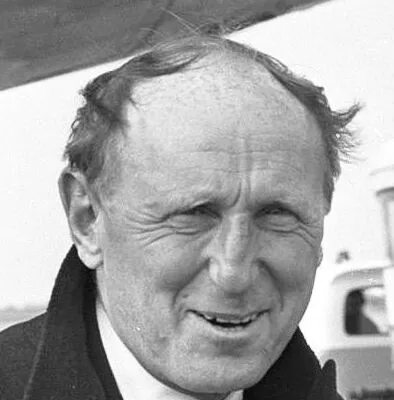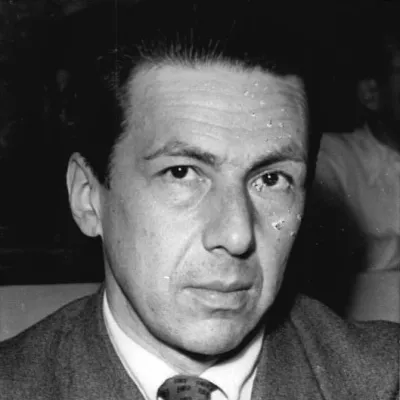
Vladimir Pozner
Human Design Chart
Biography
He died in Paris on 19 February 1992 at age 87. In August 2014, Seven Stories Press published Disunited States, a collection of Pozner's writings from his travels through the United States in the 1930s.
Vladimir Pozner as a Projector 6/2 in Human Design
Projector 6/2 — Design at a Glance
Vladimir Pozner appeared as someone who presented with an intense, focused presence that often triggered immediate reactions from those around him. His design as a Projector inclined him to quickly identify systemic weaknesses or errors in other structures. This ability acted like a bright flashlight shining into dark corners where others remained in the dark. However, lacking a constant, intrinsic energy source, he alternated between phases of high activity and necessary rest periods, limiting his endurance.
The mechanics of his design required patience: Addressing the problems he identified directly would often lead to resistance, akin to a light beam shining directly into someone's face. Instead, his true strength lay in an attractive, harmonious aura. When he lived this inner clarity, others naturally came to him seeking advice. His strategy involved waiting for an honest invitation before sharing his insights.
Living by this pattern rewarded him with success. Ignoring this dynamic and acting without involving his environment led to bitterness sooner or later. His undefined Sacral Center meant he could not define himself through constant, steady work but rather through targeted, deep interventions that only became effective when appropriately invited.
Emotional Authority
Vladimir Pozner never made decisions based on the first emotional wave. His design carried Emotional Authority, meaning his defined Emotional Center served as the inner compass – independent of other defined centers in his graph. This authority was subject to constant ups and downs of emotions; the world appeared colored by the current mood. What seemed absolutely right or inspiring in one moment could appear negative in the next. His immediate feeling was only a snapshot, not a reliable compass for the truth. Quick, spontaneous judgments from this emotional heat would often mislead him.
The mechanics of his authority required patience and time. Vladimir Pozner needed distance to let intense feelings subside. By repeatedly sleeping on decisions, he gained emotional distance until clarity and calmness set in. This process was essential, especially for long-term steps with significant influence on his life course. He learned to hesitate and ask himself multiple times before acting, rather than reacting immediately. Through this waiting, he underwent the necessary maturation process, during which emotional turbulence subsided and a deeper, more comprehensive understanding took hold. His strength did not lie in immediate reaction but in the ability to let the emotional wave subside before acting.
The 6/2 Profile — Role Model / Hermit
Vladimir Pozner's design was marked by a clear division of his life path. In the first three decades, he lived the dynamics of the 3-line: Experimentation, trial, and error characterized his early years. Mistakes were not seen as failure but as necessary steps in learning. After withdrawing from setbacks, he gathered experiences that later became the foundation for his development.
Around age thirty, the 6-line activated. This marked the transition to a phase of distancing and intense reflection. Pozner metaphorically retreated into a
Split Definition — Defined & Open Centers
Vladimir Pozner revealed himself as someone with a firm, reliable identity and a clear sense of his own direction. His defined G Center gave him a deep sense of self-worth and the ability to show others new perspectives without being dependent on their confirmation. This inner security was complemented by his defined Heart Center, which gave him strong willpower and the need to determine his life for himself. He enjoyed working independently, kept his promises, and sought recognition for his contribution, which further strengthened his self-confidence.
However, his decision-making was more complex. As a person with a defined Solar Plexus Center, he possessed emotional authority. He had to wait for his emotional wave to smooth out to gain clarity. He avoided impulsive reactions best by practicing patience; the truth revealed itself to him over time. Simultaneously, his defined Spleen Center guided his actions through intuitive, momentary perceptions. It protected him through spontaneous instincts in the "now," telling him what was healthy and correct, independent of rational analysis.
These defined centers stood in contrast to his open areas. His open Head Center made him vulnerable to mental pressure and the confusion of others. He tended to engage with questions that were not his own and suffered from the compulsion to find answers where wonder was appropriate. Similarly, his open Ajna Center: He could take in many concepts but had to learn not to identify them as his own truth to avoid falling into the fear of appearing foolish.
His open Throat Center led to a pressure to gain attention by speaking or acting. Often, he tried to dominate the conversation to relieve the uncomfortable pressure rather than waiting for the natural invitation. Additionally, he was extremely sensitive to the energy of others through his open Sacral Center. He risked overextending himself with "borrowed" energy and exhausting himself because he did not always know when to set boundaries. Finally, his open Root Center absorbed external stress, which put him in a cycle of hyperactivity and the attempt to rid himself of this non-native pressure through constant activity.
Channels for community, intuitive insight and creative integration.
Vladimir Pozner revealed himself as someone who guided his behavior by deep, intuitive impulses to thrive in the present moment. This attitude stemmed from the Channel of Perfect Form 57-10, which connected the Spleen Center with the G Center. Through the intuitive insight of Gate 57 and the self-expression in Gate 10, a spontaneous clarity emerged. He acted appropriately when he perceived something in his environment as not being in order, without being guided by future fears. This allowed him to move through the world unburdened and to perfect his life as a unique survival art.
At the same time, the dynamics of community and resistance shaped him. The Channel of Community 37-40 connected the Solar Plexus Center with the Heart Center. Here he sought recognition (Gate 37) and the right place in the whole, while being ready to work for the sustenance of his loved ones (Gate 40). This connection required carefully considered agreements that deepened emotionally over time to create stable bonds.
Additionally, other Gates influenced him. Gate 38 set boundaries and defended his individual integrity through necessary resistance, while Gate 39 recognized the Spirit through provocation and analysis. Gate 51 brought in a strong willpower that responded to shocks with adaptability. On the personality level, he sought continuity and material success for the tribe (Gate 32), but also recognized the illusion of freedom (Gate 30) and promoted transformation through principled loyalty (Gate 49). In his design, Gate 22 supported mutation through calm listening, while Gate 50 as a conservative protective reflex preserved tribal values. Gate 46 promoted dedication to the physical process, Gate 44 awareness in interactions, and Gate 13 collected experiences for collective memory.
Tribal Circuitry — Circuit Signature
Vladimir Pozner's Design inclines towards clear, community-building communication, paired with a deep, intuitive perception. His energy splits into two separate, non-directly connected streams. The first stream connects the Heart Center with the Solar Plexus Center through the Channel of Community. This creates a dynamic of giving and receiving: support is emotionally processed and translated into mutual aid. Since this area belongs to the Family Group, the constant life force of the Sacral Center is missing. Vladimir Pozner therefore needs rest periods to regenerate resources for his environment, rather than operating in a constant flow. The second, independent stream connects the Identity Center with the Spleen through the Channel of Perfect Form. Here, it's about individual self-preservation. Intuitive knowledge from the Spleen is guided by proper behavior in the Identity Center. This allows drawing strength from reactions to life and anchoring it in the present. This configuration describes a life task that serves both social interaction and personal intuition, yet operates as two parallel, separate forces. The emotional wave of the Solar Plexus and the intuitive certainty of the Spleen shape his experiential world without mixing energetically.
Left Angle Cross of Individualism 2
Vladimir Pozner's Human Design profile bore the signature of the left cross of Individualism 2. This configuration shaped him as someone who formed his unique identity through concrete, practical actions in everyday life. It was not about abstract philosophy but about the lived principle of self-determination in the immediate environment.
In Human Design, this cross describes a specific life task: the development of a strong, autonomous self that is not dependent on external expectations. The focus was on individual responsibility for one's life and the ability to clearly distinguish oneself from the masses. Vladimir Pozner demonstrated through this mechanism as a person who found his path not through loud declarations but through consistent, independent action. The energy of this design promoted an inner stability that allowed him to hold onto his own values even in uncertain times.
It was about understanding one's individuality not as a theoretical concept but as daily practice. Every decision, every action was a step towards solidifying this personal identity. Vladimir Pozner lived this dynamic by focusing on the concrete and anchoring his autonomy in reality. This created a foundation on which he could move confidently and self-determinedly without having to justify himself externally. The strength of his design lay in this calm but unshakable orientation towards his own self.
Saturn Return · Uranus Opposition · Chiron Return · 2nd Saturn Return — Life Cycles
Vladimir Pozner's design indicated a tendency towards a late but profound unfolding of his life purpose. His Chiron Return, the fulfillment cycle between the ages of 49 and 51, marked the point at which his incarnation cross – assuming he had lived according to his strategy and authority up to that point – increasingly manifested in everyday life. This was not a process of healing a wound but a phase of bloom, in which meaning and purpose became tangible.
In 1954, at the age of 49, Pozner wrote the screenplay for the DEFA documentary film 'The Song of the Streams'. This event exemplifies the mechanics of this cycle: the years of inner alignment now found a concrete, external form. The Chiron Return acts as a fulfillment cycle that carries one's essence into the world. For Pozner, this was evident in a professional act that was not a random success but an expression of his deep life purpose. The mechanics describe the transition from inner potential to visible effectiveness. Through the work on the screenplay, his specific contribution became tangible. It was a confirmation of what his design had carried from the beginning, now, however, in a maturity that was only possible in this life stage. The focus was on the realization of one's purpose, not on external validation.
Projector · Emotional Authority — Synthesis
Pozner was a projector whose life was marked by a deep need to bring light into the darkness for others. His defined G Center and the Channel of the Perfect Form (57/10) pointed to an ability to intuitively recognize what was wrong with others and to integrate this knowledge into behavior that benefited both himself and others. This projection, combined with emotional authority, required time for decision maturation, yet allowed him to view the world with wisdom and distance. The Line 6 in his profile indicates that he walked a path through experiments and life experiences to eventually act as a wise role model.
A central paradox in his design lay in the tension between the need to recognize and address errors in the system (projector) and the emotional wave that prevented an immediate reaction. He was destined to lead others, yet his inner authority required patience and reflection before sharing his insights. This created a field of tension between the impulse to correct and the necessity to wait and let things ripen – a dynamic that was evident in his work and his approach to the world.
2 Defined Channels
Incarnation Cross - Left Angle Cross of Individualism 2
Solar Return
The Solar Return shows the moment when the sun returns to its exact birth position - your personal solar year.
Life Cycles
Discover the life cycles with a detailed triple view (birth chart, cycle chart, composite).
Human Design Profile
- Type
- Projector
- Strategy
- Wait for the respectful invitation
- Authority
- Emotional Authority
- Profile
- 6/2 - Role Model / Hermit
- Definition
- Split Definition
- Incarnation Cross
- Left Angle Cross of Individualism 2
- Date of Birth
- 05.01.1905 05:00
- Place of Birth
- Paris, France
Frequently Asked Questions
What was Vladimir Pozner's Human Design type?
What Profile did Vladimir Pozner have in Human Design?
What Authority guided Vladimir Pozner in making decisions?
What incarnation cross was Vladimir Pozner assigned to?
When was Vladimir Pozner born?
Discover your own Human Design
Are you also a Projector? Find out in a personal reading how to unfold your leadership qualities and recognize the right invitations.
More Personalities
Back to overviewSissy Spacek
Alain-Fournier
Anémone
Angeli

Ann-Margret
Bourvil