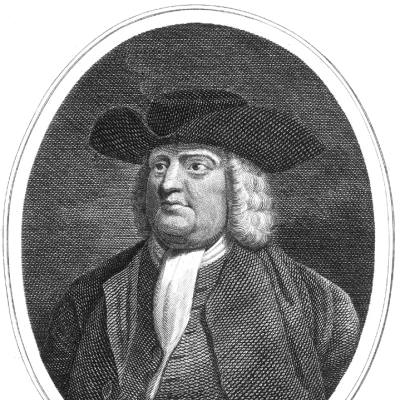
William Penn
Human Design Chart
Biography
Died 30 July 1718, Ruscombe, England.
What does Manifesting Generator 1/3 mean for William Penn?
Manifesting Generator 1/3 — Design at a Glance
William Penn's design features a hybrid energy structure that combines quick initiative with a constant inner life force. As a Manifestor Generator, he had access to the defined energy of the Sacral Center, which provided him with continuous power potential. Simultaneously, his connection between the Motor Centers and the Throat allowed him to skip steps and pull events into his life at lightning speed. This configuration created a tendency towards acceleration, but it also carried risks: By acting too quickly, he occasionally skipped necessary intermediate steps, leading to the need to backtrack and fill in gaps. This could cause frustration as his Non-Self theme lay in dissatisfaction with this perceived inefficiency. Additionally, he tended to pursue multiple impulses simultaneously and start diverse projects in parallel. His creative joy remained intact only when he strictly reacted to life rather than initiating it himself, and regularly checked whether his Sacral Center affirmed his activities with a clear 'Yes'. Under these conditions, he found deep satisfaction in the variety of his work. The pressure to finish one thing before moving on to the next stood against his nature. Instead, he entered a productive play mode where variety and the ability to work on multiple strands in parallel fed his energy and promoted satisfaction, as long as the inner resonance was in tune.
Emotional Authority
William Penn's inner compass was shaped by the defined Emotional Center, which endowed him with emotional authority. This configuration meant that his perception of the world was always colored by his current mood. In one moment, he could be enthusiastic about something, in the next, view the same situation negatively. His immediate feeling was only a snapshot, not necessarily the deeper truth. Quick, spontaneous decisions made directly from an emotional wave often proved detrimental to his design.
The mechanics of his authority required patience. Since the Emotional Center carried his inner guidance, it was essential not to make decisions immediately but to let them mature. William Penn had to take time to think about options, let them 'sleep on it' overnight, and express himself multiple times. Only when the intense feelings subsided and emotional distance was gained did the necessary clarity and calmness set in. This process of waiting was not an obstacle but the essential path to achieving the true, comprehensive insight necessary for long-term life decisions.
The 1/3 Profile — Investigator / Martyr
William Penn's design set a tendency towards a life of research and experimental action. As a person with Profile 1/3, the Researcher and Experimenter, he demonstrated a seamless integration of theoretical knowledge and practical application. His Line 1 emphasized the preservation of processes and the life-sustaining attention to details, creating a strong instinct for continuity and careful planning. Simultaneously, Line 3 urged him to learn through trial and error. This energy encouraged him to make unusual discoveries and accept mistakes as a necessary part of the learning process.
The interplay of these lines meant that William Penn did not merely passively absorb insights but actively tested them. When he made a decision or deemed an activity valuable, he had previously tested it both theoretically and practically. His judgment thus rested on self-earned experience. Sometimes, the fear of not knowing enough led him to hesitate in moving from planning to implementation. Yet, Line 3 challenged him to dive into things, form commitments, and start anew when necessary. This pattern emerged: He gathered knowledge, took the step into practice, learned from the results, and refined his understanding. This cycle of careful preparation and bold experimentation shaped his approach to challenges. His design suggested that through this combination of instinct and experience, he reached reliable insights based on genuine testing.
Single Definition — Defined & Open Centers
William Penn's Human Design profile indicates a tendency towards clear, willful communication that stems from a firm inner identity and direction. His defined G Center grants him reliable self-confidence and a sense of personal mission, while his defined Heart Center provides willpower and the ability for self-determination. This combination marks him as someone who easily and honestly expresses his truth, as his defined Throat Center serves as a pivot point to translate these inner resources into words and actions. As a Generator with a defined Sacral Center, he possesses a vast reservoir of vital energy, which must be activated through reactions to external impulses rather than through his own initiatives.
At the same time, his open Solar Plexus is a source of emotional depth that requires patience to achieve clarity, rather than following impulsive feelings. His open mental centers—Head and Ajna—make him susceptible to external inspiration and the pressure to find answers that do not come from him. Here, he tends to be influenced by doubts or the confusion of others if he does not trust his inner authority. The open Spleen Center brings a fundamental survival anxiety that can cause him to cling to uncertain situations to simulate a sense of well-being. Additionally, his open Root Center absorbs stress from the environment, which can lead to a cycle of adrenalized pressure that he does not generate himself but takes in from outside. This configuration describes a person who sees his strength in persistence and the ability to act from his own center, while learning to recognize external mental and emotional stimuli as not belonging to him.
Channels for inspiration, charisma, pioneering spirit and community.
William Penn's Design featured a tendency towards charismatic, impulsive leadership, characterized by the connection of sacral life force and immediate expression. The Charisma Channel 34-20 linked the raw, physiological energy of the Sacral Center (Gate 34) with the Now Gate (Gate 20) in the Throat Center. This created a drive to express oneself in the moment, translating generative power directly into manifesting action. Without this inner sacral reaction, this energy tended to manifest as obsession or misguided momentum; correctly channeled, it enabled impressive achievements through self-reinforcing activity.
Parallel to this, there was a capacity to influence through individual example. The Inspiration Channel 1-8 connected the G Center (Gate 1) with the Throat Center (Gate 8). Here, it was not about explanatory words, but about boldly showing a creative perspective. William Penn was designed to gain attention by living his unique identity and thus inspiring others to express their own uniqueness. This effect, however, required patience and waiting for the right timing, as there was no built-in social adaptability.
Additionally, the Initiation Channel 51-25, connecting the Heart Center through the Shock Gate (Gate 51) with the Self Spirit Gate (Gate 25), created a natural competitiveness aimed at awakening the potential for individuation in oneself and others through the "shock" of initiation. This process was mystical and could not be controlled; it required yielding to the impulse rather than forcing it.
The Community Channel 37-40 connected Solar Plexus and Heart, emphasizing the importance of carefully negotiated agreements. Here, it was about building connections through mutual benefit and emotional clarity, which required time to gain depth.
Prioritized Gates like Gate 32 (Continuity, material success), Gate 42 (Completion, experience), and Gate 62 (Logic, details) underscored the need to complete processes and logically order facts to enable stability and radical change when necessary. Gate 61 (inner truth) and Gate 15 (collective behavior) rounded out the picture by emphasizing the struggle for stillness and adaptation to natural rhythms.
Individual Circuitry — Circuit Signature
William Penn's Design established a tendency towards inner strength and individual stability. As a simply defined person, he had a continuous energetic flow connecting his Identity, Heart, Solar Plexus, Sacral, and Throat Centers. This structure created a coherent, self-referential power base.
The Projector circuit connected his Identity with his Heart Center. This fostered strong, courageous personalities with firm convictions. Since there was no connection to the Throat Center, these firm convictions often remained difficult to express directly but had a strong impact on inner self-esteem.
Parallel to this, the Reflective circuit connected his Heart with his Solar Plexus Center. This was about cooperation and the joint creation of resources. The focus was on a good balance between giving and taking and mutual support. Since the Sacral Center was not directly involved in this circuit, periods of rest for resource regeneration were necessary.
The Manifestor circuit connected his Throat with his Identity Center. This allowed the expression of his unique, individual identity. Through the inspiration from this channel, entirely new knowledge could arise and be expressed through the Throat Center with the help of the right emotions from the Solar Plexus Center. This served the transformation and the initiation of change.
Finally, the Generator circuit connected his Throat with his Sacral Center. This supported his own survival by gaining strength from the reaction to life. This strength was guided by proper behavior and intuitive knowledge and then manifested in the present moment. Together, these circuits formed a complex but interconnected pattern of individual reinforcement and resource-oriented cooperation.
Right Angle Cross of Maya 3
William Penn's Human Design profile featured the right cross of the Maya 3. This configuration established a specific foundational stance: the search for hidden truth, coupled with the urgent need to convey these insights in a way that others could truly absorb. It was a life task to uncover hidden connections and pass them on to others.
In Human Design, this cross describes an energetic structure oriented towards revelation and teaching. The energy flows from intuition to communication, meaning that William Penn was programmed to discover inner truths and then articulate them clearly and understandably. His focus was not on personal power or pure analysis, but on the ability to translate complex spiritual or intellectual insights into a language that became tangible for his environment.
This mechanism worked as a constant inner impulse. William Penn lived with the task of making the invisible visible. His role was to build bridges between abstract concepts and everyday experience. Through this configuration, he became a channel for knowledge that lay beyond superficial perception. The energy of the right cross of the Maya 3 marked him as someone who did not just seek for himself, but actively shared his findings with the world to pave the way for others to their own realization. This was not a choice, but the natural expression of his energetic structure.
Saturn Return · Uranus Opposition · Chiron Return · 2nd Saturn Return — Life Cycles
William Penn's design indicated a tendency towards large, structural changes that often came with a sense of inevitability. This energy pushed to transcend established boundaries and create new orders, not out of caprice, but as a response to an inner necessity to renew old systems.
In 1682, at the age of 38, Penn began his journey to the New World and founded Philadelphia. This corresponded to the dynamics of a Uranus opposition, a phase where long-term tensions between personal development and external structures are released. Such constellations often mark the turning point where a person asserts their own vision against the resistance of the existing order to bring something new into being. The founding of a city here was the concrete expression of this pressing impulse to establish a new social reality.
Later, in 1693, at the age of 49, Penn wrote the essay 'towards the Present and Future Peace of Europe'. This fell during his Chiron Return, a cycle of fulfillment and bloom. In this life phase, the deeper incarnation cross increasingly unfolds in everyday life. It is not about healing old wounds, but about the late, clear experience of one's own purpose. Penn's written contribution to peace showed itself as the mature form of his lifelong mission to translate his inner truths into a tangible, societal structure that should have an impact beyond his own creation.
Manifesting Generator · Emotional Authority — Synthesis
William Penn lived a process of continuous expansion and refinement of his understanding. His design as a Manifesting Generator (with defined sacral center) and his profile as a Researcher/Experimenter (1/3) pointed to a lifestyle marked by inner authority and a need for personal experience. The ability to quickly initiate things was tempered by emotional authority that required a thorough engagement with topics. This led to a continuous cycle of impulsive initiative followed by deeper examination, as evidenced in documented events where he both started new ventures and wrote comprehensive treatises. The defined Throat Channel (connecting G Center and Gate 1/8) strengthened this process by giving a voice that came from the deepest within and served to publicly share insights.
Central to Penn's life was the tension between the drive to explore and shape the new (Knowledge Circuit, Channel 1-8) and the need to filter and refine this through the emotional wave. He was a generator who could not only react but also initiate, making him a dynamic but potentially overwhelming combination. This inner conflict, between quick action and careful reflection, marked his path and led to a life characterized by constant transformation and the pursuit of knowledge.
4 Defined Channels
Incarnation Cross - Right Angle Cross of Maya 3
Solar Return
The Solar Return shows the moment when the sun returns to its exact birth position - your personal solar year.
Life Cycles
Discover the life cycles with a detailed triple view (birth chart, cycle chart, composite).
Human Design Profile
- Strategy
- To respond - wait for something to respond to
- Authority
- Emotional Authority
- Profile
- 1/3 - Investigator / Martyr
- Definition
- Single Definition
- Incarnation Cross
- Right Angle Cross of Maya 3
- Date of Birth
- 14.10.1644 06:44
- Place of Birth
- London, UK
Frequently Asked Questions
What was William Penn's Human Design type?
What was William Penn's Human Design Profile?
What authority guided William Penn's decisions?
What incarnation cross did William Penn have?
When was William Penn born?
Discover your own Human Design
Are you also a Manifesting Generator? Find out in a personal reading how to unfold your multi-talents and direct your energy wisely.
More Personalities
Back to overviewAldair

Alizée

Angeli

Arletty

Artus

Balthus