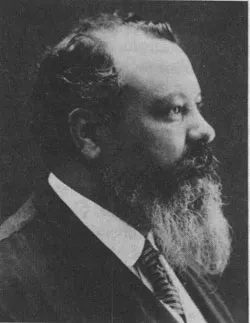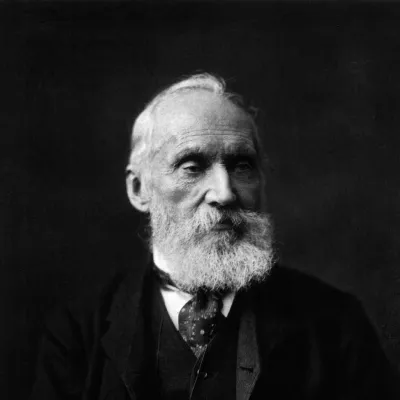
William Thomson
Human Design Chart
Biography
At the University of Glasgow he did important work in the mathematical analysis of electricity and formulation of the first and second laws of thermodynamics, and did much to unify the emerging discipline of physics in its modern form. He worked closely with mathematics professor Hugh Blackburn in his work. He also had a career as an electric telegraph engineer and inventor, which propelled him into the public eye and ensured his wealth, fame and honour. For his work on the transatlantic telegraph project he was knighted by Queen Victoria, becoming Sir William Thomson. He had extensive maritime interests and was most noted for his work on the mariner's compass, which had previously been limited in reliability.
Lord Kelvin is widely known for determining the correct value of absolute zero as approximately -273.15 Celsius. Absolute temperatures are stated in units of kelvin in his honour.
On his ennoblement in 1892 in honour of his achievements in thermodynamics, and of his opposition to Irish Home Rule, he adopted the title Baron Kelvin of Largs and is therefore often described as Lord Kelvin. He was the first UK scientist to be elevated to the House of Lords. The title refers to the River Kelvin, which flows close by his laboratory at the University of Glasgow. His home was the imposing red sandstone mansion Netherhall, in Largs on the Firth of Clyde. Despite offers of elevated posts from several world renowned universities Lord Kelvin refused to leave Glasgow, remaining Professor of Natural Philosophy for over 50 years, until his eventual retirement from that post. The Hunterian Museum at the University of Glasgow has a permanent exhibition on the work of Lord Kelvin including many of his original papers, instruments and other artefacts such as his smoking pipe.
William Thomson — Manifestor with Profile 1/3
Manifestor 1/3 — Design at a Glance
William Thomson's design established him as a pioneer destined to lead the world into a new future. His character resembled that of an emperor in ancient Rome: He possessed the vision of a great whole but did not personally wage the necessary wars and battles; instead, he sent others to conquer foreign lands for him. This role came with a specific pain point: William Thomson was often misunderstood and polarized his surroundings. Because he thought further ahead than many of his contemporaries, he encountered split reactions. Some loved his great dreams and followed him, while others rejected or even hated him because of these visions. To find the right followers, it was crucial for his design to inform others about his plans in a timely and precise manner. This formed his ideal strategy. When William Thomson adhered to this requirement and followed his inner authority, he was rewarded with a sense of internal peace. However, if he lived against his design, he felt instead a persistent, deep-seated anger within himself. His path involved minimizing resistance through clear information and exercising his leading role without getting personally entangled in the fight.
Emotional Authority
William Thomson exhibited an inner orientation that did not rely on rational analysis or external expectations but followed solely the rhythm of his feelings. His design carried emotional authority, meaning that his defined Emotional Center was the decisive instance for all important life decisions – regardless of which other centers were also defined. This configuration established that his perception of the world was always colored by the current emotional wave; enthusiasm could quickly turn into rejection and vice versa. For William Thomson, a spontaneous 'yes' or 'no' was often just a snapshot, not yet the deep truth of his character. Quick decisions based on temporary moods proved risky. The mechanics of his inner authority required patience: He had to let decisions mature ideally overnight so that intense feelings could subside. Only when emotional distance was gained and clarity emerged could he recognize his true direction. This process of multiple reconsiderations and waiting was not a weakness but the necessary path to calmness and well-founded judgments, which profoundly shaped his life journey.
The 1/3 Profile — Investigator / Martyr
William Thomson's design inclined him towards systematic research paired with the urge to test insights through direct experimentation. As a person of Profile 1/3, he was naturally both a researcher and experimenter – much like Indiana Jones, who combines science and adventure. His life revolved around learning, trial, and error. Sometimes the energy of Line 1 took control; then he hesitated before implementation because he felt he did not yet have enough theoretical knowledge. This conflicted with Line 3's urgent desire to try things out in order to learn from mistakes.
Gate 52 emphasized for him the necessity of a pause and thorough consideration before action. There was pressure to commit and provide energy for the concentration process. The second generation led to calming this energy and creating silence. He had to face the consequences of his actions; an early release of energy would have meant wasting time and energy.
At the same time, Gate 17 on the third line included understanding and adaptability. Trial and error were central themes from which he could learn. The best path led through experiments and detailed work. Experiences at the end of the journey were necessary while shortcuts would have limited the value of his opinion due to missing important details. Self-earned and tested insights shaped his judgment: When William Thomson evaluated something as good, he had previously examined it both theoretically and practically in depth.
Single Definition — Defined & Open Centers
William Thomson was someone whose expression and actions were deeply influenced by an emotional wave. His defined Solar Plexus Center served as his inner authority: decisions matured only when the emotional clarity at the end of the wave cycle set in. This patience gave his judgments a special depth and sensitivity, as he integrated perspectives from various emotional highs and lows before acting.
This emotional intelligence flowed directly into his defined Throat Center. His voice was not an impulsive outburst but a reliable channel for what proved true in his Solar Plexus. He did not speak from the mind or spontaneous mood, but articulated his felt truth with a consistent yet limited clarity. This process was supported by his defined Spleen Center, which gave him an intuitive, momentary perception of health and well-being. This existential intuition helped him read subtle signals from his body and separate himself from mental noise.
At the same time, William Thomson was open to external influences in other areas. His open G Center meant he did not carry a fixed, unchanging identity but formed through the right environment and relationship. He tended to question whether the current place or person truly suited him rather than dictating a rigid direction. Similarly, his open Head Center made him vulnerable to mental confusion; he could get entangled in endless questions from others if he did not trust his emotional authority. His open Heart Center made him susceptible to the pressure to prove himself despite lacking consistent willpower. Finally, his open Sacral Center reflected the energy of his environment, leading him to easily feel overwhelmed if he did not listen to his own limits.
Channels for emotional waves, logical scrutiny and inner openness.
William Thomson showed a basic attitude shaped by the need to wait for inner emotional rhythms before acting outwardly. His design suggested that social interaction and communication were not constant duties but expressions of specific inner moods. The Openness Channel 22-12 connected his Solar Plexus with the Throat Center. This meant that his ability to achieve emotional impact through voice or word depended on the ebb and flow of his moods. Gate 12 acted here as a filter, limiting this openness to people with the greatest potential for change. He did not seek superficial sociability but created a receptive environment to awaken transformative awareness.
Parallel to this, he was driven by a logical impulse to question and perfect patterns. The Judgment Channel 58-18 connected his Root Center with the Spleen. Gate 58 promoted the urge for 'better and more', while Gate 18 intervened correctively to recognize imbalances. This mechanism caused William Thomson to test patterns by comparing them with past experiences. His goal was to find solutions applicable to the collective rather than just personal criticism. He worked most effectively when asked to contribute his logical corrections.
Additionally, the channel of releasing emotions 39-55 shaped his inner landscape. It connected Root and Solar Plexus through Gate 39 (Provocation) and Gate 55 (Mind). This generated a pulsating wave between joy and melancholy. William Thomson did not use this moodiness for rationalization but lived in the alchemy of these feelings. His provocation served to activate others' minds and find the right spiritual resonance. If he was not in the mood, he withdrew to protect his emotional depth rather than fight against his inner rhythm.
Individual Circuitry — Circuit Signature
William Thomson's design leaned towards emotional authenticity paired with the ability to intuitively grasp logical structures. As a simply defined type, he showed coherence as a unit where Throat, Solar Plexus, and Root Centers were directly connected. This connection in the Knowledge Circuit fostered pulsating creativity: emotions from the Solar Plexus flowed unfiltered through the Throat Center, supported by the openness of Channel 12-22. Simultaneously, the channel 55-39 (releasing emotions to root) acted as a driving force for spontaneous expressions. Parallel to this, his Understanding Circuit connected Spleen and Root Centers via Channel 18-58 (Judgment). This gave his perception a sharp, future-oriented intuition that operated free from emotional distortion – pure ratio supported by inner security. The two circuits did not form a continuous energy path but existed as separate systems: on one side the expressive, emotional flow in knowledge, and on the other the quiet, focused logic of understanding. William Thomson used this duality to bring new insights into the world not only thoughtfully but also emotionally grounded and clearly articulated, with his intuition always guiding him.
Right Angle Cross of Service 2
William Thomson's Human Design profile featured the configuration 'The Right Service Cross 2'. This specific arrangement characterized a way of living that did not rely on individual self-promotion but rather on a profound, often silent connection with the whole. It was an energy inclined to work in the background, stabilizing structures or relationships without drawing attention to itself.
The mechanics of this cross described a path of service defined more by reliable presence than loud actions. William Thomson demonstrated himself as someone who found strength in giving others support or internally bolstering systems. This wasn't an energy of conquest or quick assertion but rather one of anchoring and securing.
This configuration suggested that his contribution to the world often remained unseen yet essential for maintaining what surrounded him. He lived not for applause, but for the integrity of connection between things. His design called for a stance of humility and trust in the larger context, rather than fighting against it. The strength lay in the ability to function as a silent pillar upon which others could build their developments without William Thomson needing or wanting to be at the center.
Saturn Return · Uranus Opposition · Chiron Return · 2nd Saturn Return — Life Cycles
William Thomson excelled at translating theoretical concepts into precise technical realities. This skill was evident in 1852, when at age 28, he co-discovered the Joule-Thomson effect with James Prescott Joule. This first Saturn Return marked a point where years of groundwork and internal structuring condensed into a stable, solid result – a classic moment of crystallization in his design.
Further development of his work required embracing new impulses as well. In 1861, at age 37, he began collaborating with Peter Guthrie Tait. This period fell during the Uranus Opposition, often marked by unexpected turns or new allies that expand and alter the existing path.
His deepest unfolding occurred in 1873 at age 49 during his Chiron Return. Here, a cycle of fulfillment was reached: The publication of Maxwell's 'Treatise on Electricity and Magnetism', which Thomson aligned with, highlighted how his life theme gained meaning and scope – provided he had followed his strategy up to that point. It wasn't healing but the flowering of his purpose.
Finally, in 1878 during his second Saturn Return (at age 54), he solidified his position by building one of the first harmonic analyzers in London. This second cycle of structuring confirmed the sustainability of his achievements and anchored his work definitively in the material world, beyond mere theory.
Manifestor · Emotional Authority — Synthesis
William Thomson was a Manifestor whose life was marked by an inner necessity to pioneer new paths and express visions (Manifestor type). This trailblazing role was particularly evident during moments of success, such as the joint discovery of the Joule-Thomson effect or the construction of complex analyzers – events that corresponded with his Saturn Returns. His profile as a researcher and experimenter (1/3) underscored this drive for independent knowledge acquisition, where he arrived at profound judgments through trial and error. Emotional authority required patience in decision-making since his perception of the world was always colored by his current mood state (Emotional Authority).
Thomson lived within a central paradox: His ability to express creative impulses and emotions through the channel of openness (22/12) clashed with an inner caution. The knowledge circuit drove him to generate and transform new insights, yet emotional waves demanded time for these ideas to mature. This tension between impulsive expression of his visions and the need for emotional clarity shaped his path and led to profound contributions in his field.
3 Defined Channels
Incarnation Cross - Right Angle Cross of Service 2
Solar Return
The Solar Return shows the moment when the sun returns to its exact birth position - your personal solar year.
Life Cycles
Discover the life cycles with a detailed triple view (birth chart, cycle chart, composite).
Human Design Profile
- Type
- Manifestor
- Strategy
- To inform others before acting
- Authority
- Emotional Authority
- Profile
- 1/3 - Investigator / Martyr
- Definition
- Single Definition
- Incarnation Cross
- Right Angle Cross of Service 2
- Date of Birth
- 26.06.1824 05:00
- Place of Birth
- Belfast, UK
Frequently Asked Questions
What was William Thomson's Human Design type?
What Profile did William Thomson have in Human Design?
What Authority did William Thomson possess?
What incarnation cross did William Thomson have?
When was William Thomson born?
Discover your own Human Design
Are you also a Manifestor? Find out in a personal reading how to use your initiation power peacefully and dissolve resistance.
More Personalities
Back to overviewChristian-Jaque

Kesha

Lucebert
Masaccio
Nadar
Papus