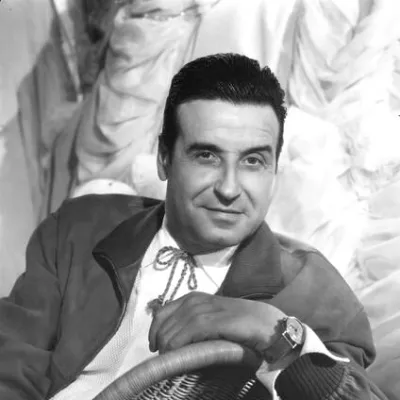
Zachary Levi
Human Design Chart
Biography
Levi starred as Georg Nowack in the 2016 Broadway revival of She Loves Me opposite Laura Benanti, for which he received a Tony Award nomination. He voiced Flynn Rider in the 2010 animated film Tangled, where he performed "I See the Light" with Mandy Moore; the song won a Grammy for Best Song Written for Visual Media. He reprised the voice role in the 2012 short film Tangled Ever After and a 2017 Disney Channel television series based on the film. He has appeared in the Marvel Cinematic Universe films Thor: The Dark World (2013) and Thor: Ragnarok (2017) as Fandral.
On 16 June 2014, Canadian actress Missy Peregrym announced that she and Levi had married in Maui, Hawaii. They filed for divorce in April 2015, with the separation date listed in court documents as 3 December 2014.
Zachary Levi — Projector with Profile 3/5
Projector 3/5 — Design at a Glance
Zachary Levi revealed himself through an aura that seemed like a focused flashlight: it shone light exactly where other people's systems still had darkness. As a Projector, he possessed the innate ability to immediately recognize errors or inefficiencies in his surroundings. This diagnostic power was, however, a double-edged sword. If he confronted these deficits directly, it often felt like blinding light to those around him – uncomfortable and confrontational. His true strength unfolded only when he lived these insights not as criticism but as a shining example. By embodying harmony himself, he became attractive to others; they came to him naturally, seeking his secrets.
His strategy was to wait for an honest and appreciative invitation rather than pushing forward on his own initiative. Without a defined Sacral Center, Zachary Levi lacked a constant, intrinsic source of energy. Instead, he went through phases of high productivity followed by necessary rest periods for recovery. If he ignored this need for rhythm and tried to maintain a constant work mode, burnout was imminent. Living according to his nature – waiting for the invitation and taking breaks – rewarded him with success. Missing this path led sooner or later to his Non-Self experience of bitterness, a sign that he was not in his true element.
Splenic Authority
Zachary Levi exhibited a fundamental disposition of intuitive spontaneity: His design suggested that he did not make decisions through prolonged deliberation but rather trusted in a fine, momentary impulse. This tendency stemmed from his authority in the Spleen Center. Since his Emotional and Sacral Centers were open – a prerequisite for this specific form of authority in Projectors or Manifestors – his Spleen served as a central health and alarm system. It provided him with vital intelligence that immediately signaled whether a situation, place, or society was beneficial or not.
This inner compass was subtle; the first impulse was always the right path to preserve his well-being and served as protection against harmful influences. Because this signal only came once in the moment and could easily be drowned out by external voices, his decision-making required high vigilance. Often a brief retreat helped him hear this fine tone again. Long-term planning took a back seat to the necessity of flexibility. Since his knowledge about what was "right" only revealed itself here and now, his priorities often changed frequently in the short term. His design therefore advised him to commit little and maintain much room for spontaneous adjustments rather than following rigid plans.
The 3/5 Profile — Martyr / Heretic
Zachary Levi's Design inclined towards a heroic and experimental attitude. As a 3/5 Profile – the Experimenter and Hero – a fundamental structure emerged where knowledge was gathered through personal experimentation (Line 3) to later present it as a solution for others (Line 5). This created a natural appeal: Others saw in him someone who had learned from practical experiences, including failures. Line 3 brought with it the "fanatical zeal" to establish connections and correct materiality – often by thorough cleaning or breaking old forms. Simultaneously, Line 5 through Gate 52 endowed Zachary Levi with the ability for precise explanation. During phases of inactivity or crisis, he could maintain focus until clear communication was necessary. This combination of passionate action followed by later focused mediation created an image of a cool storyteller. The appeal of this Profile lay in its self-earned knowledge serving as guidance for others. However, the public nature of these experiments could also make him vulnerable: Failing in front of others was particularly painful for this configuration, as it directly affected the heroic role inherent to his Profile.
Split Definition — Defined & Open Centers
Zachary Levi's Human Design shows a tendency towards continuous mental activity. His defined Ajna Center ensured constant, specific thinking; concepts and theories were familiar to him, but not the ability to meditate, as his mind was always „on“. This mental energy flowed directly into his defined Throat Center, allowing him to express what he thought. Communication thus became a reliable expression of his inner logic, coupled with a firm way to manifest and transform.
Parallel to this, his defined Spleen Center served as a source for spontaneous intuition and existential awareness in the present moment. It provided vital warning signals about health and well-being that he had to trust rather than rationalize. Together with the defined Root Center, he possessed a constant inner drive to move forward – whether through logical structure or cyclical development – to thrive materially and make corrections.
This stable interior stood in contrast to his open centers. His open Head Center made him vulnerable to mental confusion; he tended to identify with others' questions or seek inspiration instead of listening to his own authority. His open G Center meant no fixed identity: He mirrored the environment and found direction only through the right place and suitable people, rather than determining it himself. The lack of a constant willpower characterized his open Heart Center; he avoided promises to avoid spirals of self-proof. Additionally, his open Sacral Center was responsible for unstable energy – present one moment, absent the next – necessitating rest phases instead of continuous generative work. Finally, his open Solar Plexus Center absorbed external emotions; he had to learn to recognize these moods as foreign and not identify with them to remain emotionally stable.
Channels for mental order and scrutinizing logic.
Zachary Levi displayed a fundamental approach where logical order and detailed analysis were at the forefront. His mind was permanently occupied with structuring information mentally and integrating it into a coherent worldview. This ability stemmed from Channel Accepting 17-62, connecting Gate of Opinions (17) with Gate of Details (62), translating visual patterns verbally. Anything he could not logically fit into this system remained incomprehensible to him. Simultaneously, his design exerted constant pressure to articulate these organized thoughts for clarity and relief.
Parallel to this, Channel Judgment 58-18 was at work. It connected Gate of Vitality (58) with Gate of Correction (18), creating an insatiable drive to question and perfect patterns. For Zachary Levi, it was crucial to provide evidence for the best solution and correct imbalances. This process served to regain joy in life through functioning structures. Critical assessments were only effective when expressed at invitation or open receptivity; otherwise, he risked resistance.
Additionally, individual gates shaped his perception: Gate 52 demanded intense concentration for pattern correction while Gate 35 sought change through new experiences. Gate 50 fostered a conservative protective reflex and preservation of traditions, connected with the continuity search of Gate 32. In the realm of intuition, Gates 60 (acceptance of limitations), 47 (meaning from past) and 57 (intuitive clarity) were active. Finally, Gates 4 (formulation of future-proof solutions) and 43 (breakthrough of individual insights) supported his ability to penetrate complex connections and explain them clearly.
Collective Circuitry — Circuit Signature
Zachary Levi sought to connect logical insights with a clear, visual strategy. His design inclined towards not only analyzing information but bringing it into tangible form – free from disruptive emotions, purely rational. This stance resulted from the Understanding Circuit, which in him formed two separate energetic strands.
On one hand, Channel „Accepting“ connected Ajna Center with Throat Center, creating a direct line from inner perception to outer communication: What he saw and structured could be immediately articulated. It was about sharing focused ideas based on visual or strategic foundations.
Parallel to this, a second independent strand operated through Channel „Judgment“, linking Spleen and Root Centers. Here, the intuitive ability for risk assessment flowed directly into action capability. This connection ensured that his instinctive decisions did not remain theoretical but showed in concrete energy and endurance.
Since these two groups – the communicative Ajna-Throat system and the action-oriented Spleen-Root system – were energetically separate, they existed as parallel forces. They formed no single continuous flow but shaped his essence through two parallel, independent competencies: the ability for clear, strategic articulation and the intuitive, immediate implementation of intuition into action.
Right Angle Cross of Service 3
Zachary Levi's Human Design shows a tendency towards deep, often quiet dedication to the well-being of others. This attitude is not expressed through loud engagement but rather as an inner commitment that works in the background and provides stability. The right service cross 3 describes this dynamic exactly: It is a pattern of unobtrusive support where the individual directs their energy toward helping others without losing focus on themselves or seeking recognition.
This configuration acts like an invisible foundation in interpersonal relationships. Those who carry this cross tend to take responsibility for their environment by providing practical help or emotional security – always from a place of giving, not taking. It is about a form of service that happens behind the scenes and whose value often only becomes visible when it's missing.
For Zachary Levi, this means his strength lies in working through continuous, reliable presence. He does not seek the spotlight but finds confirmation in being there for others. This energy shapes his actions with quiet endurance: he endures when things get tough and supports where needed without losing his own identity. It is a service to the community that arises from inner conviction and is not steered by external expectations.
Saturn Return · Uranus Opposition — Life Cycles
Zachary Levi has shown himself as someone who stabilizes his energy through structural affirmation and clear definitions. His design tends towards unfolding in phases where external conditions mirror his internal direction. This became evident in 2007, at the age of 27, when he took on the role of Chuck Bartowski and gained greater recognition. For his design, this was a typical moment of the first Saturn return. During this life phase, years of groundwork often condense into a solid result. The structure symbolized by the Saturn return acts like a foundation upon which previous efforts can be consolidated. Levi used this period not only for professional success but to anchor his identity in a new, stable position. The Saturn cycle does not demand spontaneous breakout power here, but rather the ability to hold and deepen what has been gained. This mechanism shows how external recognition can go hand in hand with inner maturity when one is ready to take responsibility for their own stance. Levi anchored himself in this role, allowing him to establish his creative strength on a sustainable basis. The challenge lay in not experiencing the new visibility as mere hype but rather as confirmation of long-term development. Thus, the Saturn return became a catalyst for a phase of consolidation and growing influence in his career.
Projector · Splenic Authority — Synthesis
Zachary Levi's design shows a clear continuity of perception and understanding that runs through his entire nature. As a projector with defined Ajna center (mental awareness) and the channel of Acceptance (Gate 17/62), he is geared towards recognizing patterns, organizing information, and bringing 'light into darkness' for other people. This ability to identify errors in the system and grasp details is reinforced by his profile as an experimenter/hero – experiences are collected to accumulate knowledge and then passed on. The Spleen authority underscores the intuitive, instinctive component of this perception, a fine sense of what is right that helps him to set boundaries and take care of himself.
The central paradox in his design, however, is the tension between the need to share his knowledge (projector, channel of Acceptance) and how best to do so. The tendency to immediately point out errors can provoke resistance, while the Spleen center demands a spontaneous, instinctive reaction – an inner impulse that should not be slowed down by logical analysis. This creates a field of tension between the urge to analyze and the necessity to act authentically in the moment to effectively 'project' and truly serve others.
2 Defined Channels
Incarnation Cross - Right Angle Cross of Service 3
Solar Return
The Solar Return shows the moment when the sun returns to its exact birth position - your personal solar year.
Life Cycles
Discover the life cycles with a detailed triple view (birth chart, cycle chart, composite).
Human Design Profile
- Type
- Projector
- Strategy
- Wait for the respectful invitation
- Authority
- Splenic Authority
- Profile
- 3/5 - Martyr / Heretic
- Definition
- Split Definition
- Incarnation Cross
- Right Angle Cross of Service 3
- Date of Birth
- 29.09.1980 02:41
- Place of Birth
- Lake Charles, LA, United States
Frequently Asked Questions
What is Zachary Levi's Human Design type?
Which Profile does Zachary Levi have in Human Design?
What authority determines Zachary Levi's decisions?
What is Zachary Levi's incarnation cross?
When was Zachary Levi born?
Discover your own Human Design
Are you also a Projector? Find out in a personal reading how to unfold your leadership qualities and recognize the right invitations.
More Personalities
Back to overviewSissy Spacek

Alain-Fournier

Anémone

Ann-Margret

Bourvil

Christian-Jaque