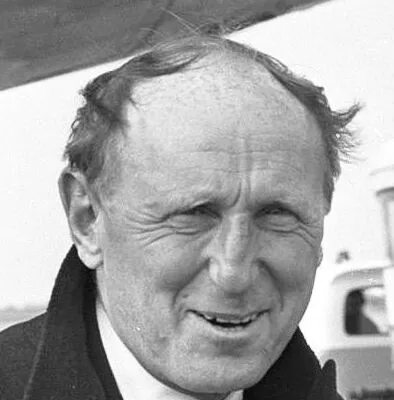
Alphonse Areola
Human Design Chart
Biography
He also represented France at every youth level and was part of the France U20 side that won the FIFA U-20 World Cup in 2013.
What does Projector 4/6 mean for Alphonse Areola?
Projector 4/6 — Design at a Glance
Alphonse Areolas design leans towards an immediate systemic diagnosis. His aura acts like a bright flashlight that focuses directly on weaknesses in his environment and makes flaws in the system immediately visible. However, this ability to 'shed light into darkness' is only effective if he does not impose it forcefully. Directly addressing other people's deficits would provoke resistance; instead, his own harmonious glow attracted them. People came to him naturally for advice as soon as he lived authentically.
The central strategy was to wait for an honest invitation. This served as a protective mechanism and path to recognition. Without this confirmation, he risked wasting his limited energy. His undefined Sacral Center meant the absence of a constant source of life energy. Instead, he experienced phases of high activity followed by mandatory rest periods for regeneration. Ignoring this rhythm inevitably led to burnout and the feeling of bitterness – his non-self theme. Conversely, adhering to his design rewarded him with success. Alphonse Areola thus showed himself as someone who effectively applied his deep insight through restraint and waiting for the right invitation without generating resistance or exhausting himself.
Emotional Authority
Alphonse Areolas design leans towards hesitant decision-making where spontaneous impulses are consciously put aside. His inner authority is marked by the defined Solar Plexus Center. In Human Design mechanics, this emotional authority always takes precedence over other defined centers regardless of further configurations in the chart. This means that Alphonse Areola was subject to an emotional wave that showed itself through a constant up and down of his feelings. He saw the world colored by his current mood; a moment of enthusiasm could quickly turn into a negative evaluation of the same thing. However, his feeling in the moment was only a snapshot, not a secured truth value. Quick, spontaneous decisions based on such emotion would have had negative consequences. Instead, his design required patience and multiple reconsiderations of questions. The more time Alphonse Areola took to let a decision mature, the deeper he could see. Over time, intense feelings subsided, emotional distance set in, clarity and calmness emerged. This process was particularly important for long-term decisions that could have a significant impact on his life course. By waiting for the cooling down of his emotions, he gained the necessary distance to find his true truth instead of being led by transient moods.
The 4/6 Profile — Opportunist / Role Model
Alphonse Areolas design leans towards developing from an experimental early work into the role of a gentle example. In the first three decades of his life, he acted like a pure experimenter who particularly tried out much in relationships and friendships. This phase of learning through experience decisively shaped his early development.
With the onset of later life phases, however, an inner conflict became apparent: The need for community stood against the desire for detached reflection on the meaning of life. This tension between heart and head demanded a clear orientation. He was expected to act as a wise role model that primarily emerges through cooperation with other people. At the same time, his large heart remained cautious not to open up to the wrong people and get hurt.
His leadership was based less on direct power but rather on providing resources for his family and environment and respecting traditional hierarchies. Simultaneously, he trusted in details and found joy in small steps. This process of trusting in persistence was central: The path itself became the goal, never completed but enriched by each individual step. This combination of principled role modeling and patient work on detail allowed him to respect traditional structures while leading through his own behavior.
Triple Split Definition — Defined & Open Centers
Alphonse Areolas design shows a tendency towards massive, loud mental activity driven by strong willpower and emotional depth. He was someone whose mind constantly asked questions and formed concepts – an effect of the defined Head Center and Ajna Center. This connection created constant mental pressure to understand and comprehend without providing the energy for direct implementation. Instead, this inspiration served to encourage others to think.
This mental clarity flowed into a reliable communication ability due to the also defined Throat Center. Alphonse Areola could express what he thought or felt, often influenced by the strong willpower of his Heart Center. This gave him the ability to make promises and use his ego and resources self-determinedly. Parallel to this, the defined Solar Plexus Center acted as an emotional authority: He had to practice patience to find clarity through waves of emotions before acting. His intuition in the present moment was protected by the defined Spleen Center and spontaneously reliable.
In contrast, G Center, Sacral, and Root Centers were open. Alphonse Areola did not have a fixed identity or constant work energy. The open G Center made him vulnerable to seeking external confirmation of direction and love; he tended to question who he really was or where his place lay instead of waiting for initiation from the environment. His open Sacral Center meant no consistent energy flow; he risked exhaustion if he fought against external pressure or used borrowed vitality, rather than responding to proper invitation. Similarly, the open Root Center absorbed stress from the environment, making him vulnerable to burnout if he tried to rid himself of this non-self-imposed pressure through overactivity. His challenge was not to confuse his strong mental and emotional presence with the attempt to force identity or energy from outside.
Channels for community, intuitive communication and clear insight.
Alphonse Areolas design focuses clearly on emotional belonging and the need to find a place in a community. As an individuality channel, Channel 37-40 shaped his essence significantly; it connected Gate of Friendship (37) with Gate of Solitude (40). This configuration created a deep inner desire for invitation and recognition to build bridges with others. It was not about spontaneous connections but carefully weighed 'good deals', where emotional clarity builds over time – an exchange of benefit ('I do this for you, if you do that for me'), ensuring loyalty and mutual support in groups.
Parallel to this, Alphonse Areola showed himself as an individual thinker whose mind did not function through logical planning but spontaneous inspiration. Channel 61-24 connected Gate of Secrets (61) in the Head Center with Gate of Rationalizing (24) in the Ajna Center. Here knowledge was not gained through effort, but as a sudden 'Satori' moment when mental silence entered. His task was to recognize and distinguish what was worth knowing rather than trying to bring everything under control.
In practical application of his abilities, Channel 48-16 came into play. It connected the intuitive depth of Gate (48) with the skillfulness and perfectionism of Gate (16). This described a process where talent developed through repeated experimentation and long-term engagement. However, to master these skills and express them as unique wavelengths, recognition from others and provision of external resources were crucial; without this support, the potential for perfection remained untapped.
Tribal Circuitry — Circuit Signature
Alphonse Areolas design shows a tendency towards situational reaction driven by three parallel, not directly connected energy blocks. As a Triple Defined individual, he did not have a constant inner motor but reacted to external impulses.
The Knowledge Circuit connected his Head and Ajna Centers. This created pulsating creativity: innovative flashes of insight (Channel 24-61) allowed generating new insights and expressing personal identity through emotional authenticity. Parallel to this, the Understanding Circuit, connecting Throat and Spleen Centers, dominated focused visual logic (Channel 16-48), aiming at improving structures and sharing rational insights for the future – free from emotional coloring.
A third, separate block formed with the Ego Circuit involving Heart and Solar Plexus Centers. Channel 37-40 regulated the relationship of giving and taking as well as mutual support in social contexts. As there was no connection to the Sacral Center, this energy was not consistently available. It required pauses for regeneration to build resources for the community.
In summary, Alphonse Areola showed himself as someone who used creative transformation and logical structuring parallelly without falling into constant activity. His strength lay in developing new ideas emotionally grounded while simultaneously designing strategically implementable systems, carefully dosing his social resources.
Right Angle Cross of Planning 1
Alphonse Areolas Human-Design chart indicates a tendency towards strategic approach where internal clarity about the next step precedes external action. His chart shows the right cross of Planning 1, a configuration that does not promote spontaneous impulses but requires thorough preparation.
This structure means that Alphonse Areola uses his energy most effectively when he takes time to fully grasp situations and develop a clear plan. This is not about hesitation or uncertainty, but rather the necessity to gather the right information before making decisions. The Planning 1 right cross gives him the ability to see through complex connections and derive a logical sequence of actions from them.
Therefore, it is crucial for Alphonse Areola not to act under pressure or be driven by external expectations towards quick reactions. His strength lies in calm analysis and meticulous strategy development. If he respects this inner order and follows his own rhythm of planning, he can achieve his goals with great precision and efficiency. This design supports him in translating long-term visions into concrete, actionable steps, where the quality of the outcome directly depends on the thoroughness of his preliminary considerations.
Saturn Return — Life Cycles
Alphonse Areolas Human-Design chart indicates a tendency towards structural anchoring, especially during phases marking the transition to established identity. This was evident in 2020: at age 27, he became Spanish Champion and Supercup winner with Real Madrid. For his design, this was a typical moment of the first major maturation phase, often around the first Saturn Return cycle (about age 29). This phase marks the step from young adulthood to clear responsibility and consolidation.
The mechanics behind it describe a process of alignment: earlier ambitions and dreams are not simply continued but compared with real life circumstances and reinforced. The success in 2020 served as proof for this internal structuring. It was no random peak, but an expression of how Alphonse Areola stabilized his position within the system during this period of life. Through this milestone, the groundwork of previous years condensed into a sustainable result. This energy served to create a basis for future responsibility by showing that his potential could stand up under real conditions. This consolidation is central to developing a mature identity based not just on possibilities but on proven reliability and strength.
Projector · Emotional Authority — Synthesis
Alphonse Areola seems marked by a deep inner drive towards perfection, manifesting through the connection of intuition and repeated practice (Channel 16/48). His ability to grasp details and refine skills is reinforced by a strong willpower that drives him to provide resources for his community (Channel 37/40). He navigates skillfully between the desire for belonging and the necessity to find his own path – an ongoing balance between heart and head (Profile 4/6). The mental clarity created through defined Head and Ajna Centers allows him to recognize patterns and develop innovative solutions.
A central paradox in his design lies in the interplay of inner depth and the need for external validation. While he possesses a pronounced ability to recognize and fulfill others' needs (Gate 40), he simultaneously requires recognition and reward for his talents (Gate 37). This tension between giving and receiving is amplified by the emotional wave pattern, which gives him time for internal clarification before making decisions. He is thus both an intuitive observer and an engaged actor capable of bringing about deep changes within his community.
3 Defined Channels
Incarnation Cross - Right Angle Cross of Planning 1
Solar Return
The Solar Return shows the moment when the sun returns to its exact birth position - your personal solar year.
Life Cycles
Discover the life cycles with a detailed triple view (birth chart, cycle chart, composite).
Human Design Profile
- Type
- Projector
- Strategy
- Wait for the respectful invitation
- Authority
- Emotional Authority
- Profile
- 4/6 - Opportunist / Role Model
- Definition
- Triple Split
- Incarnation Cross
- Right Angle Cross of Planning 1
- Date of Birth
- 27.02.1993 06:40
- Place of Birth
- Paris Arrondissement 15, France
Frequently Asked Questions
What is Alphonse Areola's Human Design type?
What Profile does Alphonse Areola have in Human Design?
Which authority governs Alphonse Areola's decisions?
Which incarnation cross is active for Alphonse Areola?
When was Alphonse Areola born?
Discover your own Human Design
Are you also a Projector? Find out in a personal reading how to unfold your leadership qualities and recognize the right invitations.
More Personalities
Back to overviewSissy Spacek
Alain-Fournier

Aldair
Anémone
Ann-Margret
Bourvil