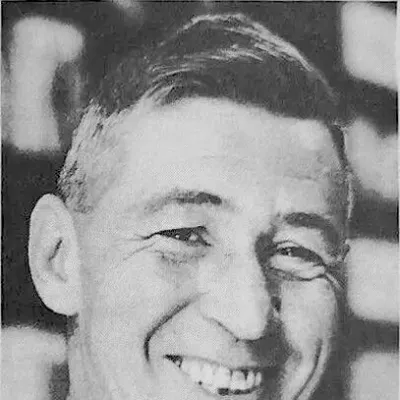
Photo: Wikimedia Commons
Alphonse Poitevin
Human Design Chart
Biography
In the 1850s he discovered that gelatin in combination with either potassium or ammonium bichromate hardens in proportion to the amount of light that falls on it. This discovery, significant for its capacity to facilitate the mass production of photographs, was later used by numerous figures such as Josef Albert, Joseph Wilson Swan, Paul Pretsch and Charles Nègre to develop subsequent photographic printing processes such as heliogravure, photogravure, collotype, autotype and carbon print.
He died in Conflans-sur-Anille on 4 March 1882.
Human Design Analysis: Alphonse Poitevin as Projector 6/2
Projector 6/2 — Design at a Glance
Alphonse Poitevin's Human Design pointed towards a tendency for precise diagnosis: he immediately recognized where errors lay in other systems. As a Projector, he did not have a constant, intrinsic source of life energy, but rather a dense, focusing aura that worked like a bright flashlight. This quality allowed him to bring 'light into the darkness' for others and illuminate their path. However, this direct exposure of weaknesses in the environment could be perceived as unpleasant, akin to shining bright light directly into someone's face. The most effective strategy for Alphonse Poitevin was not to address problems immediately, but to attract others through his own harmony. When he shone pleasantly, people automatically sought his advice. His design required him to wait for a valuable and sincerely meant invitation from others before he acted. Since his Sacral Center was undefined, he lacked a continuous source of energy. He went through phases of high productivity, followed by mandatory rest phases to prevent burnout. Living according to this design rewarded him with success. Ignoring this structure and the necessity of the invitation led to his non-self theme: Bitterness. His path was characterized by the balance between his diagnostic sharpness and the patience to wait until his judgment was sought.
Splenic Authority
Alphonse Poitevin was someone who did not make decisions through prolonged deliberation but trusted an immediate, physical impulse. His design determined that his inner authority lay in the Spleen Center. Since both his Emotional Center and his Sacral Center were open, he belonged to the few Projectors or Manifestors who possessed this specific survival intelligence. The Spleen Center functioned as his alarm system and health guardian. It provided him with spontaneous inner knowledge about whether a situation, environment, or society was right or harmful for him. His instinct and physical well-being served as reliable indicators.
This impulse was, however, very subtle and only appeared once in the immediate moment. It could easily be overshadowed or ignored by other influences, which required high vigilance from Alphonse Poitevin. Often, a short retreat helped him to clearly hear this first, spontaneous impulse, as it directly served his health. This mechanism allowed him to rigorously shield himself against harmful influences and take good care of himself. Since he only knew what was right in the moment, his plans often changed short-term. Long-term commitments were therefore difficult. His design required a lot of freedom and flexibility, so he could spontaneously engage with things rather than binding himself long-term.
The 6/2 Profile — Role Model / Hermit
Alphonse Poitevin's design was marked by a clear shift in midlife. In the first three decades, he acted as an Explorer, learning through trial and error. This phase of the 6/2 line resembled a 3-line: Alphonse Poitevin gathered diverse experiences, withdrew after failures, and sought the perfect partner. Gate 59 promoted openness and the willingness to enter into unions, with Venus deepening the relationship temporarily or permanently.
After the age of 30, with the return of Saturn, his attitude fundamentally changed. The sixth line became active, prompting Alphonse Poitevin to engage in intensive reflection. He metaphorically retreated into a 'cave' to look back at his earlier experiments with distance. This period served for healing and deep self-awareness. At the same time, Gate 16 shaped his way of dealing with others. As the second generation of this gate, he showed self-confidence and objective judgment, but was selective. He wanted to be called, rather than seek out others. Without sufficient energy, this selectivity could appear cynical, as he quickly recognized whether ideas were realizable.
From this phase of isolation and testing, Alphonse Poitevin emerged as a wise person. Others sought him out to partake in his life wisdom. His ability for deep introspection, honed through years of distance and analysis, became the foundation on which others could gain their own insights. He embodied the development from unbound searching to bound, reflective wisdom.
Split Definition — Defined & Open Centers
Alphonse Poitevin revealed himself through a reliable, stable identity and a clear inner compass. His defined G Center gave him a deep sense of direction and a need to be loved without becoming dependent. This inner security allowed him to show others new paths, provided he trusted his own authority rather than fulfilling others' expectations.
His actions and statements were marked by his defined Throat Center, which served as a pivot for communication. He spoke from a constant source, giving him a clear and honest way of expression. Combined with his defined Heart Center, which steered willpower and ego, Alphonse Poitevin could give promises and keep them. He preferred to determine his life himself and control his resources, giving him the strength to take care of his family and community as long as he maintained his inner balance.
At the same time, he possessed a defined Spleen Center, which stood for intuition and health awareness. This prompted him to listen to spontaneous, momentary warning signals of his body, rather than rationalizing them. His survival depended on trusting this instinctive knowledge in the "now" to protect himself from danger and maintain his well-being.
In contrast, Alphonse Poitevin was vulnerable to external influences in other areas. His open Head Center made him receptive to mental inspirations and doubts that did not always originate from him. He tended to engage with questions that actually belonged to others and sometimes desperately sought answers to relieve mental pressure. His open Ajna Center amplified this mental flexibility but also put him at risk of accepting foreign concepts as his own truth or feigning uncertainty to be accepted.
His open Sacral Center meant that he did not have a constant vital energy but absorbed and amplified the life force of his environment. This led to him easily overextending himself if he did not listen to his limits and he had to learn when it was time to withdraw and rest rather than working on "borrowed" energy. Similarly, his open Solar Plexus absorbed the emotions of others, making him vulnerable to emotional waves that were not his own. He had to learn not to personalize these feelings but to use them as a barometer for the emotional climate. Finally, his open Root Center took on the stress and adrenalized pressure of his environment, which often prompted him to try to escape this pressure rather than recognizing it as an external factor.
Channels for intuitive perception and spiritual pioneering spirit.
Alphonse Poitevin revealed himself as someone who combined intuitive depth with technical precision. His design indicated a tendency to perfect skills through repeated experimentation until they reached mastery. This attitude stemmed from the Channel of Wavelength 48-16, which connected the Spleen Center with the Throat Center. Gate 48 sought out vital information, while Gate 16 experimented with new possibilities and refined dexterity. Through this connection, pure technique was transformed into a talent that he could communicate. However, recognition and resources were needed to maintain this process of perfection.
Parallel to this, the Initiation Channel 51-25 was active in Alphonse Poitevin, running through the Heart Center. Here, the competitive energy of Gate 51, which always wanted to be first, met the universal love and Higher Self of Gate 25. This configuration fostered a natural competitiveness that served to inspire others to individualize. Alphonse Poitevin was designed to enable initiations through "shocks" or challenges that expanded consciousness. He awakened competitiveness in others to strengthen them, but had to wait for an invitation to avoid bitterness.
Additionally, prioritized Gates contributed to the structure: Gate 59 pursued a genetic strategy of attachment, Gate 55 brought emotional mood swings, and Gate 9 enabled precise work in the Sacral Center. Gate 21 steered material aspects, Gate 12 promoted creative restraint, and Gate 26 helped to anchor innovations in the Root Center. Gate 57 offered intuitive clarity, Gate 31 transmitted leadership, and Gate 13 collected experiences for collective memory. Together, these elements formed a Profile oriented towards the refinement of talent and the initiation of change.
Individual Circuitry — Circuit Signature
Alphonse Poitevin revealed himself as someone with a firm self-worth and clear, individual beliefs, which were often hard to put into words. This inner strength came from the Centering Circuit, which in him connected the Identity Center directly to the Heart Center through the Initiation Channel. This connection strengthened his self-image and courage, but without a link to the Throat Center, it made the external articulation of these deep certainties difficult.
Parallel to this, a separate mechanism of rational analysis was at work. Through the Understanding Circuit, specifically the Wavelength Channel, Alphonse Poitevin connected the Throat Center with the Spleen Center. This allowed him to formulate and share logical insights and strategic structures, free from emotional coloring. Since he had a Split Definition, these two energy fields—the inner, individual constancy and the outer, rational communication—existed as separate, not directly connected streams. They shaped his essence side by side: on one hand, the silent, pulsating power of his own identity, and on the other, the focused, visual clarity of his mind, aimed at improving things and sharing knowledge.
Left Angle Cross of Spirit 2
Alphonse Poitevin revealed himself as someone who intuitively grasped deeper spiritual connections and translated these insights into the material world. His design carried the signature of the left cross of Spirit 2, a configuration that establishes a specific link between inner experience and outer reality. This mechanism described a life task where the invisible was made visible and spiritual truths were formulated in a way that made them tangible and applicable to others. It was not abstract mysticism but a practical application of wisdom in everyday life. Alphonse Poitevin lived this tendency by translating his inner visions into concrete actions or expressions. The left cross of Spirit 2 grants a particular clarity on how spiritual principles can be effective in physical life. It was about building bridges between what happens in the mind or soul and what occurs in the material world. This ability allowed him to communicate complex ideas in a simple and accessible manner. His path was marked by the effort to bridge the gap between the transcendent and the mundane without losing the depth of spiritual experience.
Saturn Return · Uranus Opposition · Chiron Return · 2nd Saturn Return — Life Cycles
Alphonse Poitevin revealed himself as someone who, in the middle of life, took a decisive turn towards concrete, material realization. His design showed a tendency to question established structures and replace them with new, often technologically innovative approaches. This dynamic was triggered by the Uranus opposition, a cycle that typically begins at the age of 42 and breaks down old habits and outdated patterns to make room for renewal and individual freedom. It was not a random rebellion but a necessary mechanical correction that forced him to break away from collective expectations and find his own path.
In 1861, at the age of 42, this energy fully manifested in Alphonse Poitevin: He produced carbon prints on silver chloride paper. This event marked the point where the internal unrest of the Uranus opposition culminated in a groundbreaking creation. The development of this printing technique was a direct expression of his need to distance himself from the conventional methods of his time and establish a new, independent form of expression. Through this innovation, he fulfilled the mechanical task of this cycle, namely breaking with tradition to bring a new, personal truth into the world.
Projector · Splenic Authority — Synthesis
Alphonse Poitevin lived as a Projector, whose energy was focused on recognizing and illuminating the potential of others (Design Perspective). This ability to identify flaws in the system (Design Perspective) was inseparable from his Spleen Authority – an instinctive knowledge of what was healthy and right for him. Through the Channel of the Wave (Channels/Gates), this inner wisdom was connected to the ability to communicate his observations and perfect skills. His profile as a Role Model/Innate Talent (Profile Role) suggests that after a phase of experimentation, he returned to the role of the wise observer, whose insights attracted others. Thus, he developed a deep, instinctive competence that he could effectively use in his environment.
A central paradox in his design lay in the tension between the Projector need to 'bring light into the dark' (Design Perspective) and the subtle, inner nature of his Spleen Authority. While he tended to recognize the potentials and weaknesses of others, his decision-making required a moment of inner silence and instinct. This led to an internal dynamic where the need to express his perspective (Throat Center, Channels/Gates) clashed with the need for inner boundary setting and trust in his spontaneous impulse (Spleen Center, Authority).
2 Defined Channels
Incarnation Cross - Left Angle Cross of Spirit 2
Solar Return
The Solar Return shows the moment when the sun returns to its exact birth position - your personal solar year.
Life Cycles
Discover the life cycles with a detailed triple view (birth chart, cycle chart, composite).
Human Design Profile
- Type
- Projector
- Strategy
- Wait for the respectful invitation
- Authority
- Splenic Authority
- Profile
- 6/2 - Role Model / Hermit
- Definition
- Split Definition
- Incarnation Cross
- Left Angle Cross of Spirit 2
- Date of Birth
- 29.08.1819 01:00
- Place of Birth
- Conflans-sur-Anille, France
Frequently Asked Questions
What was Alphonse Poitevin's Human Design type?
What was Alphonse Poitevin's Profile?
What was Alphonse Poitevin's Authority?
What incarnation cross did Alphonse Poitevin have?
When was Alphonse Poitevin born?
Discover your own Human Design
Are you also a Projector? Find out in a personal reading how to unfold your leadership qualities and recognize the right invitations.
More Personalities
Back to overviewSissy Spacek
Alain-Fournier
Anémone
Ann-Margret

Bourvil
Hergé