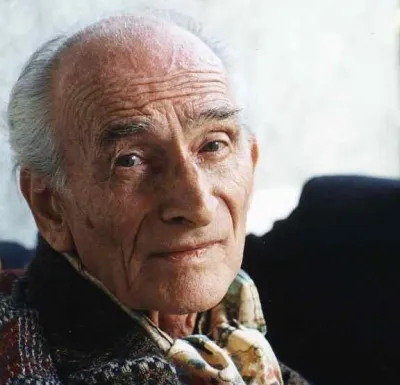
Bruce McEwen
Human Design Chart
Biography
McEwen published his first paper in 1959, and eventually published more than 700 peer-reviewed journal articles. He was co-author of the book The End of Stress As We Know It, with science writer Elizabeth Norton Lasley, and another book The Hostage Brain, with science writer Harold M. Schmeck Jr.
McEwen received numerous awards including a share of the IPSEN Foundation Prize in Neuroplasticity, and the Gold Medal award from the Society for Biological Psychiatry. He died on 2 January 2020 at age 81.
The Human Design of Bruce McEwen: Manifesting Generator 2/4
Manifesting Generator 2/4 — Design at a Glance
Bruce McEwens Design points towards a hybrid approach to work: He has the constant energy source of a Generator, yet he also possesses the ability to skip steps and quickly draw results into his life. As an Manifestor-Generator, he reacts to impulses from his defined Sacral Center but can follow this reaction at a speed that short-circuits typical processes.
This configuration brings two specific dynamics with it. First, there is the danger of skipping important intermediate steps through excessive speed, leading to the necessity of going back later and filling in gaps – a process that, if ignored, leads to frustration due to lack of inner resonance. Second, his design tends to react simultaneously to multiple impulses and start several projects at once.
The effectiveness of this energy depends crucially on whether he reacts to life rather than initiating himself, and whether his Sacral Center as well as his inner authority confirm the path that has been started. With correct alignment – that is, when there is inner consent ("Yes") – Bruce McEwen draws deep satisfaction from his work. In this state, parallel work is no obstacle but fosters a playful mode that best supports his creative power. Without this tuning, however, his otherwise great efficiency quickly turns into overload and dissatisfaction.
Sacral Authority
Bruce McEwen was a Generator whose decision-making was shaped by sacral authority. This internal guidance did not manifest in the Head Center but as a physical reaction to external stimuli: a gut feeling or a surge of energy. His strategy involved waiting and reacting, which simplified his process since strategy and authority were one and the same. A prerequisite for this was his open Emotional Center, ensuring that he did not act impulsively but waited for clear confirmation from his Sacral Center.
When this sacral engine kicked in, Bruce McEwen felt vital and alive. He seemed to have inexhaustible energy and tackled tasks with great enthusiasm. His life task involved participating in activities joyfully without necessarily subordinating them to an external purpose. Additionally, his activated Spleen Center acted as a supportive authority, giving him the ability to respond particularly quickly and spontaneously. He had direct access to his instinctive perception and physical well-being, making him reliable in orientation. This combination of sacral confirmation and spleen intuition allowed him to make decisions in the here and now, guided by deep inner knowledge of what felt right.
The 2/4 Profile — Hermit / Opportunist
Bruce McEwen showed himself as someone who oscillated between a deep need for withdrawal and the desire to connect with his closest community. His design indicated a tendency towards selectivity: he radiated limitations, which often led him to experience even more restrictions himself. This was not random but an expression of Line 2, demonstrating adaptability to constraints – sometimes even when these no longer existed. During his "me-time," Bruce McEwen immersed himself in internal processes to gain clarity and calm.
At the same time, he relied on Line 4 for his network. Here it was about carrying values outward and nurturing relationships. Yet this line also carried the potential for corruption: if enriching values were absent or laws weak, egoistic actions could succeed temporarily – a malevolent gift of Saturn in this position. The tension lay in needing the knowledge of his network to reflect upon it during his alone time and develop ideas from it. Therefore, clear communication was crucial for him: he had to make explicit when he sought company and when he wanted solitude. Only thus could he maintain the rhythm between cave and community without being overwhelmed by the limitations of Line 2 or external expectations of Line 4. His path involved integrating these two poles by protecting his boundaries while also connecting selectively.
Split Definition — Defined & Open Centers
Bruce McEwen's design indicated a tendency towards constant mental pressure. He lived with defined Head and Ajna centers, creating a permanent internal drive to question and understand connections. This state was not a choice but a mechanical given: inspiration appeared as an unresolved question seeking clarity. Since these centers did not have a direct energy motor, the attempt to immediately turn thoughts into action often led to frustration. Instead, his mental structure worked most effectively when he accepted the pressure and inspired others through questions rather than trying to force solutions himself.
This intellectual intensity contrasted with his open centers. His open Heart Center (status: open) made him vulnerable to the need to prove his worth. He tended to question whether he was doing enough or making promises he couldn't keep, in order to gain recognition. This pattern often led into spirals of self-doubt due to a lack of constant energy to enforce willpower. Similarly, his Solar Plexus Center was open (status: open). He absorbed the emotions of his environment like a sponge, which could lead him to misinterpret foreign moods as part of his own identity and shy away from emotional confrontations to maintain peace.
Despite these open areas, Bruce McEwen had a strong energetic foundation. His defined Sacral Center (status: defined) provided vital energy that was only correctly available through reaction to external impulses. Initiatives from the mind led here quickly to exhaustion. This was supported by his defined G Center (status: defined), which gave him clear inner direction and self-love, as well as a defined Spleen Center (status: defined) for spontaneous intuition in the present moment. His defined Root Center (status: defined) ensured constant physical pressure to maintain the life impulse. The challenge lay in not personalizing this mental and physical pressure but using it as a tool to inspire others without getting lost in the pitfalls of an open heart or emotional overload.
Channels for change, expressive power and mental clarity.
Bruce McEwen's design showed a tendency towards sudden, mutative change. Channel 60-3 connected his Root Center with his Sacral Center through Gate 60 (Limitation) and Gate 3 (Order). This configuration generated potential for evolutionary transformation that depended on the ability to accept limitation and move beyond the confusion of a new beginning. The energy of this channel was adrenalized and generative, characterized by powerful pulsing in-and-out energy, accompanied by melancholy. Bruce McEwen had to learn not to rationalize this mechanical moodiness but to patiently wait for new mutations to unfold.
Additionally, Channel 10-20 shaped his expression. It connected his G Center with his Throat Center through Gate 10 (Appearance) and Gate 20 (Now). This allowed him to recognize principles in the moment and transform individual knowledge into proper action. His survival depended on accepting himself and living as who he was, inspiring others to find their own truth.
Channel 34-10 connected his Sacral Center with his G Center through Gate 34 (Power) and Gate 10 (Self Behavior). Here lay the strength to hold onto personal convictions and love oneself. Bruce McEwen was inclined to go his own way, independent of societal expectations, where reactions from his Sacral Center supported this individuality.
Channel 34-20 connected his Sacral Center with his Throat Center through Gate 34 (Power) and Gate 20 (Now). This is a classic channel for Manifesting Generators, where the drive to act was guided by sacral reaction. His energy allowed him to maintain activity over longer periods as long as he only committed himself to things he truly enjoyed.
Channel 61-24 connected his Head Center with his Ajna Center through Gate 61 (Secrets) and Gate 24 (Rationalizing). This created an individual thinker who transformed inspiration into rational answers. Bruce McEwen experienced sudden moments of knowing, Satori, breaking old cycles.
Channel 54-32 connected his Root Center with his Spleen Center through Gate 54 (Ambition) and Gate 32 (Continuity). This drove him to rise through talent and competence motivated by the desire to be seen and improve his position in life.
Individual Gates like 50 (Protection Reflex), 56 (Stimulation), and 29 (Saying Yes) rounded out his profile, where Gate 50 nourished the body awareness process and Gate 56 translated mental processes into visual representations.
Individual Circuitry — Circuit Signature
Bruce McEwen's design indicated a tendency towards inner strength and impulsive creativity. Through Shared Definition, two separate energetic systems existed: a large network of Sacral, Root, Spleen, Identity, and Throat centers as well as an isolated pair of Head and Ajna centers. This separation created parallel forces that did not flow directly.
The Knowledge Circuit worked here in two separate parts: In the Head-Ajna area it promoted innovative flashes (Channel 24-61) and inspiration (Channel 3-60), while in the other part Sacral and Root centers carried mutations. The Centering Circuit connected through the Research Channel (10-34) Identity with the Sacral center, strengthening firm convictions and self-worth but without a direct expression channel to Throat.
The Ego Circuit used the Transformation Channel (32-54), linking Spleen intuition with Root energy, pointing towards resource-conserving action and necessary pauses. Finally, the Integration Circuit integrated through Awakening Channels (20-10) and Charisma (20-34) Throat, Sacral, and Identity centers into a coherent whole that drew power from reacting to life in the present moment. Bruce McEwen thus showed himself as someone with strong inner substance whose creative spark (Head/Ajna) acted separately from his action-oriented base while his core was shaped by the integration of intuition and expression ability.
Right Angle Cross of Laws 4
Bruce McEwens design carried the signature of the right cross of laws four. This configuration established a specific energetic alignment characterized by the connection between intuition and logical understanding. In Human Design, this cross represents a bridge between unconscious knowledge and conscious analysis. Bruce McEwen possessed the ability to not only sense intuitive insights but also translate them into clear, understandable structures.
The mechanics of this design promoted a deep understanding of complex connections without these necessarily being immediately apparent. Bruce McEwen processed information on a level beyond mere superficiality. The energy of the right cross of laws four supported aligning inner perceptions with external reality. This allowed him to recognize patterns that were hidden from others and present them in a form accessible to others. His way of seeing the world was marked by this synthesis of feeling and reason. It was a natural process of integration where the internal was brought into harmony with the external without it being experienced as conflict. Bruce McEwen lived this dynamic as a constant backdrop to his perception.
Saturn Return · Uranus Opposition · Chiron Return · 2nd Saturn Return — Life Cycles
Bruce McEwens design established a structure in which long-term discipline and structural confirmation played central roles. This became evident during his first Saturn return in 1964: At the age of 26, he earned his Ph.D. in cell biology from Rockefeller University. This cycle often marked the point where years of groundwork condensed into a solid academic foundation and strengthened the first major life structure.
Another defining pattern emerged during the Uranus opposition, a phase often associated with sudden turning points or questioning existing structures in Human Design. In 1981, at age 43, Bruce McEwen was appointed full professor at Rockefeller University. Rather than being marked by chaos, he used this energetic push to establish a firm position within the academic system, indicating his ability to integrate external changes into stable roles.
Validation of this life path occurred during his second Saturn return in 1994. At age 56, he was elected to membership in the American Academy of Arts and Sciences. This cycle acted as validation for what had been created; recognition by a prestigious institution underscored that his work was not only personally satisfying but also structurally integrated into the larger framework of his discipline. The sequence of these events highlighted a design drawing strength from the connection between individual expertise and institutional anchoring.
Manifesting Generator · Sacral Authority — Synthesis
Bruce McEwen was a Manifesting Generator, whose life was marked by profound inner dynamics. The combination of sacral energy and manifesting impulses (Design View) created an individual who responded to external stimuli but also quickly initiated actions. This interplay manifested in a constant movement between the need for internal reflection – characterized by his profile as a natural talent and networker – and the desire to connect with others and share knowledge (Centers: defined Head Center). The ability to draw inspiration from within and transform it was a central characteristic of his work.
A defining paradox in Bruce McEwens design lay in the tension between speed and thoroughness. As a Manifesting Generator, he tended to seize opportunities quickly (Channel Mutation), but could skip important steps in doing so. This required constant engagement with his impulse and readiness to step back and realign when necessary – a process reinforced by his defined Head Center. The recurring cycles (Cross: right cross of laws 4) underpinned this inner rhythm of quick action followed by reflection.
6 Defined Channels
Incarnation Cross - Right Angle Cross of Laws 4
Solar Return
The Solar Return shows the moment when the sun returns to its exact birth position - your personal solar year.
Life Cycles
Discover the life cycles with a detailed triple view (birth chart, cycle chart, composite).
Human Design Profile
- Strategy
- To respond - wait for something to respond to
- Authority
- Sacral Authority
- Profile
- 2/4 - Hermit / Opportunist
- Definition
- Split Definition
- Incarnation Cross
- Right Angle Cross of Laws 4
- Date of Birth
- 17.01.1938 22:10
- Place of Birth
- Fort Collins, CO, United States
Frequently Asked Questions
What is Bruce McEwen's Human Design type?
What Profile did Bruce McEwen have in Human Design?
What Authority did Bruce McEwen have?
What incarnation cross did Bruce McEwen have?
When was Bruce McEwen born?
Discover your own Human Design
Are you also a Manifesting Generator? Find out in a personal reading how to unfold your multi-talents and direct your energy wisely.
More Personalities
Back to overviewAldair

Alizée

Angeli

Arletty
Artus
Balthus