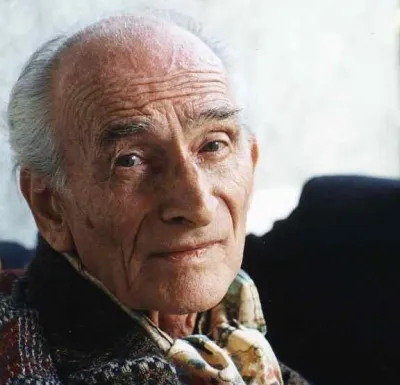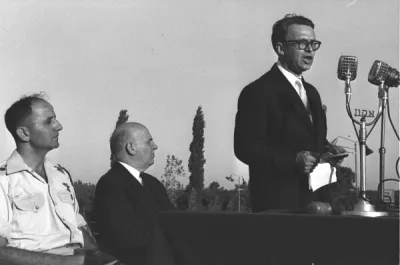
Ernst David Bergmann
Human Design Chart
Biography
Bergmann was the son of Rabbi Judah Bergmann. He studied at the University of Berlin under Wilhelm Schlenk, where he received his Ph.D. in 1927. Bergmann continued to work at the university, and with Schlenk, wrote Ausführliches Lehrbuch der Organischen Chemie, which was published in two volumes in 1932 and later in 1939; however, the fact that Bergmann was Jewish caused his name to be removed from the title page of the 1939 edition.
Bergmann left for London in 1933 soon after the Nazis came to power, and began work with chemist and Zionist leader Chaim Weizmann. He turned down an offer of a position at Oxford from Sir Robert Robinson, an event that Sir Robinson recalled years later with anger. Bergmann left Europe less than a year later, and arrived in The British Mandate of Palestine on 1 January 1934, to work at the Daniel Sieff Research Institute. During World War II he left to work on defense projects for the French, English, and Americans. Just a year after the war, Bergmann returned to the Sieff Institute in Rehovot, Israel, and continued there through its expansion in 1949 into the Weizmann Institute of Science.
During the next several years Bergmann, who had become famous through his work and connection with Weizmann, became close friends with David Ben-Gurion, and was appointed to several prominent government positions: chief of the Israel Defense Forces' science department in August 1948, science adviser to minister of defense on 15 July 1951, and director of research of the Division of Research and Infrastructure of the Ministry of Defense in early 1952.
Ernst David Bergmann — Manifesting Generator with Profile 4/6
Manifesting Generator 4/6 — Design at a Glance
Ernst David Bergmann's design inclines towards a hybrid work approach: He combines the constant energy of a Generator with the lightning-fast execution of a Manifestor. This configuration allows him to skip steps and quickly draw results into his life. However, this speed also carries risks. If Ernst David Bergmann skips important stages or starts too many projects simultaneously without paying attention to his inner consent, it often leads to frustration – his specific Non-Self theme. His success therefore depends less on linear planning than on the ability to respond to external impulses. Only when his sacral center gives a clear "yes" can he effectively use his energy. In this state, he falls into a playful mode that allows him to pursue multiple tasks simultaneously without losing dynamism. Constantly checking whether the ongoing work still brings joy is crucial. Thus, his natural sense of urgency transformed from a source of friction into a power source for deeper satisfaction. Ernst David Bergmann thus shows himself as someone who can best unleash his creative force through alternating responsiveness and quick action, provided he remains in harmony with his inner resonance.
Sacral Authority
Ernst David Bergmann's decision-making was primarily oriented towards sacral authority. As a Generator, his strategy was also his inner compass: He waited for external impulses and reacted to them rather than initiating or analyzing situations. This mechanism greatly simplified his process since he did not have to switch between strategy and authority.
His responses arose from physical resonance. Ernst David Bergmann showed himself lively and vital when his sacral motor responded to a stimulus. This often manifested as a gut feeling – a grunting, humming, or loud "mm-hm". When he felt energized and enthusiastic about something, he knew it fulfilled him. He lived joyfully in his activities without constantly questioning their purpose.
Additionally, his activated spleen center acted as a supportive instance. Since it might be directly connected to the sacral center, this gave his reactions speed and spontaneity. Ernst David Bergmann had immediate access to his instinctive perception and physical well-being. This connection enabled quick, reliable decisions based on a deep, physical level of authenticity. His "yes" or "no" was thus not an intellectual assessment but a direct, spontaneous response from his body to the world around him.
The 4/6 Profile — Opportunist / Role Model
Ernst David Bergmann's design set a tendency towards experimental behavior in his youth, driven by Profile 4/6. In the first three decades of his life, the sixth line acted like a third: he intensely experimented with relationships and friendships. This phase ended with his Saturn return, after which his inner self transformed.
Profile 4/6 describes an internal conflict between Heart Center and Head Center. The fourth line sought emotional connection and belonging to a community, while the sixth line demanded distance – the need to sit "on the mountain" and contemplate meaning. This contradiction between closeness and reflective distance could be confusing for Ernst David Bergmann.
In later years, this tension developed into a role of wise mentorship. The sixth line demands self-discipline, detail work, and correct communication to achieve material and intellectual results. At the same time, the "big heart" of the fourth line remained cautious; it opened selectively to avoid being hurt by false people. Thus, Ernst David Bergmann showed himself as someone who sought cooperation but always carefully considered whom he trusted. His development led from an experimental networker to a figure distinguished by principled integrity and authentic wisdom, without losing sight of necessary emotional caution.
Split Definition — Defined & Open Centers
Ernst David Bergmann's design inclined towards constant mental activity and clear communication. His defined Ajna Center ensured a continuous process of conceptual thinking; he processed data continuously and was hard to distract from external influences. This mental energy flowed directly into his defined Throat Center, allowing him to articulate what he thought. His voice served as a reliable channel for his concepts without acting impulsively but by structuring his thoughts before manifesting them.
His defined Sacral Center functioned as the motor, providing immense vital energy. However, this power required reaction rather than initiation; Ernst David Bergmann was most effective when responding to questions or offers instead of taking the first step himself. His defined Heart Center also provided constant willpower and ego strength, helping him keep promises and self-determine his resources. The defined Root Pressure supported him in dealing with stress and moving forward in the material world.
At the same time, he was situationally dependent on his environment due to open centers. His open Head Center made him susceptible to mental confusion or pressure to find answers that were not his own. The open G Center meant he did not carry a fixed identity but reflected himself in relationships and places; false environments could easily throw him off balance. His open Solar Plexus absorbed foreign emotions, which could lead him to personalize other people's moods or avoid confrontation to maintain emotional peace. Additionally, his open Spleen Center was marked by deep survival anxiety that could make him cling to unhealthy structures just to simulate a sense of security and well-being. These opennesses required constant deconditioning to not be drawn into the vortex of foreign fears and emotions.
Channels for mental order, value creation and natural maturation.
Ernst David Bergmann's design inclined towards structured analysis and material self-determination, always manifesting in complete experiential cycles. His mind was constantly engaged with ordering details into a logical system. The Acceptance Channel 17-62 connected the Gate of Opinions to the Gate of Details, translating visual patterns into language. This created an inner pressure to express thoughts only when they were mentally organized and fit into his worldview. Successful communication required patience until invited to speak to avoid resistance.
Parallel to this, Ernst David Bergmann aspired towards independence on a material level. The Money Line Channel 21-45 linked the Gate of the Hunter with the Gate of the Gatherer. This created tension between the will for control (Gate 21) and authority over resources (Gate 45). His success depended on following his own rhythm and acting as his own boss, since delegation was often felt as a loss of control. The balance between hard work and necessary rest was crucial to avoid overloading his Heart Center.
This logical structure and material mastery were shaped by the Ripe Channel 42-53, which connected the Gate of Growth with the Gate of Beginnings. Ernst David Bergmann had to cycle through experiences completely before he could start new ones. An early termination led to repeating the same cycle. It was important to enter processes without fixed expectations to avoid frustration. Reflecting on completed phases served to gain wisdom for future steps.
Additionally, Gates like 32 (Continuity), 61 (Inner Truth), and 47 (Collective Sense) acted as supportive energies. Gate 32 provided stability and tested new situations for long-term value, while Gate 61 promoted the pressure towards individual insight. Gate 47 helped draw collective sense from past confusions. This configuration described a person who shaped his identity through logical order, self-responsible action, and patient cycling through life cycles.
Collective Circuitry — Circuit Signature
Ernst David Bergmann's design inclined towards a dual tension field: cool, future-oriented logic stood in contrast to emotional, past-focused meaning-making. These two forces were not directly connected but existed as separate systems within his Split Definition.
The Understanding Circuit linked his Ajna with the Throat Center via Channel 17-62 (Acceptance). This created a capacity for strategic, rational insight and its clear communication. It was 'emotionless ratio' aimed at improving things and leading into the future. Parallel to this, the Meaning-Making Circuit connected his Sacral with the Root Center (Channel 42-53, Ripe), focusing on wave-like emotions and reflective learning from past experiences. This energy was cyclical and served to process felt insights from the past and share them with the collective.
A third aspect was the Ego Circuit, which linked his Throat with the Heart Center (Channel 45-21, The Money Line). This promoted cooperation, mutual support, and the joint creation of resources or material well-being. Since this circuit did not connect to the Sacral Center, constant life force was lacking; pauses were therefore essential to build new energy for this cooperative work.
Overall, Ernst David Bergmann appeared as someone who combined rational strategies for future improvement with deep learning from emotional past cycles. The necessity of cooperation and the resulting demand for regular rest shaped his energetic profile.
Right Angle Cross of Maya 3
Ernst David Bergmann's design carried the signature of the right Maya 3 cross. This configuration was characterized by a specific inner dynamics that structured his experience and reaction to the world. The right Maya 3 cross connected certain energetic patterns within the Human-Design system, leading to a characteristic way of being. In Ernst David Bergmann, this manifested as a deeply rooted tendency defined by the specific Gate combinations of this cross. The mechanics of this design suggested that he was confronted with particular intensity or unique focus in certain areas of life, resulting from the interaction of involved centers and channels. It was an energetic imprint that defined his potential and challenges. Ernst David Bergmann lived this structure not as a conscious choice but as a given fact of his design. The effects of the right Maya 3 cross were embedded in how he interacted with stimuli and responded to them. This configuration created a framework within which his energy flowed and expressed itself. For Ernst David Bergmann, it meant a specific quality of life determined by the archetypal properties of this cross. Analyzing his chart revealed this layer as a central component of his individual mechanics. It helped understand why certain patterns appeared in his life and how his energy naturally manifested. Thus, Ernst David Bergmann's design was marked by this specific cross configuration, which represented a unique signature within the Human-Design system.
Saturn Return · Uranus Opposition · Chiron Return · 2nd Saturn Return — Life Cycles
Ernst David Bergmann's life path was shaped by two decisive cycles marking structural break and later fulfillment. The first Saturn return around age 30 signified a phase of necessary restructuring. During this period in 1933, he left Germany and began his work at Weizmann's laboratory in London. This step corresponded to the typical pattern of a Saturn return, where old foundations often become brittle to make way for new, sustainable structures. It was a moment of crisis that laid the groundwork for his further path.
Later followed the Chiron return around age 50, a cycle marking the unfolding of one's potential and life purpose. For Ernst David Bergmann, this blooming phase began in 1953: He became a chemistry professor at the Hebrew University of Jerusalem and later served as vice president of the university for several years. This was not a process of emotional healing but rather the concrete realization of his destiny. The recognition through such high positions clearly showed how his inner design manifested in external authority and professional excellence. Both returns thus formed the cornerstones of his development: from necessary departure from home to established leadership roles in science.
Manifesting Generator · Sacral Authority — Synthesis
Ernst David Bergmann lived a life path marked by an inner drive for logical order and the need for material foundation (Channel 17-62, Heart Center defined). This combination of mental clarity and desire to secure resources manifested in his ability to grasp complex issues and turn them into tangible results. His design points towards a person who matured through cyclical experiences (Channel 42-53), learning from past events and passing on knowledge – a process always accompanied by a need for completeness and closing circles. The connection between Root and Sacral centers indicates deep bodily awareness, helping him act in the world and mobilize energy for his goals.
A central tension field in Ernst David Bergmann's design lay in the interplay between the need for control and inherent openness of certain centers (undefined G Center, Solar Plexus, Root). While he possessed through his defined Heart Center the ability to secure resources and assert his will, he was also vulnerable to external influences and emotional conditioning. This dynamic may have led him to constantly seek validation (Gate 40) while trying to maintain an independent identity and not be overwhelmed by others' emotions.
3 Defined Channels
Incarnation Cross - Right Angle Cross of Maya 3
Solar Return
The Solar Return shows the moment when the sun returns to its exact birth position - your personal solar year.
Life Cycles
Discover the life cycles with a detailed triple view (birth chart, cycle chart, composite).
Human Design Profile
- Strategy
- To respond - wait for something to respond to
- Authority
- Sacral Authority
- Profile
- 4/6 - Opportunist / Role Model
- Definition
- Split Definition
- Incarnation Cross
- Right Angle Cross of Maya 3
- Date of Birth
- 18.10.1903 06:00
- Place of Birth
- Karlsruhe, Germany
Frequently Asked Questions
What was Ernst David Bergmann's Human Design type?
What profile did Ernst David Bergmann have?
Which authority guided Ernst David Bergmann?
What incarnation cross did Ernst David Bergmann have?
When was Ernst David Bergmann born?
Discover your own Human Design
Are you also a Manifesting Generator? Find out in a personal reading how to unfold your multi-talents and direct your energy wisely.
More Personalities
Back to overviewAldair

Alizée

Angeli

Arletty
Artus

Balthus