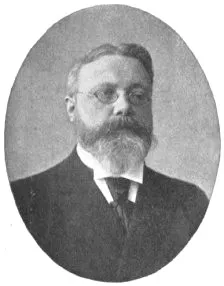
Friedrich Jolly
Human Design Chart
Biography
He was the author of an influential treatise on hypochondria and his Untersuchungen über den elektrischen Leitungswiderstand des menschlichen Körpers (1884) was fundamental to the study of electrical diagnostics.
He studied medicine at Göttingen under Georg Meissner (1829–1905), and in 1867 received his doctorate at Munich. In 1868 he became an assistant to Bernhard von Gudden (1824–1886) and Hubert von Grashey (1839–1914) at the mental institution in Werneck, and in 1870 was an assistant to Franz von Rinecker (1811–1883) at the Juliusspital in Würzburg.
In 1873 Jolly became director of the psychiatric clinic in Strassburg, where he was named as successor to Richard von Krafft-Ebing (1840–1902). In 1890 he succeeded Karl Friedrich Otto Westphal (1833–1890) as director of the neuropsychiatric clinic at the Berlin Charité.
He died on 4 January 1904 in Berlin, aged 59.
The Human Design of Friedrich Jolly: Manifesting Generator 2/5
Manifesting Generator 2/5 — Design at a Glance
Friedrich Jolly revealed himself as a person with a hybrid energy structure: He possessed the constant power of a Generator combined with the lightning-fast impact capability of a Manifestor. His design tended towards great speed; he could skip steps and quickly pull things into his life. This rapidity, however, was a double-edged sword. Often, he would take on multiple projects simultaneously, driven by various impulses. If he did not listen to the inner 'yes' of his Sacral Center – that is, if he neglected his reactive strategy – this creative enthusiasm quickly turned into frustration. His non-self theme was precisely this dissatisfaction that arose when he acted too quickly or skipped important stages and had to catch up later. For Friedrich Jolly, it was crucial to wait for life impulses and only act when his inner authority gave consent. Only then could he find deep satisfaction in creation. In this state, he enjoyed the variety; the pressure of finishing one thing before moving on to the next hindered him from accessing his natural power. His design promoted a playful mode where parallelism did not distract but rather served as a source of energy and fulfillment, provided that he remained connected with his inner compass.
Sacral Authority
Friedrich Jolly's decision-making was marked by direct physical resonance. As a Generator, he possessed sacral authority, which simplified his process: strategy and internal guidance merged into one. This mechanism only worked under the condition of an open emotional center. His responses to external stimuli did not manifest as lengthy deliberations but rather as immediate gut feelings or a noticeable surge of energy. Physical signals like grunting, humming, or simply saying "Mhm" served him as reliable indicators for what was right. Once his sacral motor engaged with something, he felt vital and alive. Then an almost inexhaustible energy became available to him, enabling him to tackle tasks with great enthusiasm. This shaped his approach to life: He was born to go through life with joy and satisfaction, fully immersed in activities without fixating on rigid purposefulness. The activation of the Spleen Center further supported this sacral authority. It gave him the ability to react particularly quickly and spontaneously. This immediate access to his physical well-being and instinctive perception allowed him to reliably guide himself from these inner impulses, making his everyday decisions efficient and intuitive.
The 2/5 Profile — Hermit / Heretic
Friedrich Jolly's design tended towards selective engagement: He withdrew to gain clarity and only stepped forward when called upon. This pattern stemmed from his Profile 2/5, the combination of Hermit and Hero lines. Line 2 conveyed a natural talent that required isolation to maintain an overview and avoid impatience. Without these withdrawal phases, his inner momentum risked becoming mere projection or arrogance. Simultaneously, the fifth line from Gate 59 acted as a seductive force in times of crisis. It drew attention not through genuine connections but through almost magnetic presence, causing others to subordinate themselves or pay for his solutions. This dynamic created a tension field: Friedrich Jolly had to carefully weigh where he invested his energy. Line 5 projected the expectation that he always be there as a rescuer, while line 2 forced him to protect himself and set boundaries. His design challenged him to strategically use this alone time to decide when to employ his seductive power without forgetting himself or getting lost in superficial solutions.
Single Definition — Defined & Open Centers
Friedrich Jolly's design showed a tendency towards consequent clarity of thought paired with a deep-rooted need for satisfaction through reactive action. His defined Ajna Center ensured constant mental processes; he always thought and created concepts in a trustworthy manner, without being easily influenced from the outside. These thoughts flowed directly into his defined Throat Center, where he articulated what his mind conceptualized – a reliable yet limited form of communication.
His defined G Center gave him a firm self-identity and a clear sense of direction for his life as well as love and lovability. He knew where he belonged without having to direct others. As a Generator with a defined Sacral Center, he had immense vital energy that was only correctly activated through reaction to external impulses. Initiated actions cut him off from this power source; his success depended on following the inner yes or no voice to avoid frustration and exhaustion.
At the same time, he was vulnerable to conditioning by his open centers. His open Head Center made him susceptible to mental pressure and foreign inspiration, leading him to engage with questions that were not his own or seek answers he didn't actually need. His open Heart Center lacked consistent willpower; he found himself making promises to prove worth, suffering from the feeling of not keeping up when failing.
His open Solar Plexus Center absorbed emotional moods from the environment, causing him to personalize foreign feelings and avoid confrontation out of fear of rejection. Additionally, his open Spleen Center was marked by a fundamental survival anxiety; he tended to cling to unhealthy situations or people just to maintain a false sense of security and well-being instead of making spontaneous decisions. Finally, his open Root Center took on external stress, pushing him into cycles of hyperactivity to escape this pressure rather than observing it as an external phenomenon.
Channels for powerful manifestation, logical clarity and inner determination.
Friedrich Jolly's design showed a tendency towards logical structuring of information and persistent experience. He was someone who mentally organized details to integrate them into a coherent worldview while also engaging in sacral reactions during discovery processes.
The Accepting Channel 17-62 connected his Ajna Center with the Throat Center. Gate 17 visualized patterns, while Gate 62 translated these into language and named details. This created an ongoing internal process: Friedrich Jolly's mind logically categorized new data to understand it. Anything he could not integrate into his own worldview remained incomprehensible. This channel gave him the ability to present complex connections as formulas or theories, provided he waited for an invitation to speak to avoid resistance and ensure clarity.
Simultaneously, the Discovery Channel 29-46 shaped his approach to life processes. It connected his Sacral Center through Gate 29, the well of endurance, with his G Center through Gate 46, the self's resolve. This required him to let go of expectations and fully immerse himself in experiences without changing course. Only by correctly saying yes could he muster the persistence needed to gain insights at the end of a process that could change collective understanding.
On the personality side, the Charisma Channel 34-20 influenced his approach. It connected the raw physiological energy from Gate 34 in the Sacral Center with the expression from Gate 20 in the Throat Center. This generated a strong drive for manifestation, which however had to be channeled through sacral reactions. Friedrich Jolly's influence could be impressive if he only gave his energy to things that seemed satisfying to him. Without inner guidance, this driving force risked breaking out chaotically or descending into obsession.
Additionally, gates like 59 (genetic strategy of pairing), 55 (emotional awareness), and 23 (communication and assimilation) contributed to the complexity of his aura, with Gate 16 in the design promoting a mutative process through experimentation.
Collective Circuitry — Circuit Signature
Friedrich Jolly appeared as someone whose inner experience and outer expression were marked by clear logical structure. His design connected the Ajna Center with the Throat Center via the Accepting Channel. This connection allowed him to directly translate mental concepts into words. The Understanding Circuit promoted his ability to share rational insights free from emotional conditioning, thereby contributing to improving the future.
Parallel to this was another force: the connection between Identity and Sacral Centers in the Meaning-Making Circuit (Discovery Channel) anchored him in his essence and life rhythm. Here it was about reflecting on the past, drawing emotional lessons from it, and cyclically sharing these with others. These two circuits formed separate segments – one side the cool logic of the mind, the other the wave-like emotion of experience.
A third aspect was Charisma (Channel 20-34), connecting Throat and Sacral Centers. This gave him a natural presence in the here and now, supported by intuitive reactions to life. Through simple definition, all these energies – Ajna, Throat, Sacral, and Identity – were united in one continuous flow. Thus, Friedrich Jolly appeared as a coherent unit where thinking, feeling, and acting did not stand isolated but sprang from a single source.
Right Angle Cross of the Sleeping Phoenix 4
Friedrich Jolly's design featured the configuration of the right cross of the sleeping phoenix. This specific alignment characterized a fundamental stance marked by a deep connection to inner rhythms and the necessity of rest. In Human-Design, this cross represents an energy that is not sustained through constant external action but rather through trust in natural sleep-wake cycles. Friedrich Jolly lived this mechanism by basing his actions on internal signals of activity and rest, rather than resisting his biological rhythm. The energy of this cross often acts like a phoenix rising from the ashes of exhaustion once necessary regeneration has occurred. For Friedrich Jolly, true effectiveness was not achieved through constant tension but through consciously allowing phases of restraint and "sleeping." In these moments of rest, his insights and energies condensed to be available with great clarity and without internal friction during active phases. This structure protected him from overload by giving him an intuitive ability to act precisely when energy flows and to withdraw when the body or mind needed regeneration. His path was thus marked by a harmonious alternation between engagement and recovery, where both states were understood as equally important and necessary for his overall effectiveness.
Saturn Return · Uranus Opposition · Chiron Return · 2nd Saturn Return — Life Cycles
Friedrich Jolly's design was characterized by a clear ability to structure and organize complex relationships. This trait became evident during his first Saturn return in 1871 at the age of 27: His habilitation as an assistant to Franz von Rinecker at the University of Würzburg marked the transition from training to independent scientific work – a typical moment when years of preparation turned into a solid professional foundation.
With his Chiron return around 1890 (age 46), he entered a phase of fulfillment and flourishing in his incarnation purpose. Taking over the chair of psychiatry at Charité in Berlin and being appointed director of the psychiatric clinic confirmed that he had consistently lived out his inner authority and strategy. This cycle did not bring healing in a therapeutic sense, but rather the visible realization of his life's purpose on the highest level.
His second Saturn return around 1904 (age 60) marked the end of this life phase. His death in Berlin at age 59 fell precisely into this period of final integration and detachment from the material structures he had previously built up. The sequence of these cycles clearly illustrated a coherent path: Building through discipline (first Saturn return), flourishing through purpose realization (Chiron return), and finally peaceful conclusion of physical existence (second Saturn return).
Manifesting Generator · Sacral Authority — Synthesis
Friedrich Jolly lived a life path characterized by a dynamic interplay between inner drive and the need for withdrawal. His design as an Manifesting Generator (MG) with sacral authority indicated a constant availability of energy, which was not meant for initiation but rather for reacting to external impulses. This responsiveness was amplified by his defined Mental Center (Ajna), creating a persistent need for structure and logical understanding – a capability to organize information and express it verbally (Channel Accepting). At the same time, his Profile as a Natural Talent/Hero & Healer called upon him to offer solutions for others, while Line 2 signaled a deep desire for solitude and inner reflection.
This interplay created a central tension: Friedrich Jolly moved between the urge to carry his energy into the world and the necessity of withdrawing to recharge this energy. The ability to quickly initiate things (typical MG) could be slowed down by the need for thorough mental processing (Ajna), potentially forcing him to reconsider or even undo steps. Documented events throughout his life – from habilitation to death – showed this shift between public activity and private withdrawal.
3 Defined Channels
Incarnation Cross - Right Angle Cross of the Sleeping Phoenix 4
Solar Return
The Solar Return shows the moment when the sun returns to its exact birth position - your personal solar year.
Life Cycles
Discover the life cycles with a detailed triple view (birth chart, cycle chart, composite).
Human Design Profile
- Strategy
- To respond - wait for something to respond to
- Authority
- Sacral Authority
- Profile
- 2/5 - Hermit / Heretic
- Definition
- Single Definition
- Incarnation Cross
- Right Angle Cross of the Sleeping Phoenix 4
- Date of Birth
- 24.11.1844 03:00
- Place of Birth
- Heidelberg, Germany
Frequently Asked Questions
What was Friedrich Jolly's Human Design type?
What profile did Friedrich Jolly have in Human Design?
What authority did Friedrich Jolly possess?
What incarnation cross did Friedrich Jolly have?
When was Friedrich Jolly born?
Discover your own Human Design
Are you also a Manifesting Generator? Find out in a personal reading how to unfold your multi-talents and direct your energy wisely.
More Personalities
Back to overviewAlain-Fournier

Aldair

Alizée

Angeli

Arletty

Artus