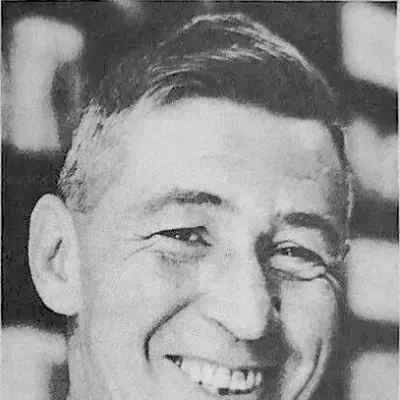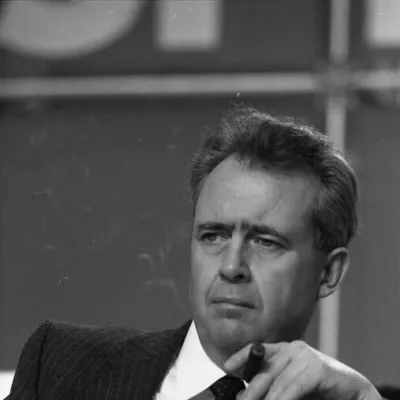
Hans Apel
Human Design Chart
Biography
Died in Hamburg, Germany on 6 September 2011.
Hans Apel — Projector with Profile 1/3
Projector 1/3 — Design at a Glance
Hans Apel's Human Design shows a tendency towards focused perception. As a Projector, he did not have an intrinsic constant energy source but operated with an aura that worked like a bright flashlight. This characteristic allowed him to immediately recognize system errors and weaknesses in his environment – areas where others were "in the dark."
However, directly addressing these flaws would trigger resistance, similar to shining a light directly into someone's face. Instead, Hans Apel exhibited dynamic leadership through role modeling. By embodying harmony himself, he became attractive; others sought him out and asked for advice. His strategy involved waiting for appreciative invitations rather than correcting without restraint.
His undefined Sacral Center also meant that his energy was cyclical: phases of high productivity alternated with necessary rest periods to prevent burnout. If Hans Apel lived according to this pattern of indirect influence and respectful handling of his energies, he would be rewarded with success. Deviations from it led to bitterness as an expression of his non-self. Thus, his design marked him as someone who guided through shining example rather than direct criticism while accepting his own energetic boundaries.
Emotional Authority
Hans Apel's Human Design shows a tendency towards transient emotional fluctuations that made his spontaneous reactions unreliable. His inner authority was Emotional Authority carried by the defined Solar Plexus Center. This mechanism meant he was subject to constant waves of ups and downs in his feelings; his perception of the world was always colored by his current mood. What appeared inspiring at one moment could become negative in the next. His immediate feeling was merely a snapshot, not yet necessarily his deeper truth. Therefore, quick decisions made from emotion often had negative consequences.
The mechanics required him to be patient and consciously delay action. He needed to take time for decisions to mature, which usually meant sleeping on them multiple times. Over time, intense feelings subsided, he gained emotional distance, and eventually clarity and calmness set in. Only then was he through the process and could recognize his true inner truth. This path to inner security was especially important for long-term decisions, as they significantly influenced his life course. Emotional Authority always took precedence over other defined centers in his chart; regardless of what else was defined, this center dictated the strategy of decision-making joy. Thus, Hans Apel emerged as someone who reached true clarity by navigating these emotional waves.
The 1/3 Profile — Investigator / Martyr
Hans Apel's design was characterized by a dialectical tension between the deep need for foundational groundwork and an insatiable drive to experiment practically. As a carrier of Profile 1/3, the Researcher-Experimentor, he lived through a cyclical process: Line 1 drove him to establish guidelines and seek harmony in familial or social contexts, where sensitivity was crucial. At the same time, Line 3, represented by Gate 9, demanded learning from specific mistakes – those "drops" that cause the barrel to overflow.
This configuration created a characteristic ambivalence: Often, fear of insufficient knowledge held him back from implementation because he did not feel adequately prepared. Yet it was precisely this theoretical advantage that had to be overcome through practical validation. Hans Apel's authority and judgment only emerged once he had tested an idea both intellectually and empirically on heart and gut. Only insights that passed the double filter of mutation and error analysis were trustworthy for his design. His path was not a straight beam of perfection but an iterative process of failure and new beginnings, where every mistake served as a necessary building block for future security.
Split Definition — Defined & Open Centers
Hans Apel revealed himself as someone with a massive, self-sustaining identity and existential intuition. His defined G Center gave him a firm sense of self-perception and a clear direction for his life path; he knew who he was and where he belonged. The also defined Heart Center reinforced this through strong willpower: He determined his own life, kept promises, and made things happen without being dependent on others.
This inner stability was complemented by the defined Spleen and Root Centers. The Spleen provided a sharp survival instinct in the „now“, while the Root supplied constant pressure to move forward and assert oneself materially. Together, these centers formed an uninterrupted energy field that made him resilient.
At the same time, his open centers significantly shaped his experience. His open Sacral Center meant he did not have a consistent generative work energy available. Instead, he tended to overextend himself through „borrowed“ energy from others and would exhaust himself if he didn't take timely breaks. His open Head and Ajna Centers led to him having no fixed mental focus; his mind was open to inspiration but prone to taking on foreign questions or confusion as his own problems. The open Throat Center also showed: He only spoke when invited or compelled by his inner authority, rather than constantly seeking attention. Thus, his strength lay not in continuous production but in the strategic use of impulses and trust in his emotional clarity from the defined Solar Plexus Center.
Channels for pioneering spirit, ambition and communal connection.
Hans Apel's design inclined towards competitive action that was always connected with a deep search for an emotional place within the whole. This configuration was shown through three defined channels. The Initiation Channel 51-25 linked the competing ego energy of Gate 51 with the universal love of Gate 25, creating natural competitiveness aimed at initiating others into individualization through „shock“ and making potential visible in individuals. Simultaneously, the Transformation Channel 54-32 propelled ambition and social mobility forward. Here, the ambition of Gate 54 connected with the instinctive talent recognition of Gate 32, so that hard work contributed to improving life position and securing tribal loyalty. The Community Channel 37-40 rounded out his profile by regulating emotional contracts. Through connecting Gate 37 (Friendship) and Gate 40 (Solitude), Hans Apel sought recognition and his place in a group, with partnerships based on mutual provision and emotional clarity.
As background patterns, further personality gates were at work: Gate 9 promoted detailed work and perfection through repetition; Gate 16 enabled collective experimentation towards mastery. Crisis management was shaped by Gates 36 (Darkness) and 53 (Freedom for new cycles), while genetic mutation and mood swings via Gates 55 and 60 presented as internal pressure or melancholic undercurrents. These elements formed a being that initiated through competition, transformed through work, and anchored through emotional bonds.
Tribal Circuitry — Circuit Signature
Hans Apel's design marked a fortified, courageous personality with strong inner convictions. The Centering Circuit in him directly connected the Identity and Heart Centers. This connection strengthened his individuality and self-worth („I am who I am“). However, without a connection to the Throat Center, these firm values were often hard to verbalize; the energy remained more inwardly directed rather than seeking external expression.
Parallel to this, the Ego Circuit worked in two separate segments. The first linked the Heart with the Solar Plexus Centers (Channel 37-40), promoting a good balance between giving and taking as well as mutual support. The second segment connected the Spleen with the Root Center (Channel 32-54). Since this circuit did not connect to the Sacral Center, there was no constant life force; Hans Apel needed sufficient rest periods for regeneration and resource building for his tribe.
Overall, Hans Apel showed through this configuration as someone with clear inner stability and cooperative potential, but who needed pauses to conserve energy. His aura was marked by individual strength while communicating his deepest convictions presented a challenge. The separate groups in his design meant these energetic streams existed parallel alongside each other without directly overlapping.
Right Angle Cross of Planning 1
Hans Apel's Human Design revealed a tendency towards strategic long-term planning and vision. He was someone who grasped large-scale connections and pursued long-term goals strategically while always keeping the 'big picture' in mind. This orientation stemmed from the configuration of his right cross of Planning 1 in his chart. This aspect grants the ability to look beyond immediate daily life and penetrate complex systems. It is not about spontaneous impulses but rather a structured approach to future concepts. Hans Apel used this energy to pave sustainable paths by placing details within a broader context. The mechanics of this cross emphasize the need to not only dream visions but also make them tangible through consistent planning. It's about creating clarity in goal setting while maintaining a broad perspective. Hans Apel lived this quality by focusing on what was essential and filtering out distractions to achieve his long-term intentions. This attitude shaped how he dealt with challenges: He sought solutions that were not just short-term fixes but also stable over the long term. Through this perspective, he avoided getting bogged down in operational details without keeping the strategic benefit in sight. His approach was always future-oriented, using the present as a tool to realize these goals. This ability to see the big picture and plan accordingly formed the foundation of his personal effectiveness.
Saturn Return · Uranus Opposition · Chiron Return · 2nd Saturn Return — Life Cycles
Hans Apel's professional path was marked by two decisive turning points that highlighted astrological cycles. In 1972, at age 40, he was appointed Parliamentary State Secretary at the Federal Ministry for Foreign Affairs. This step fell during the Uranus opposition period. During this cycle, sudden changes or liberation from old structures often occur, which here became visible through his new responsibility in diplomacy. It was a moment of reorientation and breaking with previous patterns, elevating his career to a new level.
Six years later, in 1978, Hans Apel reached the position of Federal Minister of Defense. At age 46, he found himself in the Chiron Return cycle. This period signifies the bloom and fulfillment of one's life purpose if one has followed their inner strategy. His appointment as minister was no coincidence but a concrete manifestation of this developmental phase: The previously learned and experienced now found its highest political expression. The Chiron Return confirmed the meaning of his previous career path through assuming a central leadership role in the state. Both events underscore how cosmic rhythms structured and propelled key stations in Hans Apel's public work.
Projector · Emotional Authority — Synthesis
Hans Apel was a projector whose life was marked by a profound ability to recognize errors and shed light on darkness. This recognition drew from a defined G Center, which gave him clear self-identity, combined with the emotional authority of the Solar Plexus Center – a combination that enabled him to deeply grasp situations and gain clarity only after thorough deliberation. The Investigator/Experimentor Profile type amplified this tendency by driving him to learn through experience and testing to make well-founded judgments. This blend of perceptiveness, emotional weighing, and practical verification formed the red thread of his work, evident in his pursuit of understanding and improvement.
At the same time, the design revealed a central paradox: Although Apel possessed the ability to recognize errors (Gate 9), he was also dependent on invitations from others to effectively implement his insights – an inherent tension between the drive to analyze and correct and the necessity to wait and adapt first. This discrepancy was further intensified by the undefined Sacral Center, making him susceptible to conditioning and forcing him to carefully deploy his energy to avoid burnout. Thus, he lived in a constant interplay between the inner need for clarity and the external requirement to respond to others' impulses.
3 Defined Channels
Incarnation Cross - Right Angle Cross of Planning 1
Solar Return
The Solar Return shows the moment when the sun returns to its exact birth position - your personal solar year.
Life Cycles
Discover the life cycles with a detailed triple view (birth chart, cycle chart, composite).
Human Design Profile
- Type
- Projector
- Strategy
- Wait for the respectful invitation
- Authority
- Emotional Authority
- Profile
- 1/3 - Investigator / Martyr
- Definition
- Split Definition
- Incarnation Cross
- Right Angle Cross of Planning 1
- Date of Birth
- 25.02.1932 15:45
- Place of Birth
- Hamburg, Germany
Frequently Asked Questions
What was Hans Apel's Human Design type?
What Profile did Hans Apel have in Human Design?
What Authority did Hans Apel have?
What incarnation cross did Hans Apel have?
When was Hans Apel born?
Discover your own Human Design
Are you also a Projector? Find out in a personal reading how to unfold your leadership qualities and recognize the right invitations.
More Personalities
Back to overviewSissy Spacek

Alain-Fournier

Anémone

Ann-Margret

Bourvil
Hergé