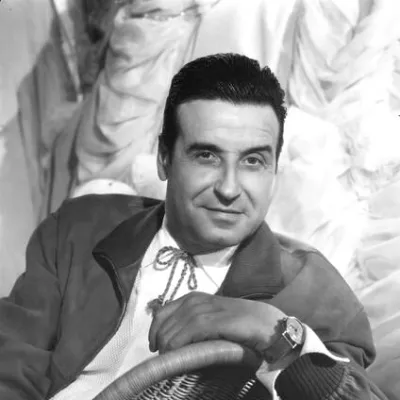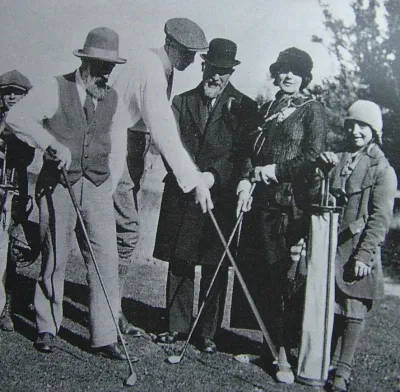
Henri-Pierre Roché
Human Design Chart
Biography
A painter by training, Henri-Pierre Roché was for most of his life an art collector. As a commercial agent or adviser to great collectors, sometimes simply by his interpersonal skills, always in the background, he played a central role in the development of modern art, helping Pablo Picasso, Marcel Duchamp, Francis Picabia, Constantin Brancuşi and Marie Laurencin, then Man Ray and Jean Dubuffet, among others, to make themselves known.
He was the lover of Helen Hessel, wife of his friend Franz Hessel. He wrote of their triangular relationship in Jules et Jim, his semi-autobiographical novel.
He died on 8 April 1959 at the age of 79 in his house in Sèvres.
Human Design Analysis: Henri-Pierre Roché as Projector 2/4
Projector 2/4 — Design at a Glance
Henri-Pierre Roché revealed himself as someone who could instantly pinpoint weaknesses in other people's systems and relationships with remarkable precision. His Human-Design as a Projector endowed him with a dense, focused aura that metaphorically shone like a bright flashlight, illuminating dark, non-functioning areas in his surroundings. This ability to identify flaws in the system was his natural gift, yet directly addressing these deficiencies often provoked resistance or irritation in others, much like shining a bright light directly into someone's eyes.
Instead, Henri-Pierre Roché was most effective when he maintained a harmonious presence. Through this pleasant "glow," he naturally attracted others who would then seek his advice. His strategy involved waiting for a respectful and honest invitation before sharing his knowledge. With his Sacral Center undefined, he lacked a constant, intrinsic life force. He experienced periods of high productivity followed by necessary rest phases to avoid burnout. Living according to this design rewarded him with success; ignoring this dynamic eventually led to his non-self theme of bitterness.
Emotional Authority
Henri-Pierre Roché showed himself as someone who never made decisions in the first emotional wave. His design indicated a tendency to be guided by the immediate mood, which colored the world either overly positively or strongly negatively depending on the moment. These fluctuations came from his emotional authority, carried by the defined Solar Plexus Center. In Human Design mechanics, this authority always takes precedence over all other defined centers, regardless of further configurations. This meant for Henri-Pierre Roché that his feeling in the moment was often just a snapshot, not necessarily the truth. Quick, spontaneous reactions to these first impressions proved risky, as they could not grasp the full depth of the situation. Instead, he gained clarity through patience and conscious hesitation. By letting decisions rest overnight and taking multiple moments, the intense feelings subsided. Only then did calmness set in and he could see through the process. This mechanism was particularly crucial for long-term, life-defining steps, as it allowed him to distinguish between fleeting enthusiasm or rejection and his true inner truth.
The 2/4 Profile — Hermit / Opportunist
Henri-Pierre Roché moved in a constant interplay between the deep need for withdrawal and the urge to connect with his closest community. His design, characterized by the Profile 2/4, suggested a structure based on the creation of a safe, loving environment. In this space, he could clearly communicate when he sought company and when he needed to be undisturbed. This ability to set boundaries was essential to finding the inner clarity his Line 2 required.
During his phases of isolation, he immersed himself in internal processes to find peace. Only after this need for solitude was satisfied did he return from his "cave" to spend time with his favorite people. Line 4 promoted leadership through exemplary behavior and the provision of resources for the family. At the same time, Line 2 was selective; it required that he be called upon and gave him the skill to objectively assess ideas for their feasibility. Without sufficient energy, this selectivity could be perceived as cynicism.
The tension between the hermit and the community-oriented line shaped his interactions. He used his solitude to reflect on the knowledge of his network and to develop brilliant ideas from it. His self-confidence allowed him to respect traditional hierarchies while simultaneously embodying his own principles in daily life. Thus, he created a space where he could both protect his individual processes and nurture his connections without losing his integrity.
Split Definition — Defined & Open Centers
Henri-Pierre Roché's Human Design profile revealed a tendency towards constant mental pressure and clear willpower. His defined Head and Ajna Centers generated a continuous inspiration to question and form concepts, yet he lacked the energy for direct implementation. This often led to inner anxiety when he tried to act on these thoughts immediately, rather than waiting for the right moment. Simultaneously, he possessed a defined Heart Center, which gave him a firm will and the need to control his life and keep promises. This combination marked him as someone who was mentally active and simultaneously sought authority to use his resources self-determinedly.
At the same time, Henri-Pierre Roché showed through his open Centers to be vulnerable to external influences. His open Throat Center tended to feel pressure to gain attention, which could make him speak to avoid being overlooked, rather than waiting for the natural invitation. The open G Center meant he did not have a fixed identity but reflected in relationships and environments; he sought the right direction and love through interaction with others, rather than defining it himself. Additionally, his open Sacral Center was sensitive to the energy of others, which could lead to exhaustion if he did not rely on his inner authority to set boundaries. His open Spleen Center made him vulnerable to fears and clinging to unhealthy situations to feel secure. Finally, his open Root Center absorbed stress from the environment, which could make him hyperactive to escape this pressure, rather than recognizing it as not his own. This configuration described a person who needed to learn to use his mental and willful core while observing the disturbances from his open Centers, rather than following them.
Channels for mental clarity and genuine community.
Henri-Pierre Roché revealed himself as someone whose thinking was not shaped by arbitrary effort but by spontaneous insight. His mind sought silence to filter the "white noise" of inspiration. This resulted from the Awareness Channel 61-24, which connected the Head Center to the Ajna Center, transforming the pressure to know the unknown into rational answers. This was not about logical prediction or abstract reflection but an acoustic processing of inspiration. Roché did not need to actively think to know; knowledge entered on its own, often as a sudden mutation or satori, when a gap appeared in the thought process. He learned to distinguish what was worth knowing and what was not, and surrendered to the inner truth that emerged through Gate 24.
Parallel to this, Henri-Pierre Roché sought his place in a community, valuing fair agreements and mutual respect. This attitude stemmed from the Community Channel 37-40. He understood that true connection did not happen spontaneously but through careful, time-intensive formulation of agreements. Gate 37 sought recognition and belonging, while Gate 40 was ready to work for loved ones but needed breaks and rewards. For Roché, this meant building bridges between individuals to create a harmonious coexistence where everyone had an honorable place. The emotional clarity of this channel ensured the depth of relationships and the willpower to pursue common goals successfully.
Additionally, specific gates influenced his life path. Gate 16 drove him to experiment and refine skills, while Gate 9 gave him the ability to work in detail and perfect his craft. Gate 22 allowed him to listen calmly and be socially open without being intrusive. Gate 21 helped him overcome material obstacles and exercise control in the service of the community. On an emotional level, Gate 55 with its mood swings and Gate 49 with its focus on principles and sacrifice shaped his inner landscape, teaching him to trust his emotional wave to make decisions.
Individual Circuitry — Circuit Signature
Henri-Pierre Roché's Human Design shows a tendency towards impulsive, creative flashes of inspiration, paired with a strong orientation towards mutual support and resource management. His Mental Circuit connected his Head Center to his Ajna Center via the Awareness Channel. This created a pulsating, acoustic energy aimed at transforming new knowledge and expressing his unique identity. This connection fostered innovative ideas, which often appeared as spontaneous inspirations. Parallel to this, his Ego Circuit linked his Heart Center to his Solar Plexus Center. This Community Channel emphasized a balanced relationship of giving and taking, as well as cooperation within a group. Since this circuit did not have a direct connection to the Sacral Center, there was a lack of constant life force, which forced Henri-Pierre Roché to take necessary breaks to restore resources for his tribe. The shared definition meant that these two systems – the creative impulse and social cooperation – operated as separate, parallel forces without a direct energetic flow between them. Henri-Pierre Roché thus appeared as someone who, on one hand, stood out through creative mutations, while on the other hand, relied heavily on traditional structures and mutual aid, navigating between these two poles without energetically uniting them.
Right Angle Cross of Planning 2
Henri-Pierre Roché's Human Design chart indicated a tendency towards strategic, long-term thinking. His chart featured the right cross of Planning, a configuration that did not encourage spontaneous impulsiveness but rather required a thoughtful, step-by-step approach. This meant that Henri-Pierre Roché was someone who did not act on gut feelings but carefully weighed and structured his actions beforehand.
This mechanism describes an inner discipline where planning was not seen as a tedious obligation but as an essential part of the process. Henri-Pierre Roché lived with the necessity of calculating paths ahead to gain security and clarity. The Planning Right Cross often linked the ability to envision with practical implementation, focusing on the correct sequence of steps.
For Henri-Pierre Roché, this was not a choice but a deeply rooted way of interacting with the world. He was strongest in situations that required patience and overview. Sudden, unprepared demands stood in opposition to this structure. Instead, Henri-Pierre Roché sought systems and orders that helped him master complex connections. This attitude shaped his actions and decisions, providing a clear, though sometimes slow, direction. Henri-Pierre Roché used this trait to create stability and predictability in his environment, which for him was a source of strength and authenticity.
Saturn Return · Uranus Opposition · Chiron Return · 2nd Saturn Return — Life Cycles
In this phase of his life, Henri-Pierre Roché was challenged to recalibrate his inner orientation through external upheavals. His design indicated a tendency to encounter planetary oppositions, symbolized here by Uranus, with sudden changes or unexpected demands that questioned established structures. This was not a random disturbance but a mechanical impulse that urged him to break free from old patterns and explore new paths, often through travel or professional realignment.
In 1920, at the age of 41, Henri-Pierre Roché embarked on a business trip to Germany with Claire and Yvan Goll. This event marked a concrete expression of the Uranus dynamic: The journey was more than just a logistical movement; it represented a break with the familiar and a step into the unpredictable. For his design, this was a typical moment when the necessity arose to flexibly respond to external changes rather than clinging to rigid plans. The business trip served as a catalyst to gain new perspectives and navigate a changing environment, which was crucial for his further development.
Projector · Emotional Authority — Synthesis
Henri-Pierre Roché lived deeply in the observation and analysis of his environment. As a Projector with emotional authority and the Profile Talent/Networker, he perceived subtle dynamics, recognized patterns, and 'shed light into the dark' for others (Channel of Awareness). This ability to identify errors in the system, however, required time to process the emotional wave and confirm the accuracy of the perception. His retreat into the inner world (Line 2) served the necessary clarity before he engaged again with selected people (Line 4) to share his knowledge. The connection between Head and Ajna Centers created a persistent mental pressure that led him to new insights and transformations.
A central paradox in his design lay in the tension between the need for isolation and the desire for community. Roché was an observer who saw the world through an emotionally tinted lens, but at the same time, through his defined mental structure (Knowledge Circuit), he was destined to receive and spread inspiration. The Uranus opposition at the age of 41, combined with a professional journey, suggests that he sought new paths during phases of change and upheaval to live out his unique perspective.
2 Defined Channels
Incarnation Cross - Right Angle Cross of Planning 2
Solar Return
The Solar Return shows the moment when the sun returns to its exact birth position - your personal solar year.
Life Cycles
Discover the life cycles with a detailed triple view (birth chart, cycle chart, composite).
Human Design Profile
- Type
- Projector
- Strategy
- Wait for the respectful invitation
- Authority
- Emotional Authority
- Profile
- 2/4 - Hermit / Opportunist
- Definition
- Split Definition
- Incarnation Cross
- Right Angle Cross of Planning 2
- Date of Birth
- 28.05.1879 23:00
- Place of Birth
- Paris, France
Frequently Asked Questions
What was Henri-Pierre Roché's Human Design type?
What Profile did Henri-Pierre Roché have?
What Authority guided Henri-Pierre Roché?
What incarnation cross did Henri-Pierre Roché have?
When was Henri-Pierre Roché born?
Discover your own Human Design
Are you also a Projector? Find out in a personal reading how to unfold your leadership qualities and recognize the right invitations.
More Personalities
Back to overviewSissy Spacek
Alain-Fournier

Anémone
Ann-Margret
Bourvil
Christian-Jaque