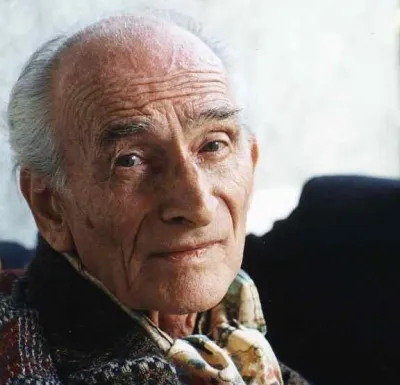
James Brady
Human Design Chart
Biography
Brady survived the 1981 gunshot wound after emergency surgery, but ever since, struggled to walk, and had to cope with a paralyzed left arm and had to regain the full use of his mind and ability to talk. Brady faced daily therapy for the rest of his life in order to continue walking and talking.
After eight years of rehab and "PT" (pain and torture), he accepted an unpaid position as Vice Chairman of the National Organization on Disability, which promotes the interests of the disabled.
Filming began on 17 December 1990 of a TV story of his life, Without Warning: The James Brady Story, with Beau Bridges playing Brady, telecast on 16 June 1991. Joan Allen played his wife Sarah Brady.
With his wife Sarah Brady, who served as chair of the Brady Campaign to Prevent Gun Violence, Brady subsequently lobbied for stricter handgun control and assault weapon restrictions. President Clinton signed the Brady Handgun-Control Bill into law on 30 November 1993, requiring a five-day wait on gun purchases. In 1996, Brady received the Presidential Medal of Freedom from President Bill Clinton, the highest civilian award in the United States.
Brady married Sue Beh in 1960. The marriage ended in divorce in 1967. In 1972, Brady married Sarah Jane Kemp and they joined an Episcopal Church. Brady died on 4 August 2014 at age 73 in Alexandria, Virginia. Four days later, the medical examiner ruled that his death was a homicide, caused by the gunshot wound which he sustained in 1981. Hinckley did not face any charges for Brady's death because he had been found not guilty by reason of insanity.
James Brady — Manifesting Generator with Profile 1/3
Manifesting Generator 1/3 — Design at a Glance
James Brady revealed himself as someone who carried energy and speed within him, without embodying the serene calm of a Generator or the isolated initiative of a Manifestor. His design conveyed a hybrid nature: He possessed the constant, sacral energy source of a Generator, combined with the ability to skip steps and draw quick results into his life. This configuration required a specific navigation through the world. Instead of initiating himself, he reacted to external impulses. Only when his sacral center gave a clear 'yes' did he apply his strength.
The challenge lay in his natural speed. Often, he skipped necessary intermediate steps, leading to the need to return later and fill in the gaps. This could cause frustration as the feeling of efficiency was lost. Additionally, he tended to pursue multiple projects simultaneously, driven by various impulses. If he did not balance this multitasking ability with his inner authority, the joy of creation quickly tipped into overwhelm.
However, when he found the right rhythm – by reacting rather than pushing, and regularly checking if his activities still aligned with his inner approval – he drew deep satisfaction from his actions. In this state, variety was not a disturbance but essential. He worked effectively when he entered a playful mode where the diversity of tasks fueled his energy rather than shattered it. His strength lay in acting quickly, as long as he did not lose the connection to his inner confirmation.
Emotional Authority
James Brady was guided by an inner authority defined by the emotional center. This center carried the responsibility of decision-making, independent of other defined areas in his design. His inner truth did not manifest in immediate clarity but as a wave of emotions that continually oscillated. The world appeared to him always colored by his current mood: In one moment, he could be deeply enthusiastic about something, in the next, the same situation could be viewed negatively.
This emotional wave meant that a first impression rarely represented the final truth. Quick, spontaneous decisions stemming directly from an intense emotional state carried a high risk of negative consequences. Instead, his design required patience and the ability to let decisions mature. James Brady had to take time to reconsider a situation multiple times, ideally letting it rest overnight. Only when the intense feelings subsided and he gained emotional distance did the necessary clarity and calmness set in. This process of waiting and maturing was essential for long-term, life-defining decisions to ensure that the choice made aligned with his deep inner truth and not just a passing mood.
The 1/3 Profile — Investigator / Martyr
James Brady was revealed as a person whose life revolved around the principle of trial and error. His design as Profile 1/3 marked him as both a researcher and experimenter. Line 1 drove him to gather theoretical knowledge and build a foundation, while Line 3 compelled him to test this knowledge practically. Often, an internal conflict arose: The fear of not knowing enough could delay implementation, yet the energy of Line 3 demanded testing to learn from mistakes.
This mechanism meant that James Brady did not just accept his insights but tested them himself. If he deemed something good, he had both intellectually and practically tested it thoroughly. His judgment was therefore trustworthy, as it was based on his own, tested experience.
The specific expression of his lines further promoted this dynamic. The first line emphasized the need for rest periods to strengthen willpower; without these recovery phases, he could not sustainably apply his energy. At the same time, Line 3 stood for independence through self-generated talent. Here, timing was crucial: James Brady had to wait until the inner energy and enthusiasm were present to bring his skills to the table. This combination of the necessity to prepare theoretically, test practically, and wait for the right inner impulse defined his unique path of learning and action.
Single Definition — Defined & Open Centers
James Brady revealed himself through a design with immense inner strength and endurance. His defined Sacral Center provided a constant source of vital energy, which he could channel correctly in response to external stimuli. This generative power was complemented by his defined Heart Center, giving him a clear will and the desire for personal influence over the material world. He had the capacity to keep promises and pursue his work with a natural competitive orientation, though he had to learn not to project this strength onto others.
His communication was marked by his defined Throat Center, serving as a focal point to carry messages from the various centers into the world. This occurred in conjunction with his defined Solar Plexus Center, which acted as an inner authority. James Brady relied on waiting out the waves of his emotions to reach emotional clarity before acting or speaking. This patience was crucial, as impulsive action in the highs or lows of his emotional wave could lead to chaos and later regret. His defined Spleen Center supported him through spontaneous, intuitive signals in the here and now, protecting his survival and well-being, while his defined Root Center provided the necessary pressure to move forward and manage stress.
In contrast, his vulnerability was revealed in the mental centers. His open Head Center and open Ajna Center meant he lacked a constant source of inspiration or conceptual thinking. Instead, he tended to pick up mental pressure waves from the environment, leading to doubt or the illusion of needing to find answers that were not his own. He could easily get entangled in questions from others and had to learn to observe this mental noise without identifying with it. Similarly, his open G Center did not give him a fixed identity or direction. James Brady relied on others to initiate him to find the right places and people, rather than seeking a fixed life path himself. This openness allowed him to adapt and learn from the environment but challenged him not to grasp after an illusion of control or identity.
Channels for community, intimacy, focus, intuition and expression.
James Brady's design tended towards intense, emotional intimacy and precise logical focus. The Channel of Union 59-6 connected his sacral life energy with the emotional wave of the Solar Plexus. This created a deep need for merging and fertility in relationships, but required patience to gain clarity in the emotional wave movement. Without this waiting period, the intensity could be misunderstood. Parallel to this, the Channel of Concentration 52-9, connecting Root and Sacral Centers, promoted a calm, unshakable attention to detail and facts. James Brady was someone who held steady to recognize and perfect patterns, driven by an inner logic that kept distractions at bay.
His talent for refining skills was marked by the Channel of Wavelength 48-16, connecting intuitive depth from the Spleen with the skill of expression, requiring mastery through repeated practice. Recognition and resources were crucial to nurture this talent. In the material world, the Channel of the Money Line 21-45, connecting willpower and authority, was active. James Brady sought control over his resources and independence to take responsibility without being overwhelmed. He worked best when he could set his own rhythm.
The Channel of Community 37-40 connected his emotional belonging with his willpower. He sought his place in a group based on mutual benefit and clear agreements that matured over time. Additional nuances were provided by Gates like Gate 62, which promoted logical frameworks and detail accuracy, as well as Gate 8, emphasizing individual contribution and identity. Gate 31 supported the transmission of leadership, while Gate 57 provided intuitive clarity and awareness of the present moment. These configurations marked James Brady as someone who sought deep connections, acted with logical precision, and developed his talent through dedication and recognition.
Tribal Circuitry — Circuit Signature
James Brady's design revealed a clear, coherent structure. As a person with simple definition, he had a continuous energetic flow that made his actions and perceptions present and coherent.
The Understanding Circuit connected two separate areas in him. On one hand, Throat and Spleen Centers flowed together, meaning he could clearly articulate logical insights and focus on visual details of the future. On the other hand, he connected Sacral and Root Centers, merging his life force directly with the urgency and rhythm of the moment. This separation showed that rational planning and spontaneous energy bursts worked as parallel, not directly connected forces.
In the Ego Circuit, a different dynamic was at play. Here, Throat, Heart, and Solar Plexus Centers were directly connected. This created a flow linking emotional waves with the authority of the Heart and communication. It was about giving and taking in the community and accumulating resources through cooperation. Since this circuit lacked a connection to Sacral energy, he needed rest periods to sustainably generate these social and material resources.
The Warrior Circuit finally connected Sacral and Solar Plexus Centers. This brought in the primal energy of survival, protecting the family, and pairing. The emotional intensity of the Solar Plexus was here supported by the constant life force of the Sacral, imprinting a deep, instinctive care and readiness to defend his environment.
Right Angle Cross of Planning 3
James Brady's Human Design profile featured a specific structure known as the right cross of Planning 3. This configuration inclined him towards strategic planning and long-term orientation. Rather than acting impulsively, James Brady was characterized by a disposition of thoughtful preparation. His inner nature was geared towards crafting plans and viewing them with a certain detachment before implementing them.
In Human Design, this cross describes an energy marked by structure and method. It's not about spontaneous inspiration but about the careful building of systems and concepts. James Brady possessed the inner ability to organize complex relationships and define a clear path. This did not mean he was rigid, but rather that he valued stability and reliability in his decisions. The energy of this design acted like an architect who first reviews the blueprints before building.
For James Brady, it was characteristic that he drew his strength from the clarity of his plan. When he knew where he was going, he could act with great determination. Without this inner structure, it could lead to uncertainty or hesitation. His design challenged him to take his time, analyze the situation, and lay a solid foundation. This way, he could achieve his goals sustainably, without being distracted by short-term disruptions. This trait shaped his approach to challenges and mastering projects.
Saturn Return · Uranus Opposition · Chiron Return · 2nd Saturn Return — Life Cycles
James Brady was someone whose life path was marked by clear, cyclical phases of testing and recognition. His design suggested a structure in which external crises and internal maturation alternated, reflected in the documented events of his life.
In 1981, at the age of 41, he experienced injuries from the assassination attempt on Ronald Reagan. This fell during the Uranus opposition period, a phase often bringing unexpected, disruptive turns. For Brady, this was a deep crisis, a moment when life abruptly and violently changed course, typical of the destabilizing yet also liberating power of this astrological transit.
However, his design also contained the capacity for deep integration and appreciation. In 1989, at 49 years old, during his Chiron Return, he received the Presidential Citizens Medal. In the Human Design perspective, this cycle does not mark healing in a medical sense but a blooming period when the personal life purpose unfolds. Brady was recognized here for his contribution, a sign that he had fulfilled his role in society.
This upward trend continued. In 1996, at the age of 56, during his second Saturn Return, he received the Presidential Medal of Freedom. The second Saturn Return signifies the affirmation of one's life structure and the assumption of responsibility at the highest level. Brady received the highest civilian award in the USA, underscoring his long-term dedication and respect for his work. His path demonstrated how deep recognition can develop from a severe crisis through inner strength and constancy.
Manifesting Generator · Emotional Authority — Synthesis
James Brady was a Manifesting Generator, whose life was marked by a dynamic interaction between the urge for quick implementation and the necessity of emotional maturation. The defined Throat (paired with sacral energy) pointed to a strong communication power, which, however, was modulated by emotional authority – an inner compass that needed time to gain clarity. This interplay was evident in the ability to take initiatives while simultaneously requiring a deeper examination and weighing to achieve long-term sustainable results. The profile as a Researcher and Experimenter (1/3) reinforced this process by creating a constant need for independent verification and practical application of insights.
A central paradox in his design lay in the tension between the sacral speed and the emotional wave. He could react swiftly to opportunities (Sacral Motor), yet emotional authority required him to give these impulses time to mature before acting on them. The cycles confirm this: crises (such as the documented event of 1981) required emotional processing, while successes (1989, 1996) resulted from a combination of action and mature decision-making. Thus, he lived in a constant rhythm of action and reflection.
5 Defined Channels
Incarnation Cross - Right Angle Cross of Planning 3
Solar Return
The Solar Return shows the moment when the sun returns to its exact birth position - your personal solar year.
Life Cycles
Discover the life cycles with a detailed triple view (birth chart, cycle chart, composite).
Human Design Profile
- Strategy
- To respond - wait for something to respond to
- Authority
- Emotional Authority
- Profile
- 1/3 - Investigator / Martyr
- Definition
- Single Definition
- Incarnation Cross
- Right Angle Cross of Planning 3
- Date of Birth
- 29.08.1940 19:05
- Place of Birth
- Centralia, IL, United States
Frequently Asked Questions
What was James Brady's Human Design type?
What Profile did James Brady have in Human Design?
Which Authority guided James Brady?
What incarnation cross did James Brady have?
When was James Brady born?
Discover your own Human Design
Are you also a Manifesting Generator? Find out in a personal reading how to unfold your multi-talents and direct your energy wisely.
More Personalities
Back to overviewAldair

Alizée

Angeli

Arletty

Artus

Balthus