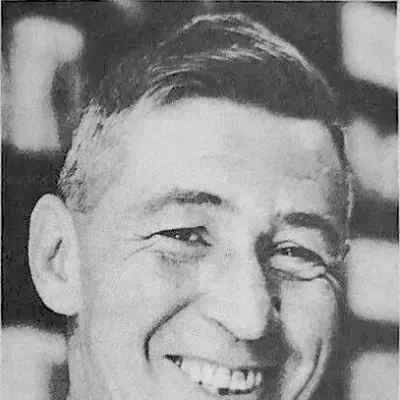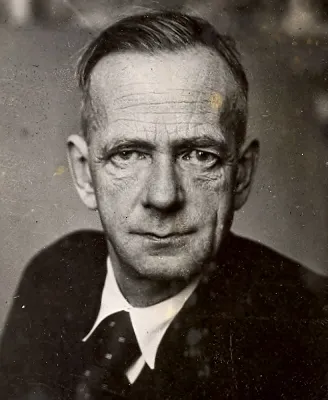
Kurt Schumacher
Human Design Chart
Biography
After serving in World War I in which he lost his right arm, he became political editor in 1920 of the Social Democratic Schwäbische Tagwacht (“Swabian Reveille”). He occupied a state legislative seat in theWürttemberg Diet (1924–31) and was a member of the Reichstag (1930–33). After the Nazis came to power in 1933, Schumacher was arrested and spent the next 10 years in concentration camps. Released between March and August 1943 and again in February 1944, he was rearrested after the plot to kill Adolf Hitler on July 20, 1944.
He began to reorganize the SPD after the German defeat, and in October 1945 at Hanover he chaired its first open meeting in 12 years. In May 1946 he became chairman of the SPD for the three western zones of Allied-occupied Germany. He sought to broaden the base of his party by appealing to the middle class and the religious, and in the Berlin elections of 1947 the SPD emerged with a higher vote than ever before. His refusal to compromise with the communists, on the other hand, resulted in constant attacks from the Soviet zone. A long illness, culminating in 1948 in the amputation of his left leg, further weakened his attenuated health, and he became increasingly bitter toward his political opponents. In 1949 he became leader of the opposition in the Bundestag (parliament), and thereafter he consistently opposed the Schuman Plan, the customs union between France and the Saar, and German rearmament. He remained deeply committed to German reunification.
He died 20 August 1952.
Kurt Schumacher as a Projector 6/2 in Human Design
Projector 6/2 — Design at a Glance
Kurt Schumacher worked as a Projector with a dense, focusing aura that intensely penetrated his surroundings. This design laid the tendency for precise system analysis: He immediately recognized weaknesses and error structures in others. Since his undefined Sacral Center did not provide constant life energy, he worked in phases of high intensity followed by necessary rest periods for regeneration.
The Projector aura functions like a bright flashlight that is directed specifically at dark spots on the counterpart. Kurt Schumacher thus quickly saw what was not working in others. However, direct confrontation with these insights would have triggered resistance because the "light" then shone too brightly into people's faces. Instead, his attraction was strongest when he himself lived in harmony and other people asked him for advice of their own accord. His strategy consisted of waiting for appreciative invitations rather than taking initiative.
If Kurt Schumacher followed this pattern, he was rewarded with success. If he ignored the necessity of invitations and pauses, the non-self theme "Bitterness" would arise. Therefore, his design demanded restraint in initiative and patience until recognition by the environment to exercise his specific leadership function without exhaustion.
No Inner Authority
Kurt Schumacher did not have an inner, physical authority – a rare configuration that fundamentally shaped his decision-making process. Instead of relying on a defined center like Solar Plexus or Emotional Center for immediate answers, he depended on external impulses. As a mental projector without activation in centers below the Throat Center, he found orientation through intensive exchanges with other people. In these dialogues, dormant potentials in his open centers were activated; energetic interactions provided him information that allowed him to view issues from multiple perspectives and express them differentiatedly. This high resonance capability was his central tool for identifying the right environment and suitable conversation partners. However, evaluating this complex influx of information required time and withdrawal. Only in solitude could he discern the essential thread, separate what mattered from what did not, and develop his specific intelligence to structure information meaningfully. His capital success lay in filtering clear patterns out of a mass of impressions. A key factor for him was choosing an environment where he felt comfortable and could exchange ideas confidently. Over time, this deepened his sense of what truly belonged to him and what made sense.
The 6/2 Profile — Role Model / Hermit
Kurt Schumacher's design set a tendency to learn through experiments and withdrawal after mistakes in the early years. As a 6/2 Profile, his line before the age of thirty acted like a Three: trial and error characterized this phase. Around thirty years old, the sixth line activated, which metaphorically led him into a cave. There he intensely reflected on his earlier experiences, fostering healing and deep self-awareness. Later, he emerged as a wise person sharing his life wisdom with others.
This development was supported by the mechanics of Gate 57 (Clarity, Intuition) and Gate 62 (Natural Talent, Discipline). The sixth line emphasized integration and making the best out of difficult situations, while clarity alone did not guarantee justification. The second line showed natural talents that were often only recognized when needed. Positive limitation through discipline helped to overcome restlessness in detail work and fear of failure as a "paper tiger". Thus, Kurt Schumacher combined intuitive insights with structured action by learning from past mistakes and later sharing this wisdom.
Single Definition — Defined & Open Centers
Kurt Schumacher was characterized by a constant internal mental pressure. His defined Head Center and Ajna Center created a permanent process of questioning and forming concepts, independent of external circumstances; he always thought. The challenge lay in not transforming this pressure into hasty actions but rather using it as a source of clarity for others. Since there was no direct energy available to implement these thoughts, fighting against this nature often led to frustration. Instead, he acted effectively by waiting and entrusting his ideas to others who could put them into practice.
This strong mental focus contrasted with his open centers, which made him vulnerable to conditioning. His open Throat Center tended to seek attention through speaking under pressure, leading to unpredictable or little noticed communication. The open G Center meant a lack of firm identity; he adapted to his environment and sought the right direction through interaction with others rather than asserting it himself. Additionally, lacking consistent willpower in his open Heart Center led him to often feel compelled to prove his worth unnecessarily – a path that ended in self-doubt. His open Sacral Center caused him to absorb foreign energy and overextend himself, while his open Solar Plexus Center made him emotionally unstable as he amplified and personalized the feelings of others. The open Spleen Center drove him to impulsive decisions out of fear of uncertainty, and his open Root Center absorbed external stress, leading to a cycle of hyperactivity. His wisdom lay in not seeing these open fields as personal flaws but trusting his inner authority to wait for the right moments to speak, act, or rest.
Channels for skeptical logic and abstract comprehension.
Kurt Schumacher was someone whose mind was marked by constant critical scrutiny. His design inclined him towards analytical skepticism, not out of mistrust but from a need for verifiable truth. This attitude was significantly shaped by Channel Logic 63-4, connecting the Head Center and Ajna Center to filter patterns persistently on their consistency. Doubt here was no barrier but an essential tool: Only when an idea functioned logically flawlessly and practically verifiably did it count as true. Unfounded belief found no place in this mechanism; answers had to prove themselves through experimentation.
Parallel to this, Channel Abstraction 64-47 filtered every experience through a kaleidoscope of mental images. This mind sought stories and perspectives to understand the mysteries of life. It was ill-suited for solving personal problems but excelled at developing inspiring narratives for the collective. The reward for this mental work was the revelation of new angles, which he could share.
Additionally, specific Gates shaped his perception: Gate 57 promoted intuitive clarity in the present moment and a consciousness of survival. Gate 62 fostered patient detail work and pattern recognition to logically order facts. Gate 61 propelled the battle for inner truth and silence, while Gate 51 provided a strong willpower that responded to shocks with adaptation. Together, these elements formed a mind navigating between strict logic and abstract storytelling, always seeking what proved sustainable.
Collective Circuitry — Circuit Signature
Kurt Schumacher was characterized by a design that combined logical clarity with reflection on past experiences. His energetic structure was simply defined, suggesting coherent alignment. Central was the connection of Head Center and Ajna Center, which worked in two distinct circuits.
In the Understanding Circuit, he activated Channel Logic (Gates 63 and 4), giving him a capacity for strategic analysis and building structured concepts for the future. This energy operated rationally, free from emotional influence, aiming to initiate improvements through clear thinking. Parallel to this, the Meaning-Finding Circuit worked via Channel Abstraction (Gates 64 and 47). Here it was about processing past events cyclically, reflecting on experiences, seeking deeper meaning behind occurrences, and preparing these insights for further transmission.
Although both circuits utilized the same center pair (Head and Ajna), the quality of energy differed fundamentally: once future-oriented logic, once past-focused emotional reflection. This duality shaped his way of thinking – combining cool strategy with the ability to learn from history. With no other centers defined, this energy focused entirely on this mental process without distraction by other energetic streams.
Left Angle Cross of the Clarion 2
Kurt Schumacher was known for his energetic and often loud presence that immediately drew attention. His Human Design profile featured the so-called Left Fanfare Cross, a configuration naturally inclined to declare messages with great power and clarity. This structure endowed him with an acoustic or rhetorical authority; he did not just speak but his words echoed and demanded others to listen and orient themselves.
The mechanics of this cross rely on inner convictions needing to push outward to manifest their effect. It is less about subtle discussions than declaring a truth so clearly that it resonates like a call in the silence. For Kurt Schumacher, this meant his communication was often direct and unfiltered. He served as a loudspeaker for ideas he deemed important, doing so with an intensity hard to ignore. This trait defined his demeanor: he did not seek compromise but articulated positions with such clarity that they remained in the memory of listeners. It was a form of expression aimed at awakening consciousness and bringing structure to the chaos of opinions through clear statements. His voice or style was the tool for creating this clarity.
Saturn Return · Uranus Opposition · Chiron Return — Life Cycles
Kurt Schumacher's design was characterized by a strong orientation towards collective responsibility and structural stability. He emerged as someone who, during phases of high societal upheaval, clearly defined his role and took leadership to establish order. This attitude became evident in his first Saturn Return in 1924: at the age of 29, he joined the Landtag of Württemberg and became chairman of the Reichsbanner Schwarz-Rot-Gold in Stuttgart. The first Saturn Return often marks a time when years of groundwork condenses into a solid position and personal authority is anchored in public space.
When the SPD was banned in 1933, and Schumacher was arrested and sought after by warrant, he faced the Uranus Opposition at age 38. This phase forced him to adapt to extreme external constraints and tested his design's resistance under pressure.
The turning point came with his Chiron Return in 1945. At 50 years old, he was elected local chairman by about 130 social democratic functionaries in Hannover. This cycle represents a fulfillment moment when the meaning of one's incarnation cross unfolds and becomes experiential. After years of persecution, here blossomed his life mission: to re-establish political structures and take responsibility for a community in reconstruction.
Projector · No Inner Authority — Synthesis
Kurt Schumacher lived much of his life serving the analysis and understanding of complex systems, marked by constant mental pressure (Head-Ajna definition). His ability to recognize patterns and logically filter them (Channel 63-4) led him to uncover weaknesses – not to offer immediate solutions but to provoke deeper engagement with problems through questions. Experience showed that this kind of inspiration, though potentially valuable, was often felt as unpleasant and could trigger crises (Uranus Opposition). He seemed to withdraw into phases of intense reflection to process experiences and gain wisdom – a pattern that intensified over time (6/2 Profile) before sharing these insights.
A central tension characterized his work: openness for diverse perspectives through undefined centers versus the drive towards logical structuring and uncovering inconsistencies. He relied on exchanges with others to define himself (Authority), yet his ability to recognize errors and raise questions could create distance. This dynamic led him to both serve as a role model for others – teaching through his experiences (Saturn Return) – and experience moments of crisis when his approach was not immediately accepted.
2 Defined Channels
Incarnation Cross - Left Angle Cross of the Clarion 2
Solar Return
The Solar Return shows the moment when the sun returns to its exact birth position - your personal solar year.
Life Cycles
Discover the life cycles with a detailed triple view (birth chart, cycle chart, composite).
Human Design Profile
- Type
- Projector
- Strategy
- Wait for the respectful invitation
- Authority
- No inner authority - learn more
- Profile
- 6/2 - Role Model / Hermit
- Definition
- Single Definition
- Incarnation Cross
- Left Angle Cross of the Clarion 2
- Date of Birth
- 13.10.1895 21:00
- Place of Birth
- Chelmno, POL
Frequently Asked Questions
What was Kurt Schumacher's Human Design type?
What profile did Kurt Schumacher have in Human Design?
What authority did Kurt Schumacher have in Human Design?
What is Kurt Schumacher's incarnation cross?
When was Kurt Schumacher born?
Discover your own Human Design
Are you also a Projector? Find out in a personal reading how to unfold your leadership qualities and recognize the right invitations.
More Personalities
Back to overviewSissy Spacek

Alain-Fournier

Anémone

Ann-Margret

Bourvil
Hergé