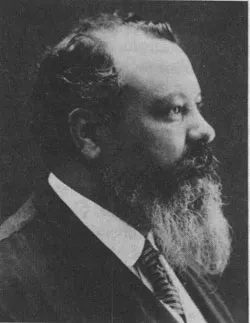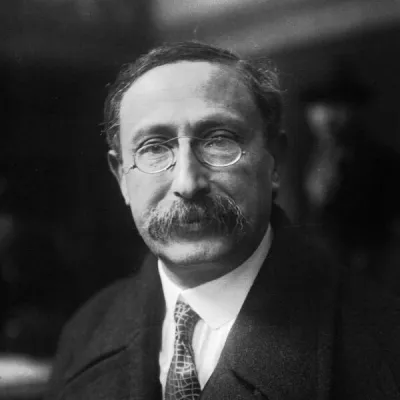
Léon Blum
Human Design Chart
Biography
Refined and with a suave grace, he was nonetheless called a "man of iron." Blum was the author of a half-dozen books, including one on Proust and Stendhal.
He died in Jouy-en-Josas, France on 30 March 1950.
The Human Design of Léon Blum: Manifestor 6/2
Manifestor 6/2 — Design at a Glance
Léon Blum emerged as someone who propelled the world forward not through his own execution, but by guiding other forces. His design presented him as a pioneer and visionary, comparable to an emperor in ancient Rome: He had the image of a great whole, yet delegated the concrete implementation to his soldiers or followers. This role inevitably led to polarization. Since Blum often thought further ahead than his surroundings, he was loved and followed by some, while others misunderstood and rejected him due to his visionary superiority. This conflict between recognition and rejection was a central pain point of his character.
To navigate these tensions and find the right following, his design required a clear strategy: informing. Léon Blum had to communicate his intentions and visions early and precisely before taking action. This served as a filtering mechanism that attracted those who aligned with his direction while distancing incompatible individuals. When he followed this strategy of informing, his system rewarded him with an inner sense of peace. Deviations from it, however, resulted in deep, lasting anger. The dynamics between his polarizing vision and the necessary information strategy thus formed the key to his internal balance.
Emotional Authority
Léon Blum's decision-making process required emotional clarity that only came with time and distance. Spontaneous actions driven by current moods proved misleading for him. This tendency resulted from his emotional authority carried by the defined Solar Plexus Center. This center subjected him to a constant wave of ups and downs in feelings; the world always appeared colored by the momentary snapshot. A sudden state of enthusiasm could quickly turn into negative assessment without reflecting his deeper truth. Quick decisions made in this emotional heat risked serious errors.
The mechanics of his authority dictated patience: he had to let decisions mature, ideally sleeping on them multiple times. This process required him to hesitate and repeatedly ask questions. Over time, the intense feelings subsided, creating emotional distance. Only then did the necessary clarity and calmness set in – the signal that the inner process was complete. This rule applied regardless of other defined centers in his design; emotional authority always took precedence for long-term, life-defining decisions. Thus, Léon Blum showed a structure that channeled impulsivity through conscious delay to reach true inner truth.
The 6/2 Profile — Role Model / Hermit
Léon Blum's design sets a two-phase life path: an early period of experimental learning through trial and error, followed by a later phase of deep reflection. Before his 30th birthday, the energy of Profile Line 3 dominated him. He was someone who actively collected life experiences, with retreat after mistakes being the driving principle. This phase served to build vitality and willpower to face challenges alone.
Around age 30, his Profile Line "Role Model/Natural Talent" activated. Léon Blum metaphorically retreated into a "cave" to look back at his past experiments from a distance. This period of intense reflection became one of healing and deep self-awareness. He overcame the need for separation and shock recovery by turning away from external competition.
From this isolation, he developed wisdom that he later made accessible as a role model. His natural brilliance, often working in private spaces, matured into an inspiring force for others. Léon Blum learned that not every inspiration is automatically valuable and there are limits to human knowledge. Eventually, he emerged from his introspective phase ready to share his ability for deep self-reflection with others, inspiring them rather than merely appearing as a "paper tiger."
Triple Split Definition — Defined & Open Centers
Léon Blum revealed himself as someone whose inner life was marked by constant mental pressure and a clear, firm identity. His design featured defined Head and Ajna centers, generating a perpetual stream of inspiration, questions, and conceptual thinking. However, this mental process was not ready for direct implementation but served to inspire or put others under pressure. With his defined G Center, he possessed a reliable sense of self-identity and direction, while the also defined Throat Center translated these inner states into clear communication. His decisions were significantly guided by his emotional authority in the Solar Plexus Center; truth revealed itself for him only after going through the emotional wave. Additionally, he had spontaneous intuition through the defined Spleen Center, which gave him orientation in the present moment.
In contrast, his Heart, Sacral, and Root Centers were open. The open Heart Center meant that Léon Blum lacked personal willpower and was vulnerable to proving himself through promises or competition, often ending in a cycle of disappointment. His open Sacral Center did not have constant generative energy; he tended to absorb the vital force of his environment and amplify it, which could lead to exhaustion if he neglected his own boundaries. Similarly, his open Root Center absorbed stress from the environment. Instead of using this pressure as personal drive, he was conditioned to escape or unconsciously intensify it rather than trusting his inner authority. This configuration created a dynamic where mental clarity and emotional depth dominated while willpower, endurance, and stress resistance were situationally dependent on the environment.
Channels for emotional transformation, intuitive elegance and clear insight.
Léon Blum was marked by a synthesis of intuitive survival instinct, spontaneous mental clarity, and an urge to seek emotional experience. His design inclined him to move through life with deep self-confidence and spontaneous adaptability, supported by sudden insights and the drive for new emotional depth.
The Channel of Perfect Form 57-10 connected his Spleen Center with G Center. This link between Gate 57 (intuitive insight) and Gate 10 (self-behavior) gave him the ability to be guided moment by moment through deep, acoustic awareness of his environment. It was an art of survival based on self-love and spontaneous, appropriate reaction to what was perceived as not in order without being burdened by future anxieties.
Parallel to this, Channel 61-24, connecting Head Center with Ajna Center, also played a role. Through Gate 61 (secrets) and Gate 24 (rationalizing), he experienced knowledge not as logical deduction but as sudden mutation or satori. His mind was geared towards processing inspiration and letting inner truth emerge in his own time, learning to distinguish what is worth knowing from what isn’t.
Emotionally driving him was Channel 36-35, linking Solar Plexus with Throat Center. Gating Crisis (36) and Change (35) created an emotional manifestation urge that turned against restrictive patterns. He sought new experiences to gain emotional maturity, often through the awareness of the impermanence of feelings. This restless desire for experience served to gain wisdom and inspire others by his example to use the moment.
Additionally, Gates like 51 (willpower) and 62 (logic/details) shaped his structure while Gates 45 and 49 brought ancestral energies. Léon Blum's design thus promoted a way of existence that integrated intuitive security, mental inspiration, and emotional experience.
Individual Circuitry — Circuit Signature
Léon Blum's design inclined him towards individual transformation through the generation of new knowledge. His character was marked by innovative flashes of insight that fostered a drive to go his own unique path and initiate change. This dynamic stemmed from the Knowledge Circuit, which in him connected Head Center with Ajna (Channel 24-61). This channel generated conscious creative impulses acting as acoustic energy of “now”, strengthening his unique identity.
As Léon Blum had a triple definition, these forces existed parallel to other non-directly connected groups. A second independent force line was the Meaning Circuit connecting Throat Center with Solar Plexus (Channel 35-36). Here it was about cyclic processing of emotional waves and past experiences. These feelings served to reflect insights from the past and then express them for learning together with others. The energy was wave-like and repelling in the decline phase of the cycle.
The third, separate group formed through integration via Channel 10-57 between Identity Center and Spleen. This linked intuitive knowledge with the power to self-affirmation. It was about drawing strength from reacting to life and making it effective through proper behavior here and now. Overall, these three isolated segments shaped his essence: innovative mental impulses, emotional reflection of the past, and intuitive self-assertion — existing side by side without a continuous energetic flow between the groups.
Left Angle Cross of the Clarion 1
Léon Blum's design showed a tendency towards structured clarity that shaped his entire life's work. He was someone who not only understood complex relationships but also translated them into clear, tangible forms - a characteristic of the left cross of the Fanfare. This configuration acts like an inner architect: it organizes the chaos of experience and translates it into understandable structures that others can take in. For Léon Blum, this meant that his expression was never arbitrary but always followed a fundamental plan. The Fanfare represents the power to formulate messages so clearly that they are not only heard but also understood and passed on. In his case, this mechanism served as a framework for his mode of expression: he sought out the essence of things and then formulated them with such precision that it dispelled doubts. It was less about mere information than conveying a clear stance that provided orientation. This ability to make the invisible visible and bring it into logical order was no coincidence but a firm part of his energetic signature. Léon Blum used this inner order to not only think through his visions but also articulate them clearly so they could have an impact. His life thus followed a pattern of structural penetration: he repeatedly tried to distill the one from the many and pour it into a form that would endure.
Saturn Return · Uranus Opposition · Chiron Return · 2nd Saturn Return — Life Cycles
Léon Blum's life followed the marked rhythms of astrological transits, which acted as external timekeepers. His first Saturn return brought a phase of structuring and taking responsibility, condensing earlier efforts into solid results. This period laid the groundwork for a more stable life order.
Subsequently came the Uranus opposition, a period often characterized by a drive towards change, detachment or sudden insights. This transit acted as a catalyst for inner upheavals and questioning existing structures, leading to new perspectives.
The Chiron return marked a phase of bloom and fulfillment of individual purpose. Here it was shown how Léon Blum increasingly made his life's mission alive and meaningful if he followed his inner strategy. It was a time of maturation and the realization of the incarnation cross, not healing in a medical sense.
The second Saturn return period concluded this cyclical sequence. In this later phase of life, it was about consolidating the achieved stability and passing on wisdom. These transits formed the temporal framework within which Léon Blum's development unfolded, independent of specific Human-Design mechanisms like defined centers or channels that were not present here. The events occurred as general human experiences structured by these planetary influences.
Manifestor · Emotional Authority — Synthesis
Léon Blum was a pioneer whose life was marked by a deep-rooted need to chart new paths and inspire others (Manifestor type, Channel 61/24). This driving force combined with an acute ability for emotional depth and understanding of complex relationships (emotional authority, defined Solar Plexus), allowing him to view the world through a unique lens. The combination of mental sharpness (defined Head and Ajna Centers) and the capacity for intuitive insight (Channel 51/56) points to someone who not only thought visionarily but also grasped the subtle nuances of life. His life was thus characterized by an ongoing quest for authenticity and the search for a deep understanding of himself - a process that was reinforced by the cyclical nature of his emotional wave.
Central to Léon Blum, however, was the tension between his drive towards innovation (Channel 36-35) and the need for inner clarity (emotional authority). He was destined to spark changes and inspire others, yet simultaneously needed time to process his emotions and make a well-founded decision. This dynamic may have led to an internal conflict between the desire for immediate impact and the necessity of letting things ripen - a paradox that shaped his character and actions.
3 Defined Channels
Incarnation Cross - Left Angle Cross of the Clarion 1
Solar Return
The Solar Return shows the moment when the sun returns to its exact birth position - your personal solar year.
Life Cycles
Discover the life cycles with a detailed triple view (birth chart, cycle chart, composite).
Human Design Profile
- Type
- Manifestor
- Strategy
- To inform others before acting
- Authority
- Emotional Authority
- Profile
- 6/2 - Role Model / Hermit
- Definition
- Triple Split
- Incarnation Cross
- Left Angle Cross of the Clarion 1
- Date of Birth
- 09.04.1872 11:00
- Place of Birth
- Paris, France
Frequently Asked Questions
What was Léon Blum's Human Design type?
What Profile did Léon Blum have in Human Design?
What Authority did Léon Blum have?
What incarnation cross did Léon Blum have?
When was Léon Blum born?
Discover your own Human Design
Are you also a Manifestor? Find out in a personal reading how to use your initiation power peacefully and dissolve resistance.
More Personalities
Back to overviewChristian-Jaque
Kesha

Laurent-Eynac
Lucebert
Masaccio
Papus