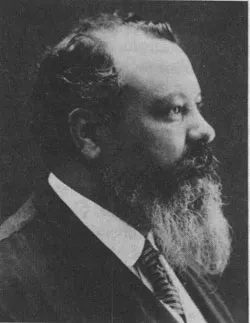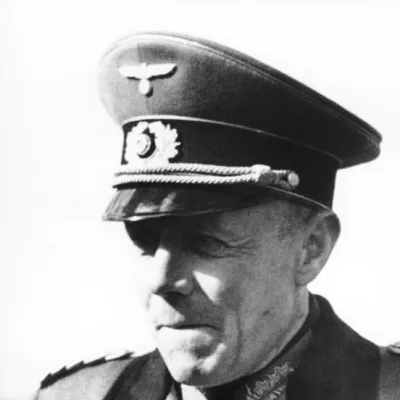
Ludwig Beck
Human Design Chart
Biography
Ludwig Beck — Manifestor with Profile 5/1
Manifestor 5/1 — Design at a Glance
Ludwig Beck embodied the energy of a pioneer and visionary whose nature was to set new directions through far-sighted concepts. His design marked him as someone who acted similarly to a Roman emperor: He had a clear vision of the big picture but left the concrete implementation to others. This structure created an inherent dynamism where his plans were not always shared by everyone.
A central aspect of his constellation was his vulnerability to misunderstandings and polarization. Since his thinking often reached further than that of those around him, he encountered resistance or even rejection while others followed him enthusiastically. To minimize this split and attract the right supporters, his mechanics required a precise strategy: He had to communicate his intentions and visions early and comprehensively. This information was not for seeking permission but to provide clarity so that the appropriate followers could find him.
The inner alignment of this design was measurable by a clear indicator. If Ludwig Beck followed the strategy of informing others and respected his authority, he was rewarded with a deep sense of internal peace. Deviations from this path led instead to persistent, profound anger. This emotional reaction served as a compass pointing towards the correct use of his leading power and indicated when his visions would face resistance without adequate preparation. His design thus determined the framework in which he could remain effective: through clear communication and acceptance that not everyone would share his path.
Ego Authority
Ludwig Beck demonstrated a willpower expressed through spontaneous, uncensored speech. His truth lay not in intellectual contemplation but in the direct expression of his ego. As a projector or manifestor with defined authority in the ego and open emotional, sacral, and spleen centers, he was strongly influenced by external interests and tended to be distracted. He had to learn to listen to himself while speaking to distinguish the mind, which often served other people's needs, from his own will. What came out of him spontaneously reflected his true nature.
When Ludwig Beck did something that truly mattered to him, he possessed the power to achieve his goals and fulfill promises. This consistent following of his own will could appear selfish to others but was necessary for him to stand by himself. His motivation lay in the personal reward of his actions – whether through material success or the drive to be first and break boundaries. In doing so, there was a possibility of leading others into new directions. For Ludwig Beck, pausing after achieving a goal was crucial. Continuous work did not lead to the desired result but risked unhealthy exhaustion and illness. This structure required a clear distinction between the mind's mode of seeking advice and the direct will decision of his ego center.
The 5/1 Profile — Heretic / Investigator
Ludwig Beck revealed himself through a tension between the urge for private research and the magnetic attraction to problem-solving for others. His design as a 5/1 (Hero/Researcher) defined him: He had the ability to act precisely in crises (Line 5), while he simultaneously felt the need to exercise control and demand respect (Line 1). This constellation worked like a master who answered all questions but risked being exhausted by constant inquiries about his knowledge. Line 5 conveyed to him the strength to hold back during times of inactivity and only act when necessary – a concise, effective statement that worked within the collective. At the same time, Line 1 demanded self-determination and clear boundaries; without this willpower, requests for respect could lead to tensions. Ludwig Beck had to learn to say no to maintain balance between public heroism and private research. Otherwise, he risked being drained: He shared his knowledge but was then worn down because he did not set protective mechanisms against excessive demands. His design suggested that true strength lay not in constant answering but in the ability to maintain focus and act only when truly necessary – always with the goal of clearly communicating his positions without sacrificing himself.
Single Definition — Defined & Open Centers
Ludwig Beck revealed himself through his defined triangle of Heart, G-, and Throat Centers as a person of constant inner stability. This structure gave him a reliable way of self-expression: The Heart Center provided the willpower and ego, the G-Center offered firm identity and direction, while the Throat transmuted these energies into concrete communication and action. This created a natural authority to keep promises and act from inner truth without being dependent on external expectations.
At the same time, Ludwig Beck was through his open centers – Head, Ajna, Sacral, Solar Plexus, Spleen, and Root – designed as a sensitive antenna for environmental energies. This openness meant no personal source of mental inspiration or emotional stability but rather an openness to external fields. The open Head Center tended to pick up foreign mental pressures and questions, leading to confusion if he did not trust his inner authority. Similarly, the open Solar Plexus Center absorbed the emotions of his surroundings; instead of his own emotional waves, it reflected the moods of others, making him vulnerable to emotional conditioning.
The open Sacral Center lacked a constant generative energy source. Instead, Ludwig Beck was sensitive to the energy level in other people and places, which could lead to overexertion by using "borrowed" energy without respecting the natural limits of his own power levels. The open Spleen Center carried a fundamental fear of survival and tended to hold onto things that were not good for him to gain a sense of security through others. Finally, the open Root Center absorbed stress from the environment, which could lead to a cycle of adrenalized pressure if he tried to actively deal with this external pressure rather than escape it or use it correctly.
The tension in Ludwig Beck’s design thus lay between the clear, stable energy of his defined triangle and the sensitivity of his open centers. The challenge was not to dilute the clarity of his inner willpower and identity through conditioned reactions to these open fields – such as taking on other people's problems or fears. His strength showed when he used his defined structure to act independently from changing external influences.
Channels for logical leadership and spiritual pioneering.
Ludwig Beck was marked by a design that combined logical pattern recognition with competitive initiation. His Human Design included the Alpha Animal Channel 7-31, which described logical, collective leadership. This configuration relied on tested patterns that one could safely follow; Gate 31 acted as a collective leader while Gate 7 provided the necessary role to lead society – often as the "power behind the throne." Such leadership required an invitation from the majority and was based on shared authority rather than sole rule.
Additionally, the Initiation Channel 51-25 played a structural role. It connected the competing ego energy of Gate 51, which always wanted to be first, with the spiritual potential of Gate 25. This created a natural competitiveness that encouraged individualization. The "shock" of initiation should have strengthened and propelled people forward, yet this process had to occur as an invitation; uninvited initiatives led to frustration. Beck lived this dynamic by exerting pressure to develop deeper awareness in the body, where mastery over self and world went hand in hand.
This was supported by gates like 52 (focus on pattern correction) and 58 (experiment for perfection), which supplied energy to logical processes. Gate 48 enabled the recognition of deeper connections, though implementation could be difficult. In the material realm, Gate 21 directed control over things and required respect in service to the community. Gate 40 brought willpower for liberating others but expected recognition as reward for performance. This combination marked Beck as someone who sought leadership through logical clarity yet was always dependent on the collective's willingness to choose and follow him.
Collective Circuitry — Circuit Signature
Ludwig Beck revealed himself through his design as someone with deep inner conviction and strategic clarity. His Centering Circuit connected the Identity Center to the Heart Center via the Initiation Channel (25-51). This connection created a strong individuality and firm self-worth, which, however – lacking direct Throat linkage in this circuit – was often not verbally articulated. The energy worked inwardly, shaping a courageous character that drew its identity from inner authority rather than seeking external validation.
Parallel to this, Ludwig Beck activated the Understanding Circuit via Channel 31-7 (The Alpha Animal). This connected the Throat Center directly with the Identity Center. Here lay the ability to communicate logical strategies and rational insights in a structured manner. Since this circuit is free of Solar Plexus energy, it involved an "emotionless ratio," focused on future-oriented solutions and sharing clear, unbiased analyses.
As a simple definition, his energy consisted of one continuous group: Throat, Identity, and Heart Centers were energetically linked. This allowed for a direct flow from inner authority (Heart) through identity to verbal expression ability (Throat). Ludwig Beck's design thus united the quiet, firm assertion of individuality with the clear strategic communication of rational concepts. The inner strength flowed directly into the ability to express structured visions without being distracted by emotional fluctuations.
Left Angle Cross of Demands 1
Ludwig Beck was characterized by a fundamental attitude that systematically drew attention to weaknesses and inconsistencies in his environment. His design carried the energy of the left cross of demands, a configuration whose core lay in not overlooking errors but actively naming them. This archetypal role as a reformer demanded correction; it served to question the status quo and demand necessary adjustments.
The constant presence of this inner voice tirelessly sought out flaws to enforce improvement. For Ludwig Beck, this was no arbitrary criticism but a structural necessity of his design: identifying problems that needed solving. This energy acted as a driving force for change by revealing what did not work in the system. The emphasis lay on clearly articulating deficits to elicit a reaction or correction. It was less about destructive undermining than pointing out gaps that had to be closed so that a system could remain stable. This attitude profoundly shaped his interaction with his environment and defined him as someone who sought order by addressing errors.
Saturn Return · Uranus Opposition · Chiron Return · 2nd Saturn Return — Life Cycles
Ludwig Beck's design was marked by cycles of profound transformation, often accompanied by structural reorganization. This dynamic manifested concretely in 1917 when he experienced the death of his wife Amelie Beck. At age 37, he was in a Uranus opposition. This transitory aspect typically triggers sudden breaks and unforeseen turns that dissolve old bonds and inevitably lead to a new life order. The personal loss marked the beginning of a phase of radical change.
Another crucial event occurred in 1938: Ludwig Beck was relieved of his position as Chief of Staff and retired from active service on November 1st. At age 58, he underwent his second Saturn return. This cycle represents maturation, consolidation of responsibility, and often the loss of positions that no longer align with one's inner structure. The retirement was not a mere coincidence but followed the mechanical pattern of this return: it involved distancing from external power structures in favor of a clear, though solitary, personal stance. Both events—the private loss and professional fall—illustrate how his design responded to external shocks through internal restructuring. The mechanics here do not show passive victimhood but rather a process where outer destruction paves the way for a newly defined, more stable inner order.
Manifestor · Ego Authority — Synthesis
Ludwig Beck's life was shaped by an inner dynamic that drew from the drive towards logical leadership and the deep need for individual self-realization (Circuit of Understanding & Centering). He acted as a pioneer (Manifestor), whose visions often rested on existing patterns (Gate 31, Alpha Animal Channel), yet the implementation of these visions always came with the desire to strengthen others in this process and promote their individuality. This tendency towards collective leadership was reinforced by an acute ability to recognize deeper connections (Gate 48) and correct patterns—a talent that could also come with frustration if not adequately recognized.
Central to Ludwig Beck's design was a paradox between the urge for control and the capacity for emotional depth. The defined Heart Center signaled a strong will and the necessity of realizing personal values (Gate 21), while the open Solar Plexus Center made him vulnerable to others' emotions (Gate 25). This tension led him to be capable of influencing and guiding others, yet also constantly struggle with inner conflict and the need for respite. The ability to integrate these opposing forces defined his unique personality and path.
2 Defined Channels
Incarnation Cross - Left Angle Cross of Demands 1
Solar Return
The Solar Return shows the moment when the sun returns to its exact birth position - your personal solar year.
Life Cycles
Discover the life cycles with a detailed triple view (birth chart, cycle chart, composite).
Human Design Profile
- Type
- Manifestor
- Strategy
- To inform others before acting
- Authority
- Ego Authority
- Profile
- 5/1 - Heretic / Investigator
- Definition
- Single Definition
- Incarnation Cross
- Left Angle Cross of Demands 1
- Date of Birth
- 29.06.1880 14:45
- Place of Birth
- Wiesbaden-Biebrich, Germany
Frequently Asked Questions
What is Ludwig Beck's Human Design type?
Which Profile did Ludwig Beck have in Human Design?
What was Ludwig Beck's Authority?
What incarnation cross was assigned to Ludwig Beck?
When was Ludwig Beck born?
Discover your own Human Design
Are you also a Manifestor? Find out in a personal reading how to use your initiation power peacefully and dissolve resistance.
More Personalities
Back to overviewChristian-Jaque
Kesha

Laurent-Eynac
Lucebert
Masaccio
Papus