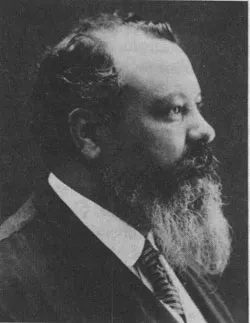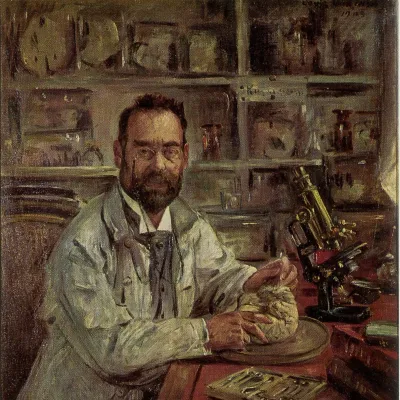
Ludwig Edinger
Human Design Chart
Biography
Edinger died suddenly on 26 January 1918 in Frankfurt of a heart attack.
Human Design Analysis: Ludwig Edinger as Manifestor 3/5
Manifestor 3/5 — Design at a Glance
Ludwig Edinger revealed himself as someone who actively propelled the world forward. His Human-Design type was Manifestor – a pioneer and leader with a clear vision for the future. Like an emperor in ancient Rome, he had grand plans but did not lead every battle personally. Instead, he sent others to realize his goals. This way of acting often polarized people: Some followed him enthusiastically, while others rejected or disliked him. The reason lay in his ability to think beyond most people's reach. This frequently led to Ludwig Edinger being misunderstood. To minimize friction and find the right supporters, it was crucial for his design to inform others about his intentions early and precisely. This strategy of informing was key to his inner balance. When he followed this guideline, his system rewarded him with a deep sense of peace. Acting against this nature, however, left him feeling a persistent, deep anger. His path therefore involved clearly communicating his vision before acting to avoid resistance and maintain his inner peace.
Emotional Authority
Ludwig Edinger's design indicated a tendency towards emotional fluctuation and the necessity for decision-making delays. His inner authority was Emotional Authority, carried by the defined Solar Plexus Center. In Human-Design mechanics, this configuration is prioritized: Whenever the Emotional Center is activated, it takes over the leadership role in decision-making, regardless of which other centers are also defined.
This meant that Ludwig Edinger was subject to a constant wave of emotional ups and downs. His perception of the world was always colored by his current mood; something could appear inspiring at one moment and negative the next. However, these immediate feelings only formed temporary impressions, not necessarily the deeper truth. Quick, spontaneous decisions made directly from such an emotional peak often proved problematic or disadvantageous.
The mechanics of his authority required patience and time. To reach clarity and calmness, Ludwig Edinger had to let decisions mature, ideally through multiple nights' reflection. Only when intense feelings subsided and emotional distance was gained did the true inner truth emerge. This process of delay served to base long-term life decisions not on fleeting mood reactions but on a stable, well-considered understanding.
The 3/5 Profile — Martyr / Heretic
Ludwig Edinger's design inclined him towards being an adventurous hero who gathered knowledge through personal experimentation and later made it available to others. As someone with Profile 3/5, he initially believed nothing given; instead, he learned from direct experiences and even his failures. This line of the experimenter accepted errors as a natural part of the growth process, where inner assertiveness helped turn setbacks into advantages. Excessive caution would have hindered this learning potential; instead, the principle of trial and error was central to his development.
The second component of his profile, the fifth line, determined how he was perceived from the outside. Others projected wisdom and competence onto him that went beyond his actual knowledge. This influence primarily affected his interactions with strangers rather than close relationships. Ludwig Edinger solved other people's problems based on his self-acquired practical knowledge. This heroic role naturally flattered him but could be painful if he failed in public. His solutions were always contingent upon them offering a benefit to him. Thus, he presented his rich trove of life experiences to others who wished to learn from his story.
Single Definition — Defined & Open Centers
Ludwig Edinger's design predisposes him to a constant mental pressure coupled with the ability to reliably express these thoughts. His defined Head Center and Ajna Center create an ongoing impulse towards questioning and understanding. However, this inspiration does not directly connect to energy sources for implementation; instead, his defined Throat Center serves as a channel to communicate conceptual clarity. Thus, Edinger appears as someone who processes mental processes verbally without needing to generate the energy himself.
At the same time, a defined Solar Plexus shapes his emotional landscape. He is designed not to make decisions in the moment but to wait for an emotional wave until clarity emerges. This process lends depth and sensitivity to his judgments but requires patience to prevent impulsive reactions. His defined Root Center provides the necessary adrenergic pressure to move forward in the world and cope with stress, enabling a constant forward movement.
In contrast, Edinger's vulnerability is revealed through several undefined centers. His open G Center means he lacks a fixed identity or direction; he tends to blend into his environment seeking the right place to feel belonging. The open Heart Center makes him susceptible to pressure to prove his worth through promises or competitive behavior despite lacking consistent energy for it. His open Sacral Center leads to taking on foreign energies and feeling easily overwhelmed as he has no boundaries for his vital force. Finally, the undefined Spleen Center reveals a tendency towards fear of survival and clinging to unhealthy situations to simulate a sense of security. These open areas make him sensitive to conditioning influences from his environment.
Channels for emotional transformation, structure, clarity and intuition.
Ludwig Edinger's design tends toward innovative, mutating thought processes characterized by spontaneous insights and the ability to efficiently structure knowledge. This configuration does not show as planned action but rather as a process where knowledge is processed at its own pace and only expressed when it becomes clear enough to be understood.
The Channel of Awareness 61-24 connects the Head Center with the Ajna Center. Here, the inspiration of Gate 61 (Secrets) works together with the rationalizing of Gate 24. This creates a mental space where sudden moments of insight – a Satori – can occur. Edinger is not designed to come to knowledge through logical deduction or experiential learning but rather through an inner truth that reveals itself when mental pressure subsides. His mind often seeks silence to hear these acoustic signals clearly.
This inspired knowledge then flows into the Channel of Structuring 43-23, which connects the Ajna Center with the Throat Center. Gate 43 (Insight) receives breakthroughs from the previous process and transmits them to Gate 23 (Assimilation). Here, abstract knowledge is translated into concrete, understandable language. Edinger's challenge lies in formulating these unique perspectives so that others can receive them without having to plan ahead. When timing is right, his explanations work as efficient tools changing thought structures; at the wrong time, they often remain ununderstood or rejected.
Additionally, the Channel of Recognition 30-41 (Root Center to Solar Plexus) shapes his experience. The drive for new experiences (Gate 41) is fueled by emotional intensity (Gate 30). This creates restlessness and a deep need not just to think about life but to live it emotionally fully. This combination of mutating mind and experiential energy forms a person who passes on knowledge through living experience and clear, structured communication always dependent on the right inner resonance and moment for expression.
Collective Circuitry — Circuit Signature
Ludwig Edinger's design shows a tendency to connect new insights with emotional depth and bring them into the world. As a simply defined individual, he has an uninterrupted energetic flow: Head Center, Ajna Center, and Throat Center are directly linked to Solar Plexus as well as Root Center. This creates an integrated power not just to think ideas but express them emotionally and impulsively.
The Knowledge Circuit shapes him through the Channels of Awareness (Gate 24–61) and Structuring (Gate 23–43). These connect Head, Ajna, and Throat Centers into a single stream. Here it is about expressing his unique identity: creative flashes and innovative deviations from the norm are structured and linguistically formulated. Knowledge arises in the mind, articulated through the Throat Center, serving transformation – both for himself as well as others.
Parallel, the Meaning Circuit works through the Channels of Transience (Gate 35–36) and Recognition (Gate 30–41). This connects Throat, Solar Plexus, and Root Centers. Contrary to the future-oriented logic of the first circuit, this area focuses on emotions, experiences from the past, and their meaningful reflection. Emotional waves from the Solar Plexus flow directly into articulation in the Throat Center supported by the impulse of the Root Center. Thus, he shares felt insights with the collective to learn together from past events. Both circuits use the Throat Center as a common expression point: once for intellectual innovation, once for emotional meaning-making – two separate but intersecting forces.
Right Angle Cross of Maya 1
Ludwig Edingers design carried the imprint of the right cross of the Maya. This configuration described an internal tension between the drive for individual validation and a deep desire to contribute to the community. His chart pointed towards a life task that involved not experiencing these two poles as opposites, but rather fusing them into a harmonious unity.
In Human Design, this cross marks a specific energetic alignment. It challenges the carrier to balance their personal ambitions and egoism through service to others and collective well-being. For Ludwig Edinger, this meant that his path did not lie in isolated self-actualization but rather in using his unique abilities so they benefited the whole. The mechanics of this design show that true satisfaction only occurs when the individual learns to measure their own worth through the support and success of their fellow humans. It was a dynamic search for balance, where personal goals and social responsibility interpenetrated instead of excluding each other. This energy shaped his way of interacting with the world: always aware that individual strength is fully effective only when placed in service to a greater order.
Saturn Return · Uranus Opposition · Chiron Return · 2nd Saturn Return — Life Cycles
Ludwig Edingers design laid a tendency towards structural anchoring and professional authority, which condensed over time. This configuration describes a process where inner clarity and external recognition grow through disciplined work and eventually peak in a stable position.
In 1912, at the age of 57, Ludwig Edinger was appointed Professor of Neurology. For his design, this was a typical moment of the second Saturn return: A cycle often regarded as a phase of maturity and confirmation. During this period, years of groundwork condensed into a solid result that not only reflected personal competence but also found institutional recognition. The appointment marked the pinnacle of a long-term development where his professional knowledge merged with his ability to structure complex relationships. This demonstrates how his design tended to reach a position through continuous effort and patience that conferred both respect and influence. The second Saturn return served here as a catalyst for this final anchoring in his field, by making visible and solidifying the results of his life's work.
Manifestor · Emotional Authority — Synthesis
Ludwig Edinger lived a path shaped by an internal dynamic between vision and emotional depth. As a Manifestor (Design) with defined emotional authority (Authority) and the Profile of the Explorer/Hero (Profile Role), he was shown as someone who persistently sought new paths and generated knowledge from personal experience. The defined mental pressure (Centers) intensified this drive for insight and inspiration, which he brought into concrete form through the Channel of Structuring (Channels/Gates) – often with the goal of empowering others. This ability to learn from personal experience and pass on this knowledge was a central feature of his actions.
Simultaneously, the design revealed a tension between the drive for innovation (Knowledge Circuit) and the necessity of emotional maturity (Authority). The spontaneous insights from the Head Center (Channels/Gates) had to be filtered through the emotional wave to fully unfold their impact. This internal struggle with new ideas and their consequences shaped his path, where the Saturn return at age 57 (Cycles) marked a documented event of career change – an expression of the constant search for confirmation and new orientation.
4 Defined Channels
Incarnation Cross - Right Angle Cross of Maya 1
Solar Return
The Solar Return shows the moment when the sun returns to its exact birth position - your personal solar year.
Life Cycles
Discover the life cycles with a detailed triple view (birth chart, cycle chart, composite).
Human Design Profile
- Type
- Manifestor
- Strategy
- To inform others before acting
- Authority
- Emotional Authority
- Profile
- 3/5 - Martyr / Heretic
- Definition
- Single Definition
- Incarnation Cross
- Right Angle Cross of Maya 1
- Date of Birth
- 13.04.1855 11:30
- Place of Birth
- Essen, Germany
Frequently Asked Questions
What was Ludwig Edinger's Human Design type?
What profile did Ludwig Edinger have in Human Design?
What authority did Ludwig Edinger have?
What incarnation cross did Ludwig Edinger have?
When was Ludwig Edinger born?
Discover your own Human Design
Are you also a Manifestor? Find out in a personal reading how to use your initiation power peacefully and dissolve resistance.
More Personalities
Back to overviewChristian-Jaque
Kesha

Lucebert
Masaccio

Nadar
Papus