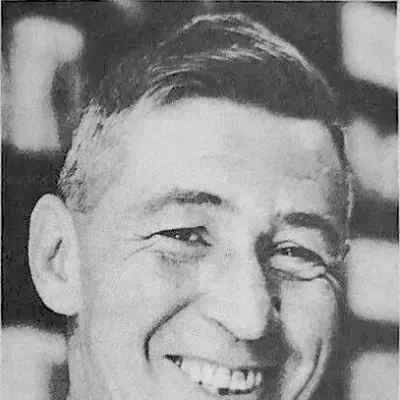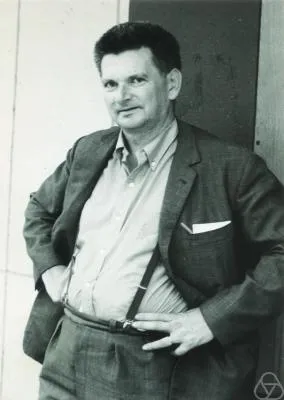
René Thom
Human Design Chart
Biography
He received the Fields Medal in 1958.
He died on 25 October 2002.
René Thom — Projector with Profile 3/6
Projector 3/6 — Design at a Glance
René Thom was someone who interacted with his environment through an intense, focused aura. As a Projector, he did not have a constant internal energy source but rather acted like a bright flashlight: He directed his light precisely onto those areas in other people's systems that were still in the dark or not functioning properly. This ability to immediately recognize errors in complex structures could be unpleasant when used directly and unexpectedly - similar to shining a bright beam into someone else's face.
René Thom's optimal strategy was not to force this diagnostic sharpness but to attract others through his own harmony. By acting as an inspiring example, he invited people to seek his advice. His design required patience: He had to wait for an honest and respectful invitation before sharing his insights. Only in this way could he avoid the typical trap of Projectors, where addressing weaknesses directly causes resistance.
Since his Sacral Center was undefined, René Thom followed a rhythm of phases with high mental activity and necessary rest periods. Constant work without recovery would have quickly burned him out. Living by this strategy of waiting for invitations led to success. Ignoring this rhythm or forcing himself in resulted sooner or later in the typical Projector feeling of bitterness - a sign that his specific potential was not unfolding in its true form.
Emotional Authority
René Thom showed a basic attitude of emotional delay: He did not rely on first impulses but let feelings subside before acting. His inner authority was Emotional Authority, carried by the defined Emotional Center. This configuration followed a permanent wave of ups and downs; his perception was always colored by current mood swings. What appeared inspiring in one moment could be negative in the next. Since this initial impression was only a snapshot, not necessarily the truth, spontaneous decisions based on emotion often had negative consequences.
The mechanics required patience: René Thom needed time to let decisions mature. Sleeping on questions and delaying served to calm intense feelings. Only when emotional distance was gained did clarity set in. This process was especially crucial for long-term life-defining steps. Important is the rule of priority: Since the Emotional Center was defined, this authority always took precedence over all other defined centers in his chart. Regardless of further configurations, he had to follow the rhythm of these emotional waves to recognize his deeper truth and not just respond superficially to mood reactions.
The 3/6 Profile — Martyr / Role Model
René Thoms design suggested a tendency towards a two-phase life path: initially characterized by intense experimentation, later by reflective wisdom. As a 3/6 Profile, he acted like a pure experimenter (Line 3) until the return of Saturn - roughly at age 29. During this phase, trial and error dominated; life was marked by playful testing but also required protection from negative influences through deliberate solitude. Line 3 brought high sensitivity, which often led to uncertainty as René Thom internally struggled between a need for control and a drive for free play.
Only after the first Saturn return did Line 6 activate. This turning point marked the transition from mere experimentation to deep reflection. René Thom withdrew to sort through his previous experiences and gain an overview of what he had seen. The initial gullibility of Line 6 gradually transformed into the ability to precisely assess others' expressive power. Instead of blind trust, he learned to make judgments and choose skills that would stand the test of time. This development led to playful energy from Line 3 being guided by the broad perspective of Line 6. In his later years, René Thom appeared as someone who carried both the curious child and the wise elder within - an inspiring example whose charm lay in making complex connections understandable through lived experience.
Split Definition — Defined & Open Centers
René Thoms Design showed a tendency towards clear, willful communication that was filtered through emotional depth and intuitive spontaneity. His defined Throat Center ensured reliable expression; he did not speak from the mind but transmuted information directly into action or words. This voice gained its substance from his defined Heart Center: René Thom possessed natural willpower and a drive to determine his life and resources himself. He enjoyed working independently and expected recognition for his contribution, which helped him keep promises and strengthen self-esteem through concrete results.
At the same time, his defined Solar Plexus Center acted as an inner authority. Decisions were not made impulsively by René Thom but after waiting out emotional waves. He needed time to gain clarity; only when the emotional charge had subsided did he make a choice. This patience gave him a deep sensitivity for connections, as he took perspectives from various emotional heights and depths. Additionally, his defined Spleen Center provided spontaneous, intuitive warning signals in the present moment. René Thom tended to trust these subtle physical cues that helped him recognize health-promoting situations and protect himself from inappropriate influences without having to rationalize them.
In contrast, his open Head Center showed a vulnerability to mental pressure. René Thom was not designed to provide constant inspiring answers; instead, he tended to identify with others' questions or fall into an internal monologue about unimportant problems when the mental pressure subsided. His open Ajna Center amplified this: He absorbed concepts and theories from his environment without owning them as his own truth. This allowed him intellectual flexibility but also made him feel unsure if he did not have immediate logical answers ready.
Similarly, his open G Center left him acting without a fixed, consistent identity. René Thom adapted to the people and places he encountered; his direction crystallized only in correct relationships. He did not actively seek a fixed place but waited for the environment to initiate it. His open Sacral Center also meant that he lacked constant generative energy. He was prone to absorbing others' vitality and strengthening it, which could easily exhaust him if he had not learned to set boundaries and rest adequately. Finally, his open Root Center absorbed external stress. René Thom was exposed to the adrenalized pressure of his environment; instead of generating this pressure himself, he reacted to it. If he did not recognize the difference between his own and others' stress, he could fall into a cycle of overactivity to escape the unpleasant feeling of absorbed pressure, which could lead to long-term exhaustion.
Channels for community, intuitive clarity and precise communication.
René Thom showed a fundamental disposition that combined intuitive depth with technical mastery. His design suggested that he perfected his talent through repeated experimentation and precision. This was marked by Channel 48-16: Gate 48 sought life-critical information from an inner intelligence, while Gate 16 experimented with new possibilities and refined skills. This combination transformed raw skill into a talent that matured to excellence through engagement and repetition.
At the same time, René Thom had the ability for spontaneous insight in the present moment. The Channel of Brainwave 57-20 connected the intuitive intelligence of the Spleen Center with the Throat Center. Here, inner knowledge based on ancient instincts gained a clear voice. It allowed him to articulate existential truths in the moment and encourage others to awaken their own survival intelligence. This spontaneous connection with the present helped overcome fears of the unknown.
In interpersonal relationships, René Thom sought his place within the community. The Channel of Community 37-40 connected the Solar Plexus Center with the Heart Center. Gate 37 yearned for affection and recognition, while Gate 40 was ready to work to provide for loved ones but needed rewards and breaks. This channel emphasized the importance of fair agreements and loyal bonds within a group, where everyone contributed without hierarchical dominance.
Additionally, other Gates were at play: Gate 9 promoted detailed work and perfection through repetition; Gate 23 supported explaining and acknowledging difference for mutation; Gate 18 discriminated between necessary corrections in the collective process; Gate 44 enabled awareness and transformation through proper interaction; and Gate 22 showed openness as well as graceful waiting to support social mutations.
Tribal Circuitry — Circuit Signature
René Thoms Design pointed towards innovative mental impulses that directly translated into communication. This was evident through the Knowledge Circuit, where René Thom actually only had active Channel 20-57 (Flash of Insight). This connected the Throat Center with the Spleen and promoted sudden creative insights as well as the ability to express new knowledge acoustically and in the moment. Parallel to this, the Understanding Circuit worked through Channel 16-48 (The Wave), which also linked Throat Center and Spleen. Here it was about sharing logical, rational insights focused on visual clarity and strategic future perspectives, free from emotional coloring. Both circuits formed a coherent group of Throat and Spleen in René Thom, imprinting an intense expression through mental innovation and rational structuring.
A separate, parallel energy field emerged from the Ego Circuit configuration. Here, René Thom had Channel 37-40 (Community), connecting Heart Center with Solar Plexus. This connection stood for a balanced relationship of giving and taking as well as mutual support within a group or tribe. Since these centers were not connected to the Throat-Spleen group, this existed as an independent, timeless dynamic of cooperation and resource management, separate from mental expression streams. René Thom thus lived with these two clearly separated energetic focuses: innovative-rational expression and cooperative relationship structure.
Right Angle Cross of Planning 3
René Thoms Human Design featured the right cross of Planning Three. This configuration combined a profound, often unconscious intuition with a clear strategic will to implement plans. It was not about spontaneous impulses but rather a well-thought-out approach based on inner certainty. The mechanics of this cross described an ability to intuitively grasp complex connections and then translate them into concrete logical steps. René Thom showed remarkable consistency: Once a plan was set, it was pursued with great perseverance. His internal compass provided direction, while his will ensured the necessary discipline to maintain that direction even when external circumstances fluctuated. It was not rigid planning in terms of control but rather a flexible strategy based on deep understanding. This combination of instinct and intellect enabled him to act decisively in situations where others remained uncertain. He trusted that his inner perceptions aligned with his outer ability to take action. This created a stable foundation for his work, ensuring that the feeling of 'rightness' was always in harmony with reason. There were no arbitrary decisions but rather a thoughtful process resulting from a unity of inner truth and outer form.
Saturn Return · Uranus Opposition · Chiron Return · 2nd Saturn Return — Life Cycles
René Thoms Human Design indicated a tendency towards deep structural insights that intensified during a phase of personal bloom. The Chiron Return, a cycle between the ages of 49 and 51, marks in Human Design the peak of the incarnation task. Here one's potential unfolds increasingly if strategy and authority were previously observed; meaning and purpose become experiential, not as healing old wounds but as fulfillment of an inner plan.
For René Thom, this fulfillment cycle began in 1972 at age 49. In that year he published the Catastrophe Theory. This event was no coincidence but rather a visible expression of what his design brought to fruition during this life phase: Years of work on complex connections culminated in clear and far-reaching insights. The publication marked the moment when the internal structure of his thinking became outwardly tangible and concrete – manifesting in the sense of 'becoming effective' or 'showing itself'. This cycle underscores how René Thom implemented his life task during a phase of maturity and clarity, driven by the necessity to make the hidden visible.
Projector · Emotional Authority — Synthesis
René Thom lived an inner continuity between recognizing patterns and communicating these insights. As a Projector with defined Throat (linked through Channel Wavelength), he perceived subtle disharmonies (Gate 48) that others missed and possessed the ability to express observations in powerful form (Gate 16). This combination was evident when, after reaching a certain maturity level through the Profile of Explorer/Role Model, he gained deep insights which he then communicated. Emotional authority strengthened this process by requiring careful consideration before sharing insights. The right cross of Planning Three indicated a natural inclination to develop strategies and order the world around him – an aspect that manifested in his work.
A central paradox in René Thoms design lay in the interplay between observational acumen and emotional depth. He was designed to recognize errors in systems (Gate 48) and offer solutions, yet the emotional wave required time and maturity before he would express insights. This tension between immediate problem recognition and the need for emotional clarity may have led to an internal conflict: the desire to correct immediately versus the wisdom of waiting and fully understanding the situation first.
3 Defined Channels
Incarnation Cross - Right Angle Cross of Planning 3
Solar Return
The Solar Return shows the moment when the sun returns to its exact birth position - your personal solar year.
Life Cycles
Discover the life cycles with a detailed triple view (birth chart, cycle chart, composite).
Human Design Profile
- Type
- Projector
- Strategy
- Wait for the respectful invitation
- Authority
- Emotional Authority
- Profile
- 3/6 - Martyr / Role Model
- Definition
- Split Definition
- Incarnation Cross
- Right Angle Cross of Planning 3
- Date of Birth
- 02.09.1923 00:10
- Place of Birth
- Montbéliard, France
Frequently Asked Questions
What was René Thom's Human Design type?
What profile did René Thom have?
What authority did René Thom have?
What incarnation cross did René Thom have?
When was René Thom born?
Discover your own Human Design
Are you also a Projector? Find out in a personal reading how to unfold your leadership qualities and recognize the right invitations.
More Personalities
Back to overviewSissy Spacek

Alain-Fournier

Anémone

Ann-Margret

Bourvil

Hergé