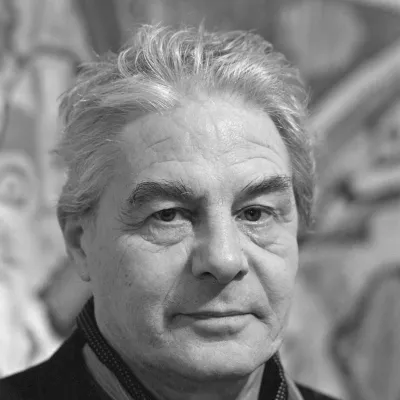
Rudolf Arnheim
Human Design Chart
Biography
He learned Gestalt psychology from studying under Max Wertheimer and Wolfgang Köhler at the University of Berlin and applied it to art. Other major books by Arnheim include Visual Thinking (1969), and The Power of the Center: A Study of Composition in the Visual Arts (1982).
He lived in Germany, Italy, England, and America where he taught at Sarah Lawrence College, Harvard University, and the University of Michigan. He greatly influenced art history and psychology in America.
The noted centenarian Rudolf Arnheim died on 9 June 2007 at age 102 in Ann Arbor, Michigan.
The Human Design of Rudolf Arnheim: Manifestor 3/5
Manifestor 3/5 — Design at a Glance
Rudolf Arnheim revealed himself as a pioneer and visionary, whose design predestined him to lead the world into a new future. His character matched the metaphor of an emperor in ancient Rome: He possessed the vision of a great empire but did not wage the necessary wars himself; instead, he sent others to conquer foreign lands for him. This superior perspective inevitably led to misunderstandings and polarization. Not everyone liked his plans; while some loved his big dreams and followed him, others hated or rejected him precisely because of these visions. This conflict between understanding and rejection formed the central pain point of his design.
To find the right followers, it was essential for him to inform other people about his intentions at the right time and accurately. This strategy of informing served to reduce resistance and attract the right supporters. If Rudolf Arnheim lived according to this strategy and followed his inner authority, he was rewarded with a feeling of internal peace. However, if he deviated from this path and lived against his design, he instead felt a persistent, deep anger. This dynamic between the need to inform, the resulting inner peace or the opposite anger shaped his life energy fundamentally.
Ego Authority
Rudolf Arnheims's design featured an unusual configuration: defined Ego Center with open Emotional, Sacral, and Spleen Centers. This structure determined his inner authority, rooted in willpower. His truth was revealed not through rational analysis or emotional fluctuations but through spontaneous, uncensored speech. Arnheim had to learn to listen to himself while speaking to separate the authentic impulse of the Ego Center from mental constructs. The mind primarily served the open centers and often reflected the interests of others, whereas his own will came directly from the throat.
This mechanism required a strict distinction: What spontaneously burst forth was his truth; what he thought was often only an adaptation to external expectations. When Arnheim did something that truly mattered to him, he possessed the willpower to achieve goals and keep promises. This consistent following of his own will appeared outwardly as selfish. For him, it was crucial that his actions rewarded himself – whether through material success or the drive to exceed limits and be first in new directions. After achieving a goal, a pause was necessary; continuous work led to exhaustion with this configuration. His credibility depended on standing by this specific will.
The 3/5 Profile — Martyr / Heretic
Rudolf Arnheim's design featured a tendency towards 'trial and error'. He appeared as someone who initially accepted little without trying it himself. This attitude stemmed from Profile 3/5, the experimenter and hero. Line 3 drove him to personally test everything and accept mistakes as an essential part of the learning process. In doing so, he sought unusual discoveries through direct action.
This self-learned knowledge later served Line 5, which provided solutions for others during crises. Arnheim acted as a competent problem solver and storyteller, whose practical experiences had a positive impact on his surroundings. Others sought advice from him because they wanted to learn from his lived insights. This role of helper flattered his self-esteem, perceived through Line 5 as maturity and self-actualization.
At the same time, this configuration carried risks. Public failures could be painful since he experimented in front of others. The dynamic between the urgent need for personal experimentation (Line 3) and the environment's expectation to act as a hero (Line 5) shaped his interactions. After such crisis phases, he often withdrew to form new connections or start anew, driven by the mutative nature of his third line. His path was marked by constant oscillation between private experimenting and public helping.
Single Definition — Defined & Open Centers
Rudolf Arnheim's design established a strong internal framework: He had defined Head, Ajna, and Heart Centers as well as a defined Throat and G Center. This configuration generated a constant mental pressure towards inspiration and concept formation, which he could directly translate into reliable communication. His thinking was consistently active; he understood connections in his own way and expressed them verbally. The defined Heart Center provided the willpower to keep promises and control resources autonomously, while the G Center offered a firm self-identity and clear direction. Arnheim appeared as someone who acted with inner authority and defended his ideas.
At the same time, his design was marked by four open centers: Sacral, Solar Plexus, Spleen, and Root were undefined. The open Sacral Center meant that he did not have a constant energy flow for generative work. Instead, his productivity responded to external energies; he tended to amplify borrowed energy, which could lead to exhaustion without boundaries. His open Solar Plexus absorbed the emotions of the environment, making him vulnerable to personalizing foreign moods and finding himself in emotional waves that were not his own. The open Spleen Center made him sensitive to conditioned fears; he often unconsciously sought security from others to satisfy a fundamental survival need rather than trusting spontaneous impulses. Finally, his open Root Center absorbed stress from the environment, leading him to either intensify or avoid adrenalized pressure instead of using it as personal drive. Arnheim had to learn to separate himself from these external influences and use his energy in bursts rather than continuously.
Channels for curiosity, awareness, leadership and pioneering spirit.
Rudolf Arnheim's design established a tendency towards precise logical pattern recognition that he did not analyze in isolation but wove into narrative structures. This synthesis of facts and stories shaped his way of imparting knowledge.
The Channel of Curiosity 11-56 connected the Ajna Center with the Throat Center. It drove an insatiable search for new perspectives, which worked as a magical storytelling experience. Instead of dry data, he presented ideas in ways that stimulated imagination and feelings of listeners; his parables served to teach or entertain by making abstract concepts emotionally accessible.
Simultaneously, the Channel of Awareness 61-24 between Head and Ajna Centers operated. It brought forth mutative, inspiring knowledge that could not be controlled. Sudden insights broke through old thought patterns and offered new perspectives. This knowledge emerged at its own pace, independent of the will to control it, and demanded surrender to the moment of inspiration rather than planned thinking.
In his design, the Channel of Initiation 51-25 between Heart and G Centers was active. It endowed a natural competitiveness and the ability to move others towards individualization through initiation. This channel promoted the urge to transcend boundaries and set an example for others through personal triumphs, with the process understood as a mystical experience in the heart.
The juxtaposition in his design also showed the Channel of the Money Line 21-45 between Heart and Throat Centers. It reflected a tension between the will for independence and control versus the necessity to serve the tribe. This created a dynamic where material responsibility and authority had to be negotiated to protect both personal interests and support the community.
Individual Circuitry — Circuit Signature
Rudolf Arnheim's design established a tendency towards inner strength and individual identity search, embedded in a context of cooperation. His Human Design featured a Simple Definition, meaning that all defined centers – Ajna, Throat, Heart, G Center, and Head – were energetically connected and worked as an interconnected system.
The Knowledge Circuit linked his Head with the Ajna Center through the Channel of Awareness (24-61). This promoted innovative flashes of insight and a quest for new knowledge driven by the desire to initiate change. Parallel to this, the Centering Circuit, which connected Identity with Heart Center (Channel 25-51, Initiation), operated. This configuration created solid personalities with strong inner convictions and courage, even if the direct expression was lacking.
Emotional Reflection played another role: The Meaning-Finding Circuit linked Ajna and Throat Centers (Channel 11-56, Curiosity). Here it was about reflecting on past experiences and sharing these insights with the collective to learn from them together. Finally, the Ego Circuit emphasized cooperation in a tribal context. Through the Channel of the Money Line (21-45), it linked Throat with Heart Center. This supported resource management and mutual aid. However, as there was no connection to the Sacral Center, rest periods were necessary to regenerate energy for these social interactions. The synthesis of these circuits shaped an attitude that connected individual transformation with collective support.
Right Angle Cross of Maya 2
The current raw content does not contain any descriptive facts that allow for a characterization of Rudolf Arnheim from this specific Human Design mechanism. There is no information available that allows conclusions about his behavior, inclinations, or inner drive through the right cross of Maya 2. Therefore, it is not possible to create text linking this mechanism with his person without violating the strict rule of using only provided facts and making no assumptions. The description is empty; there is no content basis for analysis. Any attempt to attribute properties here or derive a character trait would be pure invention and not based on the given data. Consequently, this chapter remains content-empty as the necessary substance is missing to describe Rudolf Arnheim's design in this area. No event is built-in since none was provided. General HD theories are not applied as this would represent an uncontrolled expansion of facts. The only correct response to this empty data field is the assertion that there is no material for characterization.
Saturn Return · Uranus Opposition · Chiron Return · 2nd Saturn Return — Life Cycles
Rudolf Arnheims life followed a clear rhythmic structure, marked by three distinct astrological cycles. These phases did not form arbitrary segments but served as structural frameworks for profound biographical turning points where his inner orientation shifted outwardly.
The first Saturn return around the age of 29 marked the transition into a new phase of self-responsibility and consolidation. Rudolf Arnheim moved to Rome in 1933. This step was not merely a location change but the concrete implementation of a necessary reorganization of his work as required by this cycle: laying the foundation for the following years.
The Uranus opposition around the age of 38 brought a phase of breaking free from old structures and the urge towards innovation. Rudolf Arnheim received a Rockefeller Fellowship at the Office of Radio-Research in 1942. This event underscores the typical dynamics of this opposition: established paths were left behind to encounter new, often technologically or methodically advanced fields. Recognition came through the ability to adapt to changed requirements.
The second Saturn return around the age of 55 signaled another stage of mastery and high-level intellectual exchange. Rudolf Arnheim undertook a teaching and study stay in Japan in 1959. Here, the maturity represented by this cycle was shown: no longer the arduous building up but sharing acquired wisdom in a new cultural context. The cycles thus provided the rhythm for his development from building up through transformation to deeper integration of his work.
Manifestor · Ego Authority — Synthesis
Rudolf Arnheim was a pioneer whose life was marked by a deep-rooted drive towards understanding and conveying this understanding (Head and Ajna Centers defined, Channel 61/24). He navigated complex ideas not to keep them for himself but to transform them into accessible stories (Channel 56/11) that inspired others and provoked thought. This ability to distill knowledge and present it anew was closely linked with his defined Heart Center – an inner drive to manifest visions and utilize material resources for his goals (Channel 21/45).
A central paradox in Arnheims design lay in the tension between his capacity for deep analysis and the need for constant stimulation. His defined Ego Center, connected with open Root Center energy, points to a man who sought control over his projects but was also vulnerable to external pressure. This dynamic led to an unending cycle of creative energy and the need for affirmation, which is evident in his numerous studies and publications (Cross Tones 62, 47, 32, 15).
4 Defined Channels
Incarnation Cross - Right Angle Cross of Maya 2
Solar Return
The Solar Return shows the moment when the sun returns to its exact birth position - your personal solar year.
Life Cycles
Discover the life cycles with a detailed triple view (birth chart, cycle chart, composite).
Human Design Profile
- Type
- Manifestor
- Strategy
- To inform others before acting
- Authority
- Ego Authority
- Profile
- 3/5 - Martyr / Heretic
- Definition
- Single Definition
- Incarnation Cross
- Right Angle Cross of Maya 2
- Date of Birth
- 15.07.1904 18:45
- Place of Birth
- Berlin, Germany
Frequently Asked Questions
What was Rudolf Arnheim's Human Design type?
Which Profile did Rudolf Arnheim have in Human Design?
What authority did Rudolf Arnheim have?
What incarnation cross was assigned to Rudolf Arnheim?
When was Rudolf Arnheim born?
Discover your own Human Design
Are you also a Manifestor? Find out in a personal reading how to use your initiation power peacefully and dissolve resistance.
More Personalities
Back to overviewAlain-Fournier

Angeli

Christian-Jaque
Juninho

Kesha

Lucebert