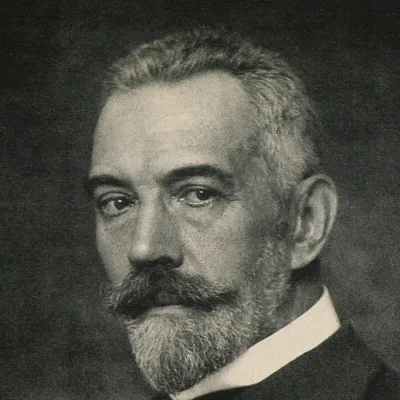
Theobald Von Bethmann Hollweg
Human Design Chart
Biography
A member of a Frankfurt banking family, Bethmann Hollweg studied law at Strassburg, Leipzig, and Berlin and entered the civil service. He was appointed Prussian minister of the interior in 1905 and state secretary in the Imperial Office of the Interior in 1907. He succeeded Bernhard, Fürst (prince) von Bülow, who resigned as chancellor on July 14, 1909.
Bethmann’s domestic policies were mildly liberal for their time and place, but he almost invariably yielded to persons more extreme and more forceful than himself. In foreign policy, his negotiations with the British over reduction of naval armaments came to nothing because of the opposition of German admiral Alfred von Tirpitz, supported by William II (Kaiser [emperor] Wilhelm II). Bethmann’s secretary of state, Alfred von Kiderlen-Wächter, created the Moroccan (Agadir) crisis (see Moroccan crises) of July–November 1911, in which Germany backed down before France and Great Britain. Bethmann and Sir Edward Grey, the British foreign secretary, worked successfully to prevent the expansion of the Balkan Warsinto a major conflict between Austria-Hungary and Russia; this was probably Bethmann’s greatest success in foreign affairs.
At home, the enactment of his legislation for enlarging the army did not reduce anxiety about Germany’s international situation. Although he believed that a democratic monarchy based on a Reichstag majority was inevitable, he was not an enthusiast of parliamentary government, and his half-hearted efforts to reform the Prussian suffrage were ineffective.
Having no desire for war, Bethmann nonetheless is thought to have initiated the July crisis of 1914 with the “blank check” to Austria-Hungary for measures against Serbia. Subsequent German warnings to Austria-Hungary and its prospective opponent Russia could not prevent the outbreak of war.
What does Manifesting Generator 2/4 mean for Theobald Von Bethmann Hollweg?
Manifesting Generator 2/4 — Design at a Glance
Theobald Von Bethmann Hollweg was someone who possessed hybrid energy: the constant power of a Generator paired with the lightning-fast execution force of a Manifestor. His design suggested that he could skip steps and quickly draw events into his life as soon as he responded to an inner impulse. This speed, however, brought two specific pitfalls. First, there was the risk of overlooking important stages, forcing him to backtrack later and make up for lost ground—a process undermining his internal satisfaction. Second, he tended to handle multiple fronts simultaneously, driven by various stimuli.
The strategy of his design did not require initiating but responding to life. Only when his Sacral Center responded with a clear “yes” was his action effective and satisfying. As long as he followed this inner resonance, the parallel handling of different tasks could be experienced as playful variety. If this strategy was ignored or if he acted without internal consent, his creative power quickly turned into frustration. His energy was thus not a constant push but a reactive force that only had lasting impact when steered by continuous confirmation from within and not in blind zeal to tackle multiple projects at once.
Emotional Authority
Theobald Von Bethmann Hollweg never made decisions based on fleeting impulsiveness. His design indicated a tendency towards deep emotional reflection before acting, stemming from his Emotional Authority carried by the defined Solar Plexus Center. In Human Design mechanics, this authority always takes precedence over all other defined centers; it dictated the decisive rhythm of his inner compass.
His emotional state was subject to constant waves of up and down. The world appeared colored through his current mood: he could be enthusiastic about something one moment and view the same situation negatively in another. His immediate feeling, however, was only a snapshot, an initial impression that did not necessarily reflect his true reality yet. Quick, spontaneous decisions from such an emotional state would often have negative consequences for him.
Instead, his path required patience and conscious delay. He took the necessary time to let a decision mature by reviewing it multiple times or even sleeping on it. Over time, intense feelings subsided, and an emotional distance set in. This process led to clarity and calmness. Only when this state was reached did he know that he had gone through his inner process. This method of delay served to gain deeper and more comprehensive insights, especially for long-term decisions that significantly influenced the course of his life.
The 2/4 Profile — Hermit / Opportunist
Theobald Von Bethmann Hollweg oscillated between a deep need for withdrawal and the urge towards community. His design indicated a tendency to reflect in the “cave” before returning to the network with brilliant ideas later on. This tension matched his Profile 2/4: Line 2 demanded solitude for inner clarity, while line 4 sought exchange with familiar people. It was important for him to clearly communicate when he needed company and when he needed silence. During alone time, he could evaluate the knowledge of his network. Simultaneously, his problem-solving competence (Gate 9) shone outward; others saw it as a skill in detail work. However, this focus on details risked softening through Jupiter influence, potentially leading to depression. On the other hand, Gate 40 emphasized the need for correct timing for influence within the network. Here, willpower and rest phases had to be balanced to prevent burnout. The danger lay in overloading by neglecting quality for quantity. Theobald Von Bethmann Hollweg needed to learn to heed this correction: only through targeted pauses could he maintain energy for his network and make his ideas effective without burning himself out. His path was to harmoniously integrate these two poles—the hermit and the networker.
Split Definition — Defined & Open Centers
Theobald Von Bethmann Hollweg was characterized by a design that combined mental clarity with vital endurance. His defined Ajna Center guaranteed a consistent, specific form of conceptual thinking; he was always engaged in a mental process and created concepts independently of external influence. This intellectual structure flowed directly into his defined Throat Center, allowing him to manifest verbally what he thought. His voice served as a reliable channel for his inner theories without acting impulsively.
In addition to this cognitive strength, he possessed a defined Sacral Center, the motor of his life energy. This vital force was only available through reaction; he needed an affirming response to external stimuli to use his energy productively and satisfyingly. Initiated actions without such confirmation would have led to frustration. His defined G Center gave him a firm self-identity and a clear sense of direction, while the defined Heart Center provided him with the willpower to keep promises and set his own pace.
At the same time, he was exposed to certain external influences through open centers. The open Head Center made him vulnerable to mental pressure; he tended to identify with questions or doubts from others rather than recognizing them as not his own. This could lead to inner confusion when trying to solve problems that were not his. Additionally, his open Root Center absorbed the stress and adrenaline surge of the environment. He was programmed to take on this external pressure, making him vulnerable to overload if he did not learn to distinguish between his own and others' stress. His challenge lay in protecting his inner authority – here represented by the defined Solar Plexus Center, which demands emotional clarity after waiting out the waves.
Channels for intuitive experimentation, insight, pioneering spirit, power and community.
Theobald Von Bethmann Hollweg was characterized by a combination of intuitive awareness and the drive to structure complex connections. His design linked the defensive intelligence of the Spleen with sacral life force in Channel Power 34-57. This configuration created a permanent survival instinct that kept him acoustically alert and physically fit; he responded spontaneously to vibrations in his environment to remain independent. Parallel to this, he had the ability to merge intuitive depth with technical mastery. The Channel Wavelength 48-16 connected his inner intelligence with the Throat Center, driving him to perfect skills through repetition and experimentation. His talent flourished when he received recognition and resources to refine this pattern.
At the same time, his mind was geared towards clearly expressing innovative perspectives. The Channel of Structuring 23-43 allowed him spontaneous insights that he could only effectively communicate once the timing was right and he did not anticipate. His thinking often felt forward-looking; through patient explanation, he could elevate organizations to a higher level of efficiency. In interpersonal dynamics, he sought his place in the whole. The Channel Community 37-40 connected his Heart with the Solar Plexus, causing him to carefully wait until a personal invitation brought him into an organization. He built bridges for individuals to live within a harmonious structure based on mutual support and loyalty to the group.
Additionally, he was marked by the competitive energy of Channel Initiation 25-51. He often awakened competitiveness in others to recognize their potential for individualization and strengthen it through 'shocks.' This happened authentically only when invited; forced initiation processes led to bitterness. His detailed work in the Sacral Center (Gate 9) supported this dedication by focusing purposefully on small details, while Gate 46 promoted his full involvement in the process, helping him always be at the right place at the right time.
Individual Circuitry — Circuit Signature
Theobald Von Bethmann Hollweg was characterized by a design that combined inner convictions with structured communication, though these forces operated separately. His Shared Definition separated two independent energies: one group consisting of Throat, Spleen, Sacral and Ajna Centers, and another comprising G, Heart, and Solar Plexus Centers. These groups were not directly connected but existed as parallel, independent streams.
In the Knowledge Circuit, Channel 43-23 linked the Ajna with the Throat Center. This enabled a clear structuring of thoughts into words, transforming and expressing new knowledge. Parallel to this, in the Focusing Circuit, Channel 25-51 between Identity and Heart Centers promoted solid, courageous personalities with strong individual convictions that often remained difficult to verbalize without direct connection to the Throat Center.
The Understanding Circuit connected via Channel 16-48 the Throat with the Spleen Center. This was about sharing logical, rational insights for societal improvement free from emotional distortions. In the Ego Circuit, Channel 37-40 linked Heart and Solar Plexus Centers. This supported cooperation and a balanced give-and-take within a community but required pauses to regenerate resources.
Finally, the Integration Circuit through Channel 34-57 connected the Sacral with the Spleen Center. This connection channeled power from reacting to life through intuitive knowledge into the present to secure personal survival and manifest individual strength. All these circuits shaped his essence as complex but clearly delineated energetic fields.
Right Angle Cross of Planning 4
Theobald Von Bethmann Hollweg exhibited a fundamental approach that aimed at strategic preparation and structured implementation. His design bore the imprint of the right cross of Planning Four, a configuration indicating that actions should not be impulsive but arise from careful forethought. This mechanism fostered a nature that valued clear plans and made decisions only after considering all relevant aspects. It was an energy seeking stability through organization and attempting to minimize chaos through methodical approach. Theobald Von Bethmann Hollweg lived with the inner instruction to weigh his steps carefully before executing them. This created a character trait of patience and thorough consideration, where spontaneous reactions yielded to long-term strategies. The underlying dynamics called for a framework within which creativity and action could safely occur without descending into disorder. Thus, this configuration shaped his essence through a consistent orientation towards planfulness and structured execution, showing him as someone capable of creating order from complex situations by first gaining an overview and then acting.
Saturn Return · Uranus Opposition · Chiron Return · 2nd Saturn Return — Life Cycles
Theobald Von Bethmann Hollweg's Human Design profile shaped a stance of structural adaptation and institutional anchoring. His path revealed itself as an ongoing integration into established hierarchies, where external events noticeably guided his inner alignment. In 1884 he passed the assessor examination with distinction; this first Saturn Return marked the beginning of a phase in which discipline and long-term planning became a solid foundation. Recognition by the system confirmed his path of consistent development within existing frameworks.
At age forty, in 1896, he was promoted to Oberpräsidentialrat during the Uranus opposition. This configuration often brings unexpected turns or sudden upgrades through external circumstances. For him, this meant an upward push that relied less on individual rebellion and more on a fateful alignment that solidified his position within the administrative apparatus.
The Chiron Return in 1905 brought his appointment as Prussian Minister of the Interior. In this fulfillment cycle between the ages of 49 and 51, the personal sense of coherence unfolds increasingly; here his destiny in public service entered a phase of full effectiveness and visibility.
Finally, the second Saturn Return in 1913 showed a deep crisis. When he declared that the "mantle of the Kaiser" must be respected, the burden of structural commitment became apparent. This cycle often tests the durability of earlier achievements under pressure; here the tension between personal authority and the unyielding demands of higher power structures was revealed.
Manifesting Generator · Emotional Authority — Synthesis
He was a person marked by the combination of manifesting Generator energy and emotional authority. The constant sacral availability (defined Sacral Center) created a foundation for quick action, yet the defined Ajna Center simultaneously fostered deep, conceptual thinking processes. This constellation led to an internal dynamic where spontaneous impulses were filtered through enduring mental scrutiny – a blend of speed and deliberation that was evident in career cycles marked by rapid advancements (1896) alternating with phases of deeper decision-making (1913). The shift between the need for withdrawal (Line 2) and the search for community (Line 4) further accentuated this inner rhythm, emphasizing both the necessity of isolation for clarity and the longing for exchange.
A central paradox lay in the tension between the desire for independent shaping (Knowledge Circuit) and the emotional wave that required a thorough engagement with issues. The ability to articulate ideas through the Throat Center (Channel of Reflection) was overlaid by an inner processiveness that slowed quick action and prompted reflection on existing concepts. This led to a life where both innovative impulses and deep reflection played roles, though integrating these aspects did not always proceed smoothly.
5 Defined Channels
Incarnation Cross - Right Angle Cross of Planning 4
Solar Return
The Solar Return shows the moment when the sun returns to its exact birth position - your personal solar year.
Life Cycles
Discover the life cycles with a detailed triple view (birth chart, cycle chart, composite).
Human Design Profile
- Strategy
- To respond - wait for something to respond to
- Authority
- Emotional Authority
- Profile
- 2/4 - Hermit / Opportunist
- Definition
- Split Definition
- Incarnation Cross
- Right Angle Cross of Planning 4
- Date of Birth
- 29.11.1856 07:45
- Place of Birth
- Hohenfinow, GER
Frequently Asked Questions
What was Theobald Von Bethmann Hollweg's Human Design type?
Which profile did Theobald Von Bethmann Hollweg have?
What authority guided Theobald Von Bethmann Hollweg's decisions?
When was Theobald von Bethmann-Hollweg born?
Discover your own Human Design
Are you also a Manifesting Generator? Find out in a personal reading how to unfold your multi-talents and direct your energy wisely.
More Personalities
Back to overviewAldair

Alizée

Angeli

Arletty

Artus

Balthus