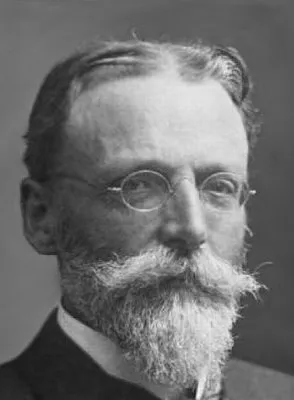
Theodor Escherich
Human Design Chart
Biography
Escherich became renowned in 1903 when he founded the Säuglingsschutz (Infant Defence Society) and started a high-profile campaign for breastfeeding. He died in Vienna on 15 February 1911, aged 53.
Human Design Analysis: Theodor Escherich as Projector 2/4
Projector 2/4 — Design at a Glance
Theodor Escherich's Human-Design as a Projector established a specific energetic structure: He did not have a constant, intrinsic source of life energy through an undefined Sacral Center. Instead, his design showed phases of high activity and rapid workability that had to be accompanied by mandatory rest periods to prevent burnout. His focus was on bringing 'light into the darkness' for other people; he was designed to immediately recognize errors in systems or others.
This ability worked effectively only if it wasn't used aggressively. Directly addressing problems would have triggered resistance from his environment. The optimal strategy for him consisted of waiting for a respectful and sincere invitation from others. Only then could he use his focused aura to illuminate the path without being perceived as unpleasant.
If Theodor Escherich lived according to this mechanism, he was rewarded with success. However, if he yielded to societal pressure – such as through an educational system or jobs that did not take into account his energy needs – and ignored the need for recovery, it would lead sooner or later to his non-self theme: bitterness. His design therefore required selective interaction where he only contributed insights where they were actively sought after and appreciated.
Emotional Authority
Theodor Escherich's design established a tendency towards emotional wave motion that significantly influenced his decision-making processes. As someone with defined Emotional Authority, he was subject to constant ups and downs of feelings that colored perception through the current mood. What appeared inspiring in one moment could turn negative in the next; this initial impression was only a snapshot, not necessarily the deeper truth. Quick, spontaneous decisions based on such emotions often had negative consequences for him. Instead, his design required patience: he needed to take time to let decisions mature. Sleeping on important questions and hesitating multiple times served to even out intense feelings. Only with gained emotional distance did clarity and calm set in. This process was particularly crucial for long-term decisions that significantly influenced the life course. Emotional Authority always took precedence over other defined centers, regardless of what else was activated in his design. Theodor Escherich thus showed himself as someone who came to solid insights through waiting and internal condensation rather than relying on impulsive reactions. This mechanism described a life task of utilizing emotional depth without blindly following it.
The 2/4 Profile — Hermit / Opportunist
Theodor Escherich's design established a tendency to oscillate between the deep need for withdrawal and the urge to connect. As a 2/4-Profile ("Natural Talent / Networker"), he showed an ongoing interplay: Line 2 demanded solitude to dive into internal processes and gain clarity; Line 4 drew him back into his familiar environment to spend time with chosen people. This configuration required clear communication of boundaries – when he sought company and when he wanted to be undisturbed. Only if this balance was maintained could he reflect on the knowledge from his network during solitary times and develop brilliant ideas. The mechanism also emphasized the necessity of correct opportunities (Gate 40) to gain influence in the network without being overwhelmed into burnout. At the same time, his problem-solving competence (Gate 9) shone through, with collaboration enhancing the potential for detail work. However, Jupiter energy from Gate 9 posed the risk that focus on details could soften and lead to depression if necessary concentration was not balanced by rest phases. Thus, his design marked a rhythm of isolated immersion and social integration, which only worked when he prioritized the quality of connections over their quantity and regularly withdrew from the network to regenerate.
Split Definition — Defined & Open Centers
Theodor Escherich's design established a consistent, reliable way of self-expression and identity. His defined G Center gave him a clear sense of direction and the feeling of being lovable without having to rely on others. This inner security influenced his communication: The also defined Throat Center served as a pivot point that transformed messages from within into the world. He did not speak impulsively but rather from a stable source – whether it was his identity or will.
This will was shaped by the defined Heart Center, which gave him access to willpower and ego energy, enabling him to keep promises and determine his own resources. He tended to actively shape his life and was recognized for his contribution. Simultaneously, the defined Solar Plexus Center acted as an emotional authority. His decisions did not arise in fleeting moments but through waiting out the emotional wave until clarity emerged. This mechanism protected him from impulsive reactions and allowed deep insights that only revealed themselves over time.
In contrast, his open Head Center showed a vulnerability to mental pressure. He tended to be distracted by doubts or questions from others rather than solving them as his own problems. His open Ajna Center meant he flexibly took on concepts and theories but did not claim them as personal truth; he was a mirror for intellectual stimulation instead of a rigid dogmatist.
His open Sacral Center made him sensitive to the energy of his environment. He often operated with 'borrowed' energy, which could lead to overexertion since he was not designed to produce continuous generative power. Instead, he had to learn to set boundaries and rest. The open Spleen Center brought a fundamental fear for well-being; he tended to cling to people or situations that provided false security rather than trusting his own intuition. Finally, his open Root Center absorbed external stress and adrenaline from the environment, making him vulnerable to overburdening if he did not recognize this as foreign and let it go.
Channels for inspiring presence and authentic connection.
Theodor Escherich was someone who through his blore existence and authentic nature inspired others to live their unique individuality. This effect relied on the Channel of Inspiration 1-8 connecting the G Center with the Throat Center. Here, Gate 1 of self-expression worked together with Gate 8 of contribution: It was not about explaining but making a transformative perspective creative and visible. Theodor Escherich was designed to act as an example; by fully living his individual direction, he inspired others to be brave too. This leadership did not require social adaptability but attracted attention through the quality of his presence.
Parallel to this, the Channel of Community 37-40 shaped his social actions. It connected the Solar Plexus Center with the Heart Center via Gate 37 of friendship and Gate 40 of solitude. This meant that Theodor Escherich did not spontaneously dive into connections but carefully waited until a genuine invitation came. He sought his place in the whole and understood community as fair agreements: 'I do this for you if you do that for me.' His energy served to build bridges between individuals, valuing mutual respect and an honorable place for each person. Hierarchy played no role; important was loyalty to the group and the contribution each could make from their own strength.
Additionally, specific gates in his design were active: Gate 9 in the Sacral Center gave him the ability to work with details through repeated experiments. Gate 16 allowed him to identify with collective innovations and gain mastery through constant trial and error. Gate 7 projected patterns for the future while Gate 2 as a receptive point took on new evolutionary directions. Gate 62 ensured logical structure and patience in pattern recognition, and Gate 36 helped him experience emotional crises as necessary developmental processes. Gate 6 regulated growth through friction, Gate 56 abstracted mental processes into stories, and Gate 22 allowed him to listen calmly until mutations in the social field had fully taken place.
Individual Circuitry — Circuit Signature
Theodor Escherich's design established a tendency towards inspired individual expression that was flanked by a separated communal resource building. As a person with Shared Definition, he possessed two energetically independent poles: The Knowledge Circuit and the Ego Circuit. These were not directly connected but existed as parallel forces alongside each other.
In the Knowledge Circuit, the Channel of Inspiration linked the Throat Center to the Identity Center. This enabled Theodor Escherich to express new insights and his unique individuality through words or sounds. The energy was pulsing and acoustically marked, allowing him to bring changes into the world by articulating his specific knowledge.
Parallel to this, the Ego Circuit worked via the Channel of Community connecting the Heart Center with the Solar Plexus. Here it was about cooperation, mutual support, and building resources within a group. Since this area did not connect to the Sacral Center, this kind of communal creation required necessary rest periods for regeneration. Theodor Escherich thus moved between the impulsive expression of his own identity and timeless, traditional care of trust relationships and material security in the collective – two separate but equally valued life areas.
Right Angle Cross of Planning 4
Theodor Escherich's Human Design includes the configuration of the right cross of planning four. This shapes a specific inner dynamics: The ability to penetrate complex interconnections and transform them into clear, structured plans was a central aspect of his nature. This energy enabled him to turn chaos into order and connect visions with practical feasibility.
In Human Design, this cross describes a rare combination of deep understanding of systems and the gift to apply these insights strategically. It is not mere theory but applied wisdom. Theodor Escherich thus showed himself as someone who did not only analyze but developed action-oriented solutions. His strength lay in connecting intuition with logical structuring.
This configuration supported him in seeing big pictures while simultaneously identifying necessary steps for realization. It gave him a clear perspective on challenges and allowed him to lead others through his orderly approaches. The right cross of planning four thus acted as an inner compass for strategic thinking and effective action, without being guided by external expectations.
Saturn Return · Uranus Opposition · Chiron Return — Life Cycles
Theodor Escherich's Human Design shows a tendency towards precise, isolating knowledge acquisition. This structure promotes the ability to reduce complex biological interconnections to their elemental components and clearly define them. In 1886, at age 29 during his first Saturn return, he discovered and isolated the bacterium Escherichia coli. This period typically marks the moment when years of often invisible groundwork condenses into a stable, sustainable result – here concretized in groundbreaking scientific identification.
Later, his chart showed a dynamic orientation towards collective benefit and protection for vulnerable groups. This energy did not only focus on individual analysis but also on organizing resources for community welfare. In 1903, at age 46 during his Chiron return, he founded the association “Säuglingsschutz” and launched a campaign for breastfeeding. The Chiron return functions as an achievement cycle in which one's inner life task – if lived previously – increasingly unfolds in outer life and becomes experientially meaningful. For Theodor Escherich, this bloom manifested not in abstract theory but in concrete, organizational action to protect the next generation. His biography reflects thus the transition from individual scientific precision towards socially effective application of these insights.
Projector · Emotional Authority — Synthesis
Theodor Escherich lived an inner rhythm marked by a balance between the need for withdrawal and the desire for connection (Profile 2/4). This duality was reflected in his ability to gain deep insights – often through solitary exploration of internal processes – and then share these understandings with others. His defined Throat Channel indicated that he had a natural gift for expressing observations, thereby initiating changes (Channel 1-8), while emotional authority required him time to mature his thoughts. Recurring events during Saturn return and Chiron return showed that in phases of deep transformation, he embarked on new paths and achieved successes.
A central paradox lay in Escherich being a projector destined to recognize the potentials of others (and illuminate their 'darkness'), while emotional authority compelled him simultaneously to cautious waiting and careful evaluation of situations. He could identify flaws in the system immediately, yet expressing these insights required tact so as not to be perceived as intrusive. This tension between the urge to bring light into darkness and the necessity to consider his counterpart's emotional reaction shaped his approach.
2 Defined Channels
Incarnation Cross - Right Angle Cross of Planning 4
Solar Return
The Solar Return shows the moment when the sun returns to its exact birth position - your personal solar year.
Life Cycles
Discover the life cycles with a detailed triple view (birth chart, cycle chart, composite).
Human Design Profile
- Type
- Projector
- Strategy
- Wait for the respectful invitation
- Authority
- Emotional Authority
- Profile
- 2/4 - Hermit / Opportunist
- Definition
- Split Definition
- Incarnation Cross
- Right Angle Cross of Planning 4
- Date of Birth
- 29.11.1857 11:45
- Place of Birth
- Ansbach, Germany
Frequently Asked Questions
What was Theodor Escherich's Human Design type?
What Profile did Theodor Escherich have in Human Design?
What Authority did Theodor Escherich possess?
What incarnation cross did Theodor Escherich have?
When was Theodor Escherich born?
Discover your own Human Design
Are you also a Projector? Find out in a personal reading how to unfold your leadership qualities and recognize the right invitations.
More Personalities
Back to overviewSissy Spacek

Alain-Fournier

Anémone

Ann-Margret

Bourvil
Hergé