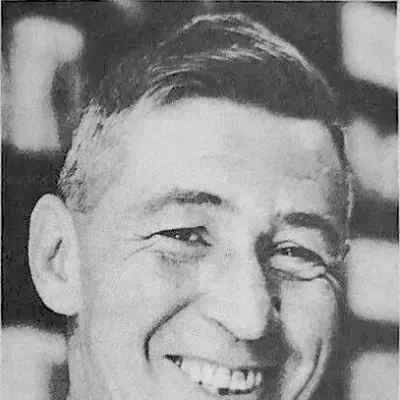
Wesley Clark
Human Design Chart
Biography
Although Clark spent most of his career in the U.S. Army, he is no stranger to Washington politics, having served as Supreme Allied Commander for Europe from 1997 until May, 2000. He led the charge in 1999 to turn Kosovo away from Slobodan Milosevic’s Serbia, heading up an unwieldy NATO alliance and an ambivalent American military establishment. Clark is often credited with winning NATO’s only war. He is as often criticized for his mistakes and misjudgments frequently stemming from his unyielding sense of "rightness" and a disregard for others’ conflicting opinions. He may be respected for his brilliance and analytical thinking, but is not always liked. Pentagon brass as well as subordinates and peers have called him brash, cocky, self-absorbed, hard on subordinates all the while praising the drive, intelligence and talent that fueled his success. Clark was forced to leave his term four months early most likely because of his frequent clashes with the Pentagon over resources, tactics and his job description. At least two top generals, Tommy Franks and Hugh Shelton, Clark’s boss in 1999, are openly critical of him.
Human Design Analysis: Wesley Clark as Projector 4/6
Projector 4/6 — Design at a Glance
Wesley Clark's design showed a tendency towards precise system analysis: He was someone who immediately recognized where other structures had deficiencies. As a projector, he did not have an intrinsic energy source like a generator but rather acted like a focused flashlight that shone light on dark spots specifically. This ability to identify errors in the system instantly was his strength, but it also carried the risk of being perceived as unpleasant or direct when addressing these weaknesses immediately – comparable to shining a bright light directly into someone's face.
The optimal strategy for Wesley Clark involved not initiating independently but waiting for a respectful and sincerely meant invitation from his environment. Instead of actively seeking recognition or offering unsolicited observations, he should attract others through his own harmonious actions. When people were drawn to his clarity and asked him for advice, he could then effectively exercise his leadership role. If he did not follow this strategy, the feeling of bitterness as an expression of his non-self would arise; if he followed it, however, he was rewarded with success. His undefined Sacral Center also required regular rest phases to conserve energy and prevent burnout, since his energy drive was not linear but wave-like.
Splenic Authority
Wesley Clark's design showed a tendency towards intuitive, immediate decision-making. His inner authority rested in the defined Spleen Center, indicating that he possessed fine survival intelligence. This manifested as spontaneous internal knowledge about whether a situation or person was healthy for him. Since the Emotional and Sacral Centers are open – a prerequisite for this configuration in projectors or manifestors – Wesley Clark could not rely on emotional clarity or sacral energy but had to trust the first impulse of his Spleen Center. This impulse is a precise indicator of his physical well-being and served as protection against harmful influences. However, this voice was very subtle and appeared only once at the moment. It therefore required high vigilance to avoid being drowned out by external expectations. Since knowledge arises in the present, long-term plans were difficult for Wesley Clark to maintain; his design favored flexibility and freedom. A retreat for decision-making could be helpful to clearly perceive this fine impulse. He thus showed himself as someone who cared through spontaneous reactions to his immediate environment and rigorously protected himself from burdens when his instinct alarmed.
The 4/6 Profile — Opportunist / Role Model
Wesley Clark's design inclined towards experimental behavior in early years, followed by a later inclination towards the role of wise role model. Until the age of 30, his configuration appeared like a pure network profile: He actively sought opportunities, tested relationships, and waited for favorable moments for changes – characterized by the opportunism and unpredictable fixation of Gate 10 (Line 4). This did not mean superficiality but rather an acceptance strategy: He maintained his behavior until external circumstances opened up for transformation.
With the activation of Line 6, a conflict arose between the deep desire for community belonging (Heart) and the need for detached, wise observation (Head). This tension shaped his further life. Instead of just cooperating, he developed the ability to limit himself and say clear no's. Through experience, he learned not to join everyone but selectively take on commitments that served his integrity.
At the age of 50, this process culminated in wisdom in the sense of Gate 46 (Line 6). He became a teacher and role model who did not act through naive idealism but with clear insight into the nature of others. His task was to smooth the way for others by acting from the height of his overview – always cautiously, opening his big heart only to those who had proven themselves trustworthy.
Single Definition — Defined & Open Centers
Wesley Clark's Human Design profile suggests a tendency towards clear, identity-strong communication that flows directly from his inner compass and physical intuition. His defined G Center provided him with a reliable sense of self-identity and direction, while the also defined Spleen Center allowed for spontaneous, intuitive judgments in the moment. This energy culminated in his defined Throat Center: His voice was not just a product of thought but an expression of his deep existence and higher self. He spoke from the security of who he is and what is healthy for him.
This stable foundation contrasts sharply with the open centers that made him vulnerable to external influences. His open Head Center tended to absorb mental pressure and questions from others without generating them itself; he could easily get caught in a whirlwind of confusion when trying to find answers not coming from within. The open Ajna Center amplified this by absorbing foreign concepts and opinions, leading him to feel compelled to appear intellectually secure despite his flexible mind.
The open Heart Center meant that willpower and the need to fulfill promises or prove value were not his natural energy. Instead, he risked spiraling into self-doubt when trying to meet others' expectations. His open Sacral Center was responsible for the flow of life force; without consistent generative power, he could easily become exhausted by amplifying the vitality of his environment and growing beyond himself. The open Solar Plexus Center let him absorb and personalize emotions from the environment, leading to inner unrest when not alone to release these waves. Finally, the open Root Center absorbed external stress, making him vulnerable to adrenalized pressure that he did not generate but only amplified. His challenge lay in utilizing the quiet of his defined centers rather than being overwhelmed by the cacophony of the open fields.
Channels for intuitive elegance and reflective silence.
Wesley Clark's Human Design profile points towards an intuitive adaptability paired with a deep reflective capacity. He was someone who led his behavior spontaneously from inner wisdom, patiently condensing experiences before integrating them.
This approach primarily stemmed from Channel Perfect Form 57-10. This channel connects the intuitive insight (Gate 57) with self-behavior (Gate 10). It enables acute perception of the environment – often beyond words through tones and inflections – translating this into spontaneous, appropriate action. The result is behavior that integrates personal well-being directed at oneself with survival in a social context. Wesley Clark acted not out of fear of the future but from clear, momentary intuition perfecting his physical existence and moving him unburdened through the world.
Parallel to this, Channel Lost Son 13-33 also played a role. It connects listening and storing information (Gate 13) with withdrawing for reflection (Gate 33). This mechanism serves maturation: experiences are collected, secrets kept, and only after patient consideration processed. Here it's not about prediction but understanding the lessons of the past to establish continuity. Wesley Clark used this energy to position himself as a keeper of stories and truths, trusting the natural flow rather than forcing results.
Additionally, other gates shaped his profile: Gate 15 promoted adaptation to natural rhythms and collective behavior; Gate 46 emphasized dedication in the here and now and nurturing the body as a temple; Gate 25 brought a mystical stance of innocence and centeredness. On the personality level, Gate 16 supported experimentation towards mastery, while on the design level, Gate 62 promoted logical pattern recognition, Gate 50 protected traditional values, and Gate 35 sought change through interaction. Gate 18 rounded this off with the ability to distinguish between important and unimportant corrections always in service of a collective process.
Individual Circuitry — Circuit Signature
Wesley Clark's Human Design profile suggests a tendency to use emotional wave movements as a source for deep insights. This energy connected his Throat Center with the Identity Center through Channel The Lost Son. Here, it was not about cold logic but reflecting on the past: feelings and experiences from earlier events were processed to draw personal meaning from them. This process followed a cyclical nature – with beginning, middle, and end – serving to share these insights in the collective and learn together from history.
Parallel to this, another separate power was at work: Channel Perfect Form directly connected the Identity Center with the Spleen Center. This did not represent a continuous flow with emotional waves but formed a distinct part of his definition. Here it was about highest individuality and self-empowerment in the present moment. Intuitive knowledge from the Spleen was used to guide strength through correct behavior, thus securing personal survival.
Although both circuits touched on the Identity Center, their energetic streams remained clearly separate due to simple definition. There was no direct flow between past emotional reflections and intuitive present sense for survival. Thus, Wesley Clark was marked by two parallel forces: one ability to transform past emotions into meaningful stories and an intuitive sharpness to act individually strong in the present moment. This configuration described a life task where emotional depth and intuitive presence coexisted without directly merging.
Right Angle Cross of the Vessel of Love 4
Wesley Clark's Human Design shows a tendency towards deep, often unspoken connectedness. This configuration is referred to as the right cross of Love Vessel 4 and describes a specific kind of emotional resonance. It manifests not through loud gestures or obvious romance but through a quiet, almost fateful attraction to certain people.
The mechanics of this cross work in the background of consciousness. It's an energy that shapes relationships on a very personal, intimate level. Wesley Clark tended to enter connections marked by a strong sense of familiarity, even if external circumstances didn't explain it. This dynamic often works like an invisible thread bringing people together without them being able to pinpoint exactly why.
It is not a strategy for superficial contacts but a deeper structure of the heart. It demands authenticity and genuine exchange, far from social masks. Those who carry this configuration experience love as something given, simply there and not something that needs to be earned. This created an inner stability in Wesley Clark's interpersonal relationships based on mutual understanding rather than performance or expectation. The energy of this cross thus fostered a kind of intimacy that was calm and steady.
Saturn Return · Uranus Opposition · Chiron Return · 2nd Saturn Return — Life Cycles
Wesley Clark's design showed a tendency towards structural anchoring and the building of responsibility, unfolding clearly often hierarchically. This orientation was marked by two Saturn Returns, cycles in which long-term commitments are put to the test and redefined.
In 1971 at age 27, he led the 1st Battalion of the 77th US Armored Regiment in Fort Carson. This first Saturn Return confirmed his ability to take on authority and lead stable structures – a moment when years of preparation condensed into concrete leadership tasks.
The second Saturn passage around the year 2000 presented another facet of this cycle: the dissolution of existing power structures. In April 2000, Clark was prematurely relieved of his position as SACEUR instead of completing his planned term until July. For his design, this was a critical point for realignment where external circumstances forced a pause and reflection on one's role in the system. Both events underscore how Saturn Returns for him were not only personal milestones but structural turning points that fundamentally changed his position within large organizations – whether through confirmation or sudden release from responsibility.
Projector · Splenic Authority — Synthesis
A central red thread runs through the design: the ability to recognize patterns and errors in systems precisely (Projector, Gate 11) and connect this intuitive knowledge directly with an instinct for one's own well-being (Spleen Center Authority, Channel 57-10). This combination generates a pronounced ability to secure oneself through intuitive behavior, which affects interaction with the environment. The role as networker/role model amplifies this aspect by linking the need for connection (Line 4) with the desire for inner reflection and wisdom (Line 6) – a process that enables the integration of insights from the past (Perception Circuit).
The central paradox lies in the interplay between the Projector's need to 'project' others and point out errors, and Spleen-based authority rooted in spontaneous self-protective impulse. While the design signals a natural inclination towards recognizing imbalances, inner guidance simultaneously requires demarcation and protection of one's own well-being. The Saturn Return during crisis shows how this tension can manifest in life: recognizing a systemic flaw (2000) leads to the necessity of distancing oneself to preserve one's integrity.
2 Defined Channels
Incarnation Cross - Right Angle Cross of the Vessel of Love 4
Solar Return
The Solar Return shows the moment when the sun returns to its exact birth position - your personal solar year.
Life Cycles
Discover the life cycles with a detailed triple view (birth chart, cycle chart, composite).
Human Design Profile
- Type
- Projector
- Strategy
- Wait for the respectful invitation
- Authority
- Splenic Authority
- Profile
- 4/6 - Opportunist / Role Model
- Definition
- Single Definition
- Incarnation Cross
- Right Angle Cross of the Vessel of Love 4
- Date of Birth
- 23.12.1944 05:43
- Place of Birth
- Chicago, IL, United States
Frequently Asked Questions
What is the Human Design type of Wesley Clark?
Which Profile does Wesley Clark have?
What authority does Wesley Clark possess?
What incarnation cross does Wesley Clark have?
When was Wesley Clark born?
Discover your own Human Design
Are you also a Projector? Find out in a personal reading how to unfold your leadership qualities and recognize the right invitations.
More Personalities
Back to overviewSissy Spacek

Alain-Fournier

Anémone

Ann-Margret

Bourvil
Hergé