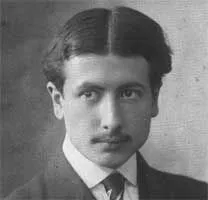
Photo: Wikimedia Commons
Ernest Claes
Human Design Chart
Biography
He is one of the most widely read authors in Flanders. His best-known work is the local history and picaresque novel De Witte (‘Flaxen Head’), which was also made into a film twice.
He died on 2 September 1968 in Brussels, Belgium.
Human Design Analysis: Ernest Claes as Generator 6/2
Generator 6/2 — Design at a Glance
Ernest Claes revealed himself as someone who possessed immense, enduring strength, comparable to a workhorse that only effectively utilized its energy when it felt inner approval for its task. His design as a Generator suggested that he could only fully unleash his potential by responding to impulses from his environment rather than by initiating action himself. The motto 'Not initiating, but responding' was central to him; only when his sacral center gave a clear 'yes' could he act with full power.
If he did not live by this principle, for instance by doing things that did not bring him joy or by being prevented from pursuing his heart's project even though he still had energy, frustration or a lack of power would ensue. These stumbling blocks - wasting energy on unwanted tasks or interrupting despite an inner drive - threatened to block his high creative potential. In harmony with his design, by waiting and responding to signals from life, he was rewarded with a deep sense of fulfillment. His strength lay in responding from the gut, which no one could stop him from doing as long as he followed this strategy.
Sacral Authority
Ernest Claes lived as a Generator whose decision-making was shaped by his Sacral Authority. This inner guidance required an open emotional center, distinguishing his reactions from the immediate intuition of gut feelings. His strategy and authority aligned, simplifying the orientation process. Instead of planning, he waited for his body's response to external stimuli. This response manifested as physical resonance: a grunt, a hum, or a loud 'mmh' signaled approval and energy. Without this physical confirmation, the energy remained absent.
When his sacral motor engaged, he felt vital and alive. This inexhaustible energy allowed him to immerse himself in activities driven by enthusiasm and contentment, not by purposefulness. He was born to walk through life with joy. Additionally, his activated spleen center served as a supportive force, giving him the ability to react particularly quickly and spontaneously. Through its connection with the sacral center, he had immediate access to his physical well-being and instinctive perception. This combination allowed him to reliably guide himself with his inner compass, which united both power and quick intuition.
The 6/2 Profile — Role Model / Hermit
Ernest Claes revealed himself in his early life phase as someone who learned through diverse experiments and personal experiences. His Human Design Profile as 6/2, the 'Role Model and Natural Talent', shaped this course: before the return of Saturn, that is, before the age of 30, the 6-line functioned like a 3-line. This meant that trial and error was the driving principle, accompanied by necessary retreats after mistakes to learn from them.
Around the age of 30, the 6-line was fully activated. Ernest Claes metaphorically retreated into a 'cave on the mountain' to look back at his previous experiments with distance. This phase of intense reflection served for healing and deep self-awareness. From this isolation, he emerged as a wise person whose life wisdom attracted others. They came to him to participate in his introspection.
This development was supported by specific line resonances. The sixth line from Gate 50 emphasized the importance of consistent values. Ernest Claes decided for or against leadership positions based on this value consistency and the resulting demands. At the same time, the second line in Gate 31 showed a natural leadership ability. Without adequate development, however, this could be perceived as arrogance if it acted without regard for collective opinions. The resonance with Gate 7 pointed to a democratic leadership role, where the power was present but often acted without explicit collective approval. Only through continuous development did Ernest Claes avoid the decline of these leadership qualities into corruption or paper tigering.
Split Definition — Defined & Open Centers
Ernest Claes revealed himself as someone who stood under a constant, internal mental pressure to ask questions and understand connections. His defined Head and Ajna Centers created a trustworthy, specific way of thinking; he was a source of inspiration for others, but lacked the direct energy to immediately implement these thoughts. This state required patience, as haste only led to frustration. At the same time, he possessed a clear, reliable identity and a sense of his own life direction, carried by his defined G Center. He knew who he was and could show others new perspectives without being dependent on them.
His power source lay in his defined Sacral Center. As a Generator, he possessed an enormous vital energy that he could only channel through reacting to life. Initiatives he started on his own, without being asked, led to exhaustion; true satisfaction he found only when he waited for life to present itself and then responded with full force.
This stable inner core contrasted strongly with his open centers. His open Throat Center made him vulnerable to the pressure to demand attention, even though he actually needed to wait to be invited. His open Heart Center drove him to prove his worth through promises and competition, which led into a cycle of self-disapproval, as he did not possess the consistent willpower for it. His open Solar Plexus absorbed the emotions of his surroundings, making him emotionally vulnerable and prone to personalizing foreign moods. Furthermore, he was exposed to a fundamental survival fear through his open Spleen Center and tended to cling to unhealthy situations just to feel a sense of security. Finally, his open Root Center absorbed the stress from the environment, making him vulnerable to burnout when trying to withstand this external pressure.
Channels for rhythm, clear perception and inner determination.
Ernest Claes showed a fundamental attitude based on deep trust in the natural flow of life. His design was marked by the Rhythm Channel 5-15, connecting the Sacral Center with the G Center. This channel endowed him with an internal, biological rhythm that was not governed by the mind or emotional waves. He followed firm routines (Gate 5) while remaining open to the diversity and extremes of human experience (Gate 15). This created a magnetic energy flow that effortlessly propelled him forward and drew others into his rhythm as long as he remained true to his inner timing.
Parallel to this, the Discovery Channel 29-46 shaped his lifestyle. Through the Gate of Saying Yes (29) in the Sacral Center, he responded positively to impulses, giving him the persistence to fully immerse himself in experiences. Linked with the Gate of Determination (46) in the G Center, this led to him being in the right place at the right time. His path was not a controlled plan but a process of letting go of expectations, where the significance of his actions revealed itself only later.
Mentally, he worked with the Channel of Awareness 61-24. Here, the inspiration of the Head Center (Gate 61) connected with the rational processing in the Ajna Center (Gate 24). His thinking did not seek logical predictions but sudden insights, a "Satori". He had to accept that knowledge came in his own time, often supported by silence or music, and that he could not know everything but only what was revealed to him as inner truth.
Additionally, individual Gates played a role: Gate 50 provided a protective reflex and the preservation of traditions and values. Gate 3 in the Sacral Center drove mutations to create new orders out of confusion. Gate 31 allowed the transfer of power to others, while Gate 41 promoted evolutionary development through specific experiences and crises. Gate 4 in the Personality sought formulas to clarify suspicious patterns and secure the future.
Collective Circuitry — Circuit Signature
Ernest Claes revealed through his design as someone who carried two separate, not directly connected energetic systems within him. This resulted from his split definition: One channel connected the Sacral with the Identity Center, another the Head with the Ajna Center. Between these two groups, there was no direct flow; they existed as parallel, independent forces.
In the area of identity, the Understanding Circuit operated through the Rhythm Channel (Gates 15 and 5). This channel connected the Sacral with the Identity Center and promoted a logical, strategic approach. Ernest Claes sought structures and rational insights to shape the future, free from emotional influence. Parallel to this, the Meaning Circuit operated through the Discovery Channel (Gates 46 and 29). This channel also connected the Sacral with the Identity Center but focused on emotions and experiences from the past. Here, it was about finding meaning in the past and sharing these felt insights. Both channels created a tension between future-oriented logic and past-oriented feeling, both stemming from the same energetic core (Sacral-Identity).
Independently of this, in the cognitive area, the Knowledge Circuit operated through the Awareness Channel (Gates 24 and 61). This channel connected the Head with the Ajna Center. It promoted innovative, creative flashes of insight and the desire to find a new, individual expression. This energy was pulsing and acoustically marked, driven by the inspiration to create and transform something new. Since this system was separate from the Identity-Sacral system, Ernest Claes experienced these creative impulses as an independent force, not directly connected to his logical or emotional identity.
Left Angle Cross of Wishes 2
Ernest Claes revealed himself through a deep, often unspoken desire for a specific, personal fulfillment that significantly shaped his inner experience. His design carried the signature of the left cross of desires, a configuration that did not place an external, worldly ambition in the foreground, but rather an intense, inward-looking longing. This structure described a person whose drive came less from social expectations or material goals, and more from a private, spiritual or emotional ideal that he sought to realize.
The mechanics of this cross pointed to a way of life that was determined by the search for a completely individual form of happiness or meaning. It was not a broad, public call, but an intimate, personal mission. Ernest Claes lived with the tendency to direct his energy towards this inner desire, which gave him a certain endurance, even if the goal often remained invisible to outsiders. The experience of this design was marked by the tension between what was and what he wished for in his soul. It was a dynamic of inner dedication, where fulfillment did not lie in recognition by the world, but in approaching this personal, often silent ideal.
Saturn Return · Uranus Opposition · Chiron Return · 2nd Saturn Return — Life Cycles
Ernest Claes’ design foresaw a lifespan structured by four central astrologically and human-design-specific cycles. His chart featured the standard configurations for the first Saturn Return, the Uranus Opposition, the Chiron Return, and the second Saturn Return. These constellations marked not random points in time, but firmly anchored phases of inner development and outer alignment.
The first Saturn Return served as a phase of consolidation, in which early impulses were transformed into sustainable structures. This was followed by the Uranus Opposition, a period typically characterized by the need to break free from old bonds and the search for individual autonomy. This was not a crisis in the negative sense, but a necessary step towards the differentiation of the self.
Special significance was attached to the Chiron Return. In this cycle, which usually falls between the ages of 49 and 51, a phase of fulfillment emerged. If Ernest Claes had lived according to his strategy and authority up to this point, his incarnation cross unfolded increasingly. It was not about healing old wounds, but about experiencing meaning and purpose; his life task became tangible and manifested as a period of flourishing.
The second Saturn Return marked the conclusion. This cycle brought a further deepening of wisdom and a reordering of priorities. The sequence of these four cycles outlined the framework within which Ernest Claes could channel his energy and refine his identity step by step. Each step built logically on the previous one and served the integration of the respective life phase.
Generator · Sacral Authority — Synthesis
Ernest Claes lived deeply rooted in his sacral drive (Generator Type, Sacral Authority). This drive, combined with the Rhythm Channel, characterized a life marked by an inner, pulsating energy and the need for continuous activity. The ability to immerse himself in activities that brought joy formed a red thread running through the phases of his life – always guided by the immediate bodily response to external stimuli. The defined connection between the Head and Ajna Centers strengthened this flow through constant inspiration and the need to understand and question things.
At the same time, his design revealed a central paradox: the 6/2 line points to a development from an initial experimental enthusiasm to a later withdrawal and a phase of intense reflection. This stood in tension with his sacral energy, which constantly urged him towards activity and engagement. It seemed as if he oscillated between the desire for deep self-knowledge and the need to keep his energy flowing – a dance between pausing and moving forward that accompanied his life journey.
3 Defined Channels
Incarnation Cross - Left Angle Cross of Wishes 2
Solar Return
The Solar Return shows the moment when the sun returns to its exact birth position - your personal solar year.
Life Cycles
Discover the life cycles with a detailed triple view (birth chart, cycle chart, composite).
Human Design Profile
- Type
- Generator
- Strategy
- To respond - wait for something to respond to
- Authority
- Sacral Authority
- Profile
- 6/2 - Role Model / Hermit
- Definition
- Split Definition
- Incarnation Cross
- Left Angle Cross of Wishes 2
- Date of Birth
- 24.10.1885 12:00
- Place of Birth
- Brussels, Belgium
Frequently Asked Questions
What was Ernest Claes' Human Design type?
What Profiles did Ernest Claes have?
What Authority did Ernest Claes have?
What incarnation cross did Ernest Claes have?
When was Ernest Claes born?
Discover your own Human Design
Are you also a Generator? Find out in a personal reading how to use your sacral energy correctly and discover deep satisfaction.
More Personalities
Back to overviewAaliyah

Alain-Fournier
Alexia

Angèle

Angeli
Anne-Marie