
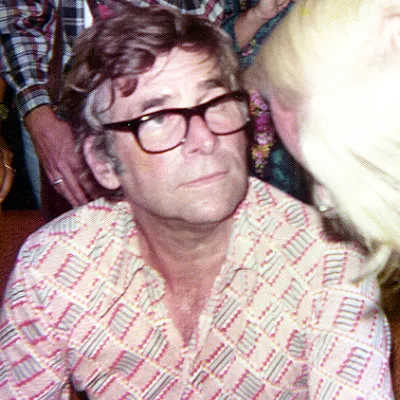
Gene Roddenberry
Human Design Chart
Biography
His family moved to Los Angeles in 1923. While growing up, one of three kids of Caroline, a housewife, and Eugene, a police officer, Roddenberry loved listening to radio serials. He attended several colleges, including UCLA without graduating.
Roddenberry flew 89 B-17 combat missions in the Pacific during World War II and received the Distinguished Flying Cross and the Air Medal. After the war he was a commercial pilot for Pan-Am for four years. In 1949, he served as a police officer with the Los Angeles Police Department.
His writing career began in the early '50s when he began contributing scripts to TV series including Dragnet, Naked City and Have Gun, Will Travel The inspiration for Star Trek came when the western series Wagon Train premiered in 1966. Like Wagon Train, Star Trek was about a warm and diverse band of roving comrades. Through the far-out concept of the series Roddenberry felt he could deal with important issues such as sex, religion, and union-management without upsetting the network. He had wanted his wife, Majel Barrett, to play Captain Kirk's second-in-command. When NBC execs balked at a woman character with that much power, the post went to Mr. Spock (Leonard Nimoy). Barrett ended up with parts on both the original TV Star Trek and the sequel, Star Trek: The Next Generation. With a dismal original run, showing a lowly 52nd in the ratings, Roddenberry's TV series, Star Trek was saved by letter-writing campaigns from Hollywood writers and later by fans.
In 1985, he became the first TV writer with a star on the Hollywood Walk of Fame, and he was later inducted into both the Science Fiction Hall of Fame and the Academy of Television Arts & Sciences Hall of Fame.
Human Design Analysis: Gene Roddenberry as Generator 2/4
Generator 2/4 — Design at a Glance
Gene Roddenberry's design points to a tendency towards great endurance and high energy potential. As a Generator, he had a lot of sacral energy, which made him seem like a strong workhorse as long as he had the necessary inner motivation for his tasks. His life energy did not ignite through self-initiative but responded to signals from his environment. The motto of his design was not to initiate but to react.
This mechanism meant that Gene Roddenberry was most effective when his sacral center gave a clear 'yes' to an external impulse. When he responded to these inner signals and acted on them, he was rewarded with a deep sense of fulfillment. If he did not live according to this principle, for example by constantly initiating things himself or doing tasks that did not interest him, he would eventually encounter persistent frustration and a lack of energy. Two main pitfalls shaped his profile: wasting energy on tasks he disliked, which could lead to burnout, or holding back from his heart project despite still having plenty of power to work further. His success thus depended on responding intuitively to life impulses rather than swimming against the current of his own energy.
Emotional Authority
Gene Roddenberry's design points to a tendency towards emotional wave movement. His inner authority carried the defined Emotional Center. In Human Design mechanics, this rule is absolute: whenever the Emotional Center is activated, it becomes the inner authority, regardless of other defined centers in the chart. Gene Roddenberry was subject to an emotional wave that showed in a constant up and down of his feelings. He saw the world colored by his current mood. At one moment, he could be totally enthusiastic about something, and in the next, he could view the same thing totally negatively. His feeling in the moment, however, was only a snapshot, a first impression that did not necessarily represent his truth. Quick, spontaneous decisions based on emotion could therefore have negative consequences. The more time he took to let a decision mature, the deeper and more comprehensive he could understand something. This required patience and the repeated consideration of a decision. Gene Roddenberry should take his time and ask himself several times. Over time, the intense feelings subsided, he gained emotional distance, and clarity and calmness set in. Then he had gone through the process. This was especially important for long-term decisions that could have a significant impact on his life course.
The 2/4 Profile — Hermit / Opportunist
Gene Roddenberry's design points to a pendulum rhythm between deep withdrawal and active network engagement. As a 2/4 profile, he constantly oscillated between two basic needs: the urge of Line 2 to withdraw as a hermit and the desire of Line 4 to spend time with his closest community. This tension required clear communication to the outside to make his needs for 'me-time' or company understandable. In his isolated phase, he immersed himself in internal processes to find peace and clarity. Only when his need for solitude was satisfied did he return from his 'cave' to connect with his favorite people.
Line 2 gave him selectivity and caution; he was a natural talent that had to be called to duty and radiated persistence that he did not always feel himself. Experience taught him that persistence was only successful when it was correct and requested. At the same time, Line 4 stood for respect and recognition in the network. He recognized the gifts of others, promoted them, and waited for the right moment to make his unique contribution. Through this configuration, he could reflect and evaluate the knowledge of his network during quiet times and develop brilliant ideas that then changed the collective through communication and individuality.
Single Definition — Defined & Open Centers
Gene Roddenberry's Design inclined towards self-determined willpower and constant vitality. His defined Heart Center provided a clear access to ego and resources; he preferred to work according to his own mechanisms and kept promises, which strengthened his self-esteem. The defined Sacral Center supplied a permanent energy source that was activated by reacting to external impulses. This sacral power allowed him to persistently engage in tasks as long as his inner response was affirmative.
At the same time, his defined Solar Plexus Center shaped his emotional authority. He was designed to wait for the emotional wave before making decisions. This patience gave his judgments depth and clarity, as he did not react impulsively to the highs or lows of his feelings. The defined Root Center supported this process through a steady inner pressure that propelled him forward and fostered existential awareness.
In contrast, the vulnerability of his open centers was evident. His open Head Center tended to be overwhelmed by mental confusion or the questions of others, which prompted him to distance himself from such pressure to maintain clarity. Similarly, his open Ajna Center made him susceptible to foreign concepts; he had to learn not to identify ideas as his own truth. His open Throat Center attracted attention without him actively seeking it; attempting to control his communication often led to stress. His open G Center meant that he did not carry a fixed identity but felt initiated through the right environment and relationships. Finally, his open Spleen Center was vulnerable to survival fears and spontaneous, impulsive decisions, which he had to avoid to protect his health and well-being.
Channels for emotional waves, community and maturation.
Gene Roddenberry's Design established a tendency to understand relationships as carefully negotiated contracts in which mutual benefit and emotional clarity were paramount. This was evident through Channel 37-40, which connected the Solar Plexus Center with the Heart Center. Here, Gate 37 sought recognition and its place in the whole, while Gate 40 was ready to provide for others but needed breaks and rewards. This configuration required time to find the right invitation or partner; spontaneous decisions were less effective than carefully considered agreements based on direct, personal contact.
Parallel to this, Channel 42-53, which linked the Root Center with the Sacral Center, was at work. Through Gate 53 of Beginnings and Gate 42 of Growth, every cycle—whether a project or a relationship—was experienced as a complete process that needed to be run from intention to completion and reflected upon. This channel fostered the ability to draw wisdom from experiences and pass it on, provided one engaged with the experience without rigid expectations.
Another defining aspect was Channel 39-55, which connected the Root Center with the Solar Plexus Center. Gate 39 of Provocation and Gate 55 of Spirit set in motion a pulsating emotional wave that swung between joy and melancholy. This energy helped to recognize and provoke the true nature and mood of others to find the appropriate "spirit" or correct connection. The authenticity of these emotional swings was crucial to avoid manipulative behavior and instead enable a deep, passionate connection.
Additionally, individual Gates like Gate 29 (Yes) and Gate 8 (Contribution) contributed to life energy by promoting persistence and the need to individually advocate for group goals. Gate 14 facilitated skillful power accumulation and direction finding, while Gate 51 provided a strong will without social ties, reacting to shocks with adaptability. Gate 6 regulated emotional waves as a biological boundary, and Gate 3 enabled mutations to overcome confusion. Finally, Gate 52 demanded self-imposed pauses for concentration and pattern correction to avoid stress and gain clarity.
Individual Circuitry — Circuit Signature
Gene Roddenberry's Design revealed a clear, coherent energetic structure. As a simply defined type, he had a continuous flow between the Solar Plexus, Heart, Root, and Sacral Centers. This created an integrated experience where emotional impulses, willpower, and physical endurance directly interplayed.
The Knowledge Circuit worked through him via Channel 15-23, connecting the Solar Plexus to the Root Center. This generated a pulsating energy that translated new insights through emotional waves into concrete action impulses.
In the Meaning Circuit, Channel 23-25 activated the connection between the Sacral and Root Centers. This configuration promoted a cyclical processing of experiences. Gene Roddenberry learned from the past to develop sustainable, powerful impulses for the collective.
The Ego Circuit closed this unity. Through Channel 22-15, it connected the Heart to the Solar Plexus Center. This emphasized the importance of mutual support and fair resource exchange. Since there was no direct connection to the Sacral Center in this specific circuit, this dynamic required conscious pauses for regeneration.
Overall, these three circuits shaped a Profile that linked emotional intelligence with social cooperation and physical endurance. The energies did not flow in isolation but formed a coherent whole, oriented towards exchange, learning experiences, and collective creation.
Right Angle Cross of Contagion 3
Gene Roddenberry's Human Design profile revealed a specific, often underestimated dynamic, which was evident in the configuration of the right-hand Incarnation Cross at 3. This structure indicated a tendency towards subtle yet profound influences on his environment, which were more about a nearly imperceptible transmission of ideas or moods than open confrontation. In Human Design, this Cross describes an energy that works through touch or close contact, transferring unconscious patterns or beliefs from one person to another. It was not a conscious manipulation but a natural, mechanical process of energetic contagion. For Gene Roddenberry, this meant that his presence and way of interacting with others often unintentionally changed their inner landscape. He acted as a catalyst, activating or intensifying latent tendencies in his environment, without it always being recognized as his direct action. This mechanism shaped his interpersonal relationships and his way of working in groups, creating a constant, flowing exchange dynamic that operated on a level beyond rational control.
Saturn Return · Uranus Opposition · Chiron Return · 2nd Saturn Return — Life Cycles
Gene Roddenberry's Human Design profile was characterized by a clear ability to structure, which was evident in phases of consolidation. The first Saturn Return often marked the transition from education to stable employment. In 1949, at the age of 28, he met this expectation by serving as a police officer at the Los Angeles Police Department. This was a moment of anchoring, where years of groundwork condensed into a solid result.
Later, during the Uranus Opposition, a period often bringing change and new opportunities, he experienced success with the series *The Lieutenant* in 1963, at the age of 42. This success underscores the ability to adapt to changing circumstances and take new paths.
The Chiron Return, a cycle of fulfillment and blooming, where one's life purpose unfolds, occurred in 1969. At 48 years old, he married Majel Barrett. This was not a moment of healing but of confirmation of his path, where meaning and purpose became tangible.
Finally, the second Saturn Return in 1979, at the age of 58, brought the success of the film *Star Trek: The Motion Picture*. This time confirmed the long-term structure and value of his work, which now unfolded its full impact in a new format. His Human Design profile showed how personal development and professional success manifested in clear, cyclical phases.
Generator · Emotional Authority — Synthesis
He was a Generator whose life was marked by the necessity to deal with his emotional wave (emotional authority). This inner dynamic, combined with the Profile of a Natural Talent and Networker (Line 2/4), led to a constant interplay between withdrawing into the inner world and the need to connect with others. The defined Heart Center (Willpower) confirmed a strong self-determination, which was, however, continually tested through cyclical experiences - career beginnings, successes in creative fields, and personal relationships. The Channel of Community (Gate 37/40) points to a deep longing for belonging and recognition, which came with the ability to form and maintain relationships.
A central paradox lay in the tension between the need for inner clarity and the desire to bring something new into the world through creative impulses (Knowledge Circuit). Emotional authority required time to let decisions mature, while the Knowledge Circuit prompted quick, innovative steps. This dynamic was evident in the successes tied to the expression of his individuality, but also in the need to continually withdraw and find his own inner truth.
3 Defined Channels
Incarnation Cross - Right Angle Cross of Contagion 3
Solar Return
The Solar Return shows the moment when the sun returns to its exact birth position - your personal solar year.
Life Cycles
Discover the life cycles with a detailed triple view (birth chart, cycle chart, composite).
Human Design Profile
- Type
- Generator
- Strategy
- To respond - wait for something to respond to
- Authority
- Emotional Authority
- Profile
- 2/4 - Hermit / Opportunist
- Definition
- Single Definition
- Incarnation Cross
- Right Angle Cross of Contagion 3
- Date of Birth
- 19.08.1921 01:35
- Place of Birth
- El Paso, TX, United States
Frequently Asked Questions
What was Gene Roddenberry's Human Design type?
What Profile did Gene Roddenberry have in Human Design?
What Authority guided Gene Roddenberry's decisions?
Which incarnation cross did Gene Roddenberry carry?
When was Gene Roddenberry born?
Discover your own Human Design
Are you also a Generator? Find out in a personal reading how to use your sacral energy correctly and discover deep satisfaction.
More Personalities
Back to overviewAaliyah

Alexia

Angèle

Anne-Marie

Arcángel

Arno
