Harry Benjamin
Human Design Chart
Biography
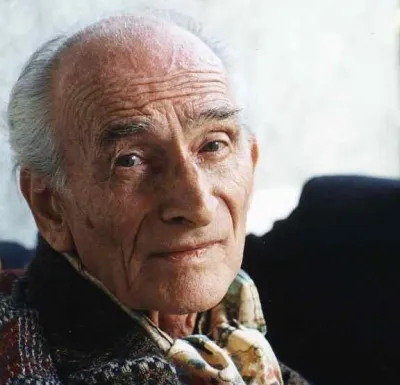
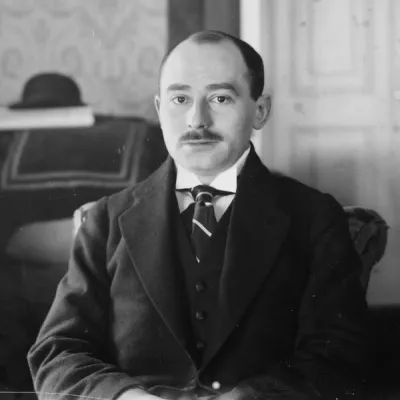
Benjamin received his doctorate in medicine in 1912 in Tübingen, Germany for a dissertation on tuberculosis. Sexual medicine interested him, but was not part of his medical studies.
Benjamin visited the United States in 1913, to work with a doctor who claimed, incorrectly, to have found a cure for tuberculosis. The liner in which Benjamin was returning to Germany was caught mid-Atlantic both by the outbreak of the First World War in 1914, and the Royal Navy. Given the choice of a British internment camp, as an "enemy alien", or returning to New York, he used his last dollars to travel back to America, where he made his home for the rest of his life.
In 1948, in San Francisco, Benjamin was asked by Alfred Kinsey, a fellow sexologist, to see a child who "wanted to become a girl" despite being born male; the mother wished for help that would assist rather than thwart the child. Kinsey had encountered the child as a result of his interviews for Sexual Behavior in the Human Male, which was published that year. Kinsey and Benjamin had seen nothing of the like previously. This child rapidly led Benjamin to understand that there was a different condition to that of transvestism, under which adults who had such needs had been classified to that time.
Harry Benjamin — Manifesting Generator with Profile 2/4
Manifesting Generator 2/4 — Design at a Glance
Harry Benjamin revealed himself through his design as a Manifesting Generator with a hybrid nature: He had the constant energy source of Generators but also possessed the Manifestor's ability to skip steps and achieve results quickly. This configuration allowed him to draw things rapidly into his life, yet it carried specific risks. Without inner consent, he tended to omit important stages or start multiple projects simultaneously, leading quickly to frustration – his theme of non-self.
The mechanics of his design therefore required the strategy 'React instead of taking initiative'. Harry Benjamin had to respond to impulses and only act when his sacral center gave a clear yes. Only through this inner confirmation could he effectively use his speed without falling into multitasking traps or having to painstakingly make up for missed steps later on. By correctly applying this strategy, he found deep satisfaction in creation and benefited from the variety of tasks by entering a playful mode. His energy was thus not an uncontrolled impulse but a powerful resource directed through conscious reaction to life's offers. This ensured him the necessary fulfillment and prevented his natural speed from becoming a source of exhaustion or failure.
Sacral Authority
Harry Benjamin oriented himself towards a single inner decision-making instance: sacral authority. As a Generator, his strategy was identical with this authority, simplifying his process for living. He did not react through cognitive analysis to external stimuli but listened to physical signals from the abdominal area. These manifested as an internal voice or spontaneous sounds like grunts, hums, or a confirming 'Mmm'. Such signals marked the moment of activation of his sacral motor.
This mechanism endowed him with inexhaustible energy and vitality. When he reacted to something that appealed to him, he acted with great enthusiasm and immersed himself fully in his tasks. His actions were characterized by joy and freedom from purpose; he did things because they felt right, not out of necessity. A prerequisite for this clear guidance was an open emotional center ensuring that the sacral reaction remained primary. Through this configuration, Harry Benjamin lived a life where energy and direction were inseparable, steered through immediate physical resonance rather than mental planning.
The 2/4 Profile — Hermit / Opportunist
Harry Benjamin showed a pronounced tension between his deep need for withdrawal and simultaneous attraction to community. His design as Profile 2/4 marked him by this constant oscillation: On one hand, he retreated into his 'cave' to be alone; on the other, he actively sought exchange with his trusted people. This dynamic required clear communication of his availability from him. He had to convey outwardly when he wanted company and when he needed solitude.
During the withdrawal period, characteristic for Line 2 (Gate 61), Harry Benjamin immersed himself in internal processes. Here he used his mind to penetrate into mystery and find peace. This phase of 'natural brilliance' served to create clarity. Once this inner need was satisfied, he returned to reflect on the collected knowledge of his network and develop new ideas from it. Line 4 promoted connection with the community while Line 2 provided the necessary distance for evaluation.
This interaction between hermitage and network participation was central to his functioning. By creating a safe environment, he could integrate these two poles. Flexibility in shifting principles supported him in adapting to the respective needs without losing his inner strength. Thus, Harry Benjamin effectively used his alone time to process and evaluate knowledge from his social contacts.
Triple Split Definition — Defined & Open Centers
Harry Benjamin revealed through his design as someone with tremendous internal stability in thinking, willpower, and energy. His defined Ajna Center ensured continuous conceptual thinking; he processed data consistently and spoke his thoughts directly through the also defined Throat Center. This cycle was reinforced by his defined Heart Center, which gave him clear willpower – he knew what he wanted and kept promises. Additionally, his defined G Center provided a firm sense of identity and direction, while the defined Sacral Center served as a constant energy source. His strategy involved waiting and responding to questions or situations rather than initiating himself. His defined Spleen Center delivered spontaneous intuitive warning signals in the present moment, and his defined Root Center generated a steady pressure for forward movement in the material world.
In contrast, Harry Benjamin was marked by situational dependence through his open centers. The open Head Center meant that he did not have constant internal inspirational drive; he tended to pick up mental pressure from the environment and could easily identify with others' doubts or questions rather than generating his own inspiring impulses. Similarly open was his Solar Plexus Center, leading him to absorb and amplify emotions of his surroundings instead of regulating them independently. He was prone to experiencing other people's moods as his own and tended to avoid emotional confrontations to prevent triggering this absorption. This openness made him a sensitive barometer for the emotional climate but also required distinguishing between foreign and personal feelings to avoid being overwhelmed by others' emotional waves.
Channels for logic, structure, discovery and willpower.
Harry Benjamin presented himself through a dominant and logical presence. His mind was constantly occupied with organizing details and visualizing patterns, which he then translated into language. At the same time, there was an insatiable urge to test and perfect these structures for their viability.
This dynamic resulted from the connection of Channel Accepting 17-62 and Channel Judgment 58-18. The Channel Accepting 17-62 connected the Ajna Center with the Throat Center through Gate 17 (Opinions) and Gate 62 (Details). Here, Gate 17 visualized patterns while Gate 62 organized and named them linguistically. Everything that could be integrated into this mental system was understood; what could not be integrated remained incomprehensible. This created a constant pressure to articulate opinions in detail as soon as the timing was right.
Parallel to this, Channel Judgment 58-18 connected the Root Center with the Spleen Center. Gate 58 (Vitality) drove the impulse "Better and more," while Gate 18 (Correcting) checked what was in balance or needed correction. This channel functioned as a sentry for logic: it evaluated patterns based on whether they made life cheerful for the collective by comparing past with present.
The synthesis of these channels made Harry Benjamin into a correction mechanism. He not only saw the details (Gate 62), but questioned their efficiency and correctness (Gate 18). The energy flowed from the Root through the Spleen or from Ajna to Throat, enabling him both to explain in detail as well as critically question. His design required an invitation: Only when he was asked could he effectively bring his corrections without them being perceived as constant searching for faults.
Collective Circuitry — Circuit Signature
Harry Benjamin demonstrated himself as someone who derived his actions from a synthesis of individual identity, rational strategy, and emotional reflection. As a Triple-Defined individual, he was not marked by the core energy but rather by separate energetic streams. The Knowledge Circuit connected his Ajna Center with Throat Center through the Channel of Structuring (Gates 43-23). This shaped a pulsating, acoustic expression form aimed at making new paths and transformation effective through the expression of one's individuality. Parallel to this, the Understanding Circuit was active. It linked two separate areas: Ajna with Throat Center (through Accepting and Judging) as well as Spleen with Root Center. This configuration promoted a focused, visual logic and strategy that aimed at future improvements free from emotional conditioning. The Meaning Circuit connected Identity Center with Sacral Center through the Channel of Discovery (Gates 46-29). Here, a cyclical, emotional depth emerged that allowed reflecting on past experiences to gain collectively meaningful insights. In the Ego Circuit, the Heart Center remained isolated from the rest of the system; it was only connected to Throat Center (Money Line). This underscored the necessity of downtime for resource regeneration since there was no direct connection to constant life force. The tension between creative identity formation and cool logic was moderated by this emotional reflection.
Right Angle Cross of Maya 4
Harry Benjamin's design was marked by the Right Cross of Maya 4. This configuration gave him a specific internal structure oriented towards profound transformation and overcoming resistance. In Human Design, this cross describes a process of breaking through old patterns to find new, more authentic paths. It wasn't about superficial adaptation but rather a fundamental realignment of one's existence.
For Harry Benjamin, this meant that his life was characterized by constant inner work to free himself from old constraints and redefine himself. The mechanics of this cross often require going through difficult phases to reach true freedom. It is a path of cleansing and rebirth where the old must die for the new to take its place. Harry Benjamin lived this dynamic by not shying away from confrontational situations necessary to reveal his true nature.
This design promoted resilience and courage in change, testing and expanding personal limits until a stable inner truth was found. Harry Benjamin showed himself as someone willing to endure the pain of transformation to reach deeper levels of self-understanding. This energy drove him not only personally but also in his environment, challenging old structures and opening new perspectives. His path was one of continuous becoming, marked by the need for constant reinvention.
Saturn Return · Uranus Opposition · Chiron Return · 2nd Saturn Return — Life Cycles
Harry Benjamin demonstrated a clear orientation towards external structure and professional responsibility during this phase of life. His design suggested that he defined identity and self-worth strongly through establishing a stable position in the world. This aligned with his first Saturn Return, a cycle typically starting around age 28, which represents the first major test of personal identity. During this time, the question loomed: Who am I in the world? The internal pressure to prove oneself and create a solid foundation for further life was significant during these years.
Specifically, this dynamic orientation became visible in 1913 when Harry Benjamin, at age 28, moved to the USA as a young doctor. His goal was to participate in a scientific project on tuberculosis. This step marked not only a geographical change but also fulfilled the archetypal function of his first Saturn Return: condensing years of groundwork into a concrete, responsible position in the professional world. Through this career move, he sought and found an answer to the need arising from the Saturn influence to anchor himself structurally in life and publicly demonstrate his competence.
Manifesting Generator · Sacral Authority — Synthesis
Harry Benjamin lived a life marked by deep inner logic and a desire for clarity. His design as a Manifesting Generator with sacral authority points to someone who can quickly set things in motion but primarily relies on responding to impulses, which are confirmed through the Sacral Center. This responsiveness, combined with a defined Ajna Center, led to constant information processing and the need to communicate it precisely – a process amplified by the Channel of Acceptance (17/62). The defined G-Center indicated a strong identity and an inner compass guiding him towards his own truth, while the Heart Center gave him the willpower to pursue his goals. His profile as a Natural Talent and Networker reflected in his ability to gather knowledge and disseminate it through contacts – a dance between withdrawal and community that made up his internal rhythm.
Central for Harry Benjamin was the tension between the need for control and the necessity of letting go. The defined Throat Center and Root Center pointed to strong willpower and manifestation abilities, yet these were tempered by sacral authority – an invitation not to initiate but to react. This paradox led to an inner struggle between a desire for efficiency and the realization that true fulfillment lies in surrendering to the present moment. The connection of Judgment (18/58) and Structuring (23/43) pointed to constant confrontation with perfectionism, while his open Solar Plexus Center sensitized him to others' emotions and emphasized the need to distance himself from them.
5 Defined Channels
Incarnation Cross - Right Angle Cross of Maya 4
Solar Return
The Solar Return shows the moment when the sun returns to its exact birth position - your personal solar year.
Life Cycles
Discover the life cycles with a detailed triple view (birth chart, cycle chart, composite).
Human Design Profile
- Strategy
- To respond - wait for something to respond to
- Authority
- Sacral Authority
- Profile
- 2/4 - Hermit / Opportunist
- Definition
- Triple Split
- Incarnation Cross
- Right Angle Cross of Maya 4
- Date of Birth
- 12.01.1885 05:30
- Place of Birth
- Berlin, Germany
Frequently Asked Questions
What was Harry Benjamin's Human Design type?
What Profile did Harry Benjamin have in Human Design?
Which Authority guided Harry Benjamin?
What incarnation cross did Harry Benjamin have?
When was Harry Benjamin born?
Discover your own Human Design
Are you also a Manifesting Generator? Find out in a personal reading how to unfold your multi-talents and direct your energy wisely.
More Personalities
Back to overviewAldair

Alizée

Angeli

Arletty

Artus

Balthus