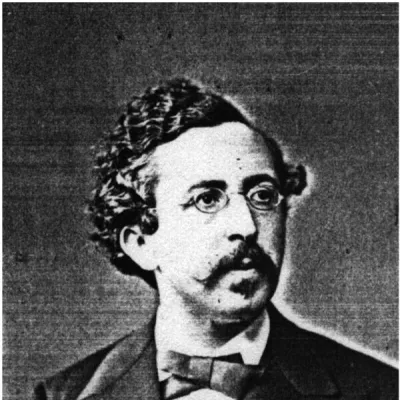
Hermann Cohen
Human Design Chart
Biography
He devoted three early volumes to the interpretation of Kant (Kant's Theory of Experience, Kant's Foundations of Ethics, and Kant's Foundations of Aesthetics). In 1902 he began publishing the three volumes of his own systematic philosophy: Logik der reinen Erkenntnis (1902), Ethik des reinen Willens (1904) and Ästhetik des reinen Gefühls (1912). The planned fourth volume on psychology was never written.
Cohen's most famous Jewish works include Religion der Vernunft aus den Quellen des Judentums (Religion of Reason out of the Sources of Judaism, 1919), Deutschtum und Judentum, Die Naechstenliebe im Talmud, and Die Ethik des Maimonides.
An English translation of some of his Jewish writings is available in Reason and Hope: Selections from the Jewish Writings of Hermann Cohen, translated by Eva Jospe (1971).
Cohen was an outspoken critic of Zionism, as he argued that its aspiration to create a Jewish state would lead to "return the Jews to History". In his view, Judaism was inherently a-historical, with a spiritual and moral mission far transcending the national aims of Zionism. Despite his attitude, Tel Aviv has a Hermann Cohen Street.
In 1878, Cohen married eighteen-year-old Martha Lewandowski, a daughter of the composer Louis Lewandowski. (She was murdered in Theresienstadt on 12 September 1942.) Hermann Cohen died on 4 April 1918 at age 75 in Berlin, German Empire.
Human Design Analysis: Hermann Cohen as Manifesting Generator 3/5
Manifesting Generator 3/5 — Design at a Glance
Hermann Cohen revealed himself as someone who possessed a hybrid energy structure: He combined the constant power of a Generator with the lightning-fast projection of a Manifestor. This design allowed him to skip steps and quickly draw things into his life. Yet this speed carried risks; often he acted too hastily, skipped necessary intermediate steps, and later had to backtrack to fill in gaps – a process that, if ignored, quickly led to frustration without following his inner guidance. Additionally, he tended to pursue multiple projects simultaneously as he responded to numerous impulses at once.
The key mechanism lay in his defined Sacral Center. Instead of initiating himself, his strategy was one of responding: He waited for life impulses and checked whether his Inner Self gave a clear "yes." Only then would he start. When this condition was met, he found deep satisfaction in creating. Paradoxically, he needed variety at just that moment; the compulsion to finish one thing before starting another contradicted his nature. Instead, his creativity flourished in a playful mode where he pursued various tasks simultaneously and enjoyed the diversity. His energy thus wasn't linear progress but rather a dynamic, impulse-led dance between different fields as long as inner resonance was present.
Sacral Authority
Hermann Cohen's design inclines towards intuitive, body-based decision-making. As a Generator, he had sacral authority, which simplified his process of choice: strategy and inner guidance were one and the same. This configuration worked through immediate reactions to external stimuli. Instead of analyzing for long periods, his system responded with a palpable "gut feeling" or an energy surge. When a positive signal appeared – audible as grunting, humming, or an affirming "mm-hm" – he felt vital and energized. This reaction marked access to inexhaustible life force and enabled him to undertake tasks with great enthusiasm and without rigid purposefulness. His well-being depended on following these inner impulses, which allowed him to fully immerse himself in his activities. The description also mentions potential support from the Spleen Center; if this center was activated or connected to the Sacral Center, it sharpened his perception further. This enabled quick, spontaneous decisions based on instinctive intuition and direct access to physical well-being. Thus, Hermann Cohen could reliably guide himself from this deep, physical resonance, helping him act authentically and powerfully in everyday life rather than being driven by external expectations or intellectual deliberations.
The 3/5 Profile — Martyr / Heretic
Hermann Cohen's design inclined towards an experimental practice, paired with the need to provide insights gained from this experimentation as solutions for others. As a person of Profile 3/5, he initially believed nothing was predetermined and had to discover everything through personal experience. This line of the Explorer served to gather experiential knowledge through trial and error. This knowledge was then shared in the role of the Hero, making him attractive to those who wanted to learn from his successes. Simultaneously, this profile carried the risk of painful public failures during this experimental phase.
The third line emphasized responsibility through self-sacrifice; it recognized its role early on in the mutation process and was willing to dedicate itself to it. Without this dedication, development was not possible. On the other hand, the fifth line stood for objectivity, especially during crisis times. It required an impartial stance, free from emotional influence, to be effective on a material level. Thus, Hermann Cohen showed himself as someone who learned through personal experience and then shared this knowledge neutrally and heroically, with the balance between private experimentation and public failure or success shaping his development.
Split Definition — Defined & Open Centers
Hermann Cohen's design points to a tendency towards clear, strong-willed articulation, carried by a deeply rooted identity. His defined G Center gave him reliable self-awareness and a sense of direction; he knew where he came from and was going without imposing this on others. This inner security flowed into his defined Heart Center, giving him willpower and the ability to keep promises and use resources autonomously. He acted out of a strong 'I' that knew its worth and asserted it.
This energy was directed outward through his defined Throat Center. His voice wasn't a random product of the moment but a consistent expression of his inner truth. When he spoke or acted, he did so with the clarity of an engine powered directly by willpower and identity – honest, direct, and without detours.
At the same time, there was openness to the unknown in his mental and emotional areas. His open Head Center meant that he wasn't constantly driven by inspiration; instead, when mental pressure arose, he tended to question whether he had found the right answer. He learned to let go of this compulsion and remain an observer of his thoughts rather than falling into confusion. Similarly, his open Solar Plexus Center absorbed emotions from the environment like a barometer. Hermann Cohen was prone to personalizing foreign moods as his own or shying away from emotional confrontation to maintain harmony. But by not identifying these waves as his own, he could use them to perceive others' emotional climates without getting lost in them. His open Spleen Center complemented this with a sensitivity towards health and well-being; he avoided spontaneous decisions out of fear of uncertainty and instead sought consistent authority to protect against conditioning influences.
Channel 33-13: The Prodigal — Channels & Gates
Hermann Cohen showed himself as someone who not only passively accepted experiences but actively reflected on them and translated them into coherent structures. His design tended towards sorting what was seen before sharing – a process that required patience.
This trait stemmed from the Lost Son Channel 13-33. Here, Gate 13 in the G Center combined the ability to absorb information and secrets with Gate 33 in the Throat Center, which leaned towards withdrawal. Cohen collected life stories and withdrew to organize these memories. Only when the deeper truth became visible beneath the surface did he speak it out. This channel brought continuity to his development; he learned from the past rather than hastily looking ahead.
Parallel to this, the Initiation Channel 51-25 worked. It connected the Heart Center through Gate 51 of Shock with Gate 25 of Self Spirit. This configuration gave him natural competitiveness but oriented it not only materially but also spiritually. Cohen recognized the potential for individuation in others and could – when invited – deliver the necessary 'shock' to inspire a deeper awareness of their uniqueness. This process was mystical and uncontrollable; initiation had to find him for it to be effective.
The Ripe Channel 42-53 connected his Root Center with the Sacral Center. Gate 53 of Beginnings drove him to start new cycles, while Gate 42 of Growth ensured these experiences were fully traversed. Cohen needed to bring a cycle to a satisfying conclusion before moving on to the next one. This process wasn't goal-oriented in the narrower sense but served the acquisition of wisdom. Through reflective contemplation, he translated his personal experiences into information useful for the collective.
Additionally, Gates like 39 (Provocation/Mutation), 21 (Control/Material Life), and 48 (Depth/Pattern Recognition) shaped his profile. Gate 62 in the Personality Profile emphasized logic, details, and patience in pattern correction, while Gate 52 required a self-imposed pause for concentration. In his design, Gates like 60 (Acceptance of Limitations), 56 (Abstraction/Telling), and 27 (Care) worked together to create a person who acted through patient observation, logical structuring, and caring transmission of insights.
Collective Circuitry — Circuit Signature
Hermann Cohen's design points towards a tendency for solidified individuality and inner constancy. The Centering Circuit connected his Identity with the Heart Center (Channel 25-51, Initiation). This connection created a direct flow between divine identity and self-worth. A pulsating energy of personal uniqueness emerged: 'I am who I am'. As he lacked a connection to the Throat Center, these strong convictions often remained unspoken or hard to put into words but deeply shaped his essence.
Parallel to this, the Meaning Circuit worked as a separate power structure. It consisted of two disconnected parts: a connection between Throat and Identity Centers (Channel 33-13, The Lost Son) and one between Sacral and Root Centers (Channel 42-53, Ripe). This generated cyclical emotional waves dealing with the past. Hermann Cohen reflected on past experiences to grasp their meaning and emotionally process insights. Energy flowed in wave-like patterns – with a beginning, middle, and end – serving to learn from the past.
As someone with split definition, he possessed two clearly separate energetic systems: one for inner constancy and individuality (Heart/Identity), the other for emotional meaning-making and communication (Throat/Identity as well as Sacral/Root). These groups weren't directly connected but existed as parallel, independent forces. His character showed through this constellation as someone deeply rooted internally but processed his deepest feelings and convictions in wave-like phases without always immediately articulating them. The melancholy of the Centering Circuit colored his entire experience.
Right Angle Cross of Tension 2
Hermann Cohen's design indicated a tendency towards a specific inner tension that was often perceived as burdensome. This configuration, known as the right tension cross two, did not describe an external ability to act in the classical sense but rather an intense internal dynamic. It felt like a constant pressure from within that could not be resolved through logical reasoning or external confirmation. Instead, this mechanism demanded a surrender to the process itself, regardless of the outcome. For Hermann Cohen, this meant that his path was less about clear goals and more about navigating this continuous inner friction. The energy of this cross did not drive him outward but kept him in a state of high expectation and unresolved tension. It was a life task to carry this burden without avoiding it through control or escape. This structure created an atmosphere of seriousness and deep engagement that didn't need to be visible to others, but fundamentally shaped Hermann Cohen's inner experience. The challenge lay in accepting this tension as a necessary part of his design rather than fighting against it.
Saturn Return · Uranus Opposition · Chiron Return · 2nd Saturn Return — Life Cycles
Hermann Cohen's design indicated a tendency towards structural consolidation that manifested in clear career phases. As a Manifestor, he responded to internal resonance, leading to a life path characterized by periodic solidification. The first Saturn return around the age of 31 often marked the transition from education to established position. In 1873, Hermann Cohen habilitated with Friedrich Albert Lange – an event that underscored this mechanical efficiency: years of groundwork condensed into a viable professional foundation.
This dynamic repeated itself in the second Saturn return around the age of 60, a time when one's authority and depth often unfolded in comprehensive works. In 1902, he published the first volume of “The Logic of Pure Knowledge.” This was not an isolated event but rather the logical consequence of a design that aimed at cumulative development and deep anchoring. The mechanics of his chart did not promote fleeting impulses but sustained, systematic elaboration of inner truths outwardly. Through these cyclical phases of validation and publication, his intellectual structure became increasingly visible and stable, driven by the necessity to bring internal clarity into external form.
Manifesting Generator · Sacral Authority — Synthesis
Hermann Cohen lived a life path marked by a deep inner drive to gather experiences and transform them into knowledge. His design as a Manifesting Generator (with sacral authority) points to someone who could quickly attract things but always learned through experimentation – a process amplified by the Explorer/Hero profile. The connection between Sacral Center and Throat Center (Channel 13-33) enabled him to absorb information, reflect on it, and ultimately express formulations that resonated with others and influenced them. This was evident in his ability to generate knowledge from practical experience and share it, confirming his role as someone others could learn from.
A central paradox lay in the combination of quick initiating power (Manifesting Generator) and the need to respond to sacral impulses – a tension field between the urge to initiate things and the wisdom to wait and allow. This inner struggle was reflected in the Saturn returns: the early habilitation year (31) indicated rapid ascent, while the publication of his work later in life (60) suggested a long phase of maturation and reflection. He was thus someone who united action with restraint.
3 Defined Channels
Incarnation Cross - Right Angle Cross of Tension 2
Solar Return
The Solar Return shows the moment when the sun returns to its exact birth position - your personal solar year.
Life Cycles
Discover the life cycles with a detailed triple view (birth chart, cycle chart, composite).
Human Design Profile
- Strategy
- To respond - wait for something to respond to
- Authority
- Sacral Authority
- Profile
- 3/5 - Martyr / Heretic
- Definition
- Split Definition
- Incarnation Cross
- Right Angle Cross of Tension 2
- Date of Birth
- 04.07.1842 08:00
- Place of Birth
- Coswig (Sachsen), Germany
Frequently Asked Questions
What is Hermann Cohen's Human Design type?
What Profile did Hermann Cohen have in Human Design?
What Authority did Hermann Cohen have?
What incarnation cross did Hermann Cohen have?
When was Hermann Cohen born?
Discover your own Human Design
Are you also a Manifesting Generator? Find out in a personal reading how to unfold your multi-talents and direct your energy wisely.
More Personalities
Back to overviewAlain-Fournier

Aldair

Alizée

Angeli

Arletty
Artus