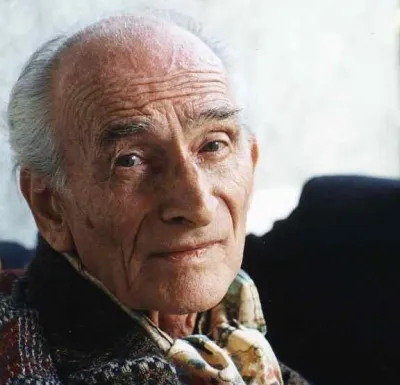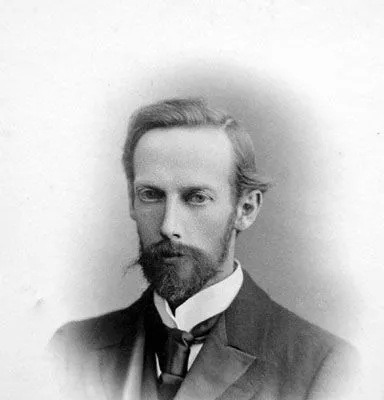
John George Bartholomew
Human Design Chart
Biography
Bartholomew married and had four children. He died in Cintra, Portugal on 14 April 1920 at age 60.
The Human Design of John George Bartholomew: Manifesting Generator 5/1
Manifesting Generator 5/1 — Design at a Glance
John George Bartholomew revealed himself as someone who possessed a unique combination of constant energy and lightning-fast action capability. His design as an Manifesting Generator combined the powerful endurance of a Generator with the direct impact of a Manifestor. He had a consistently available sacral life force, which did not compel him to initiate independently but rather to respond to external impulses.
At the same time, his configuration allowed him to skip steps in implementation and draw things into his life at an impressive speed. This rapidity carried risks: often he acted too quickly or took on multiple projects simultaneously without waiting for internal approval. This frequently led to frustration when important intermediate steps were missing or energy was scattered by multitasking.
The path to his deep satisfaction lay in the discipline of responding. He had to check whether his sacral center responded with a clear 'yes' to an impulse. Only if this inner resonance existed and he found himself in a playful mode could his creative power flow without exhaustion. Parallel processing of various tasks was no obstacle for him as long as internal authority supported each undertaking. Thus, potential friction turned into productive dynamics.
Sacral Authority
John George Bartholomew based his decisions on deep, bodily resonance rather than intellectual analysis. His inner authority came from the defined sacral center, which marked him as a Generator. For this type, the strategy of reacting was inseparable from this internal guidance, simplifying his decision-making process.
This mechanism manifested through a palpable 'gut feeling' or sudden surge of energy in response to external stimuli. John George Bartholomew learned to pay attention to bodily signals such as grunts, hums, or an affirming 'mm-hm'. When his sacral motor kicked in, he felt vital and alive. Then he had access to inexhaustible energy that enabled him to tackle tasks with great enthusiasm. He moved through life with joy and satisfaction, fully immersed in his activities without them needing to serve an external purpose.
Additionally, an activated spleen center acted as a supportive instance. This gave him faster, more spontaneous reactions and decisions. He had immediate access to his physical well-being and instinctive perception, guiding him reliably. This combination of sacral confirmation and spleen-supported intuition shaped the way he moved through the world and responded to offers.
The 5/1 Profile — Heretic / Investigator
John George Bartholomew was marked by the Profile Hero/Researcher (5/1), creating a specific tension between his role as problem solver for others and his necessary retreat into knowledge deepening. His Line 5 gave him almost magnetic charisma; others projected onto him the ability to answer complex questions and offer solutions. This led to frequent calls upon him as an authority, similar to an expert handling hours of inquiries.
At the same time, his Line 1, that of the Researcher, demanded a retreat into privacy for knowledge deepening and recovery. Without clear boundaries, John George Bartholomew faced the risk of burnout from excessive helping without adequate regeneration. The challenge lay in balancing these two poles: managing others' projected expectations on one hand and preserving space for his own research and correction processes on the other. By learning to set limits, he could maintain the beneficial dynamics where his deep knowledge base (Line 1) was purposefully used for problem-solving for others (Line 5), without him burning out in the process. This configuration described a life task of uncovering hidden connections and passing them on to others, yet only under the condition that he protected his own energy through necessary retreats.
Split Definition — Defined & Open Centers
John George Bartholomew was characterized by a massive, constant mental and volitional presence. His design indicated an inclination towards uninterrupted cognitive activity: The defined Head and Ajna Centers generated a continuous pressure to question and form concepts, while the defined Heart Center reinforced these thoughts with firm willpower. This combination created a kind of 'mental machine' that was always active and held clear opinions. Through the connection between Ajna and Throat, he could directly translate his intellectual processes into speech; his defined G Center gave this voice a stable identity and direction, so he not only thought but also knew who he was and where he wanted to go.
This immense inner stability stood in stark contrast to his open centers, which made him vulnerable to external influences. His open Solar Plexus absorbed the emotions of the environment, leading him to internalize foreign moods and often feel emotionally unsettled, even though his mind remained clear. He tended to question whether his feelings were authentic or merely a reflection of others'. Similarly, his closed Spleen Center left him unable to rely on spontaneous intuition; instead, he sought security from others and risked impulsive actions out of fear rather than trusting reliable inner signals. This discrepancy between the firm mental structure and the volatile emotional and intuitive base shaped his experience: He had to learn not to use his mental energy for self-torment or persuading others but to give it as inspiration while protecting himself from emotional conditioning.
Channels for pioneering spirit, presence, clarity and endurance.
John George Bartholomew exhibited a fundamental disposition of natural competitiveness that not only drove his own quest for prominence but also awakened potential in others. His design was marked by the Initiation Channel 51-25: The egoistic energy of Gate 51 (Shock), which always wanted to be first, combined with Gate 25 (Self Spirit). This allowed him to recognize beauty in both animate and inanimate objects and inspire others towards individualization through authentic example. This process was not a conscious act of enlightenment but rather a mystical side effect of his life; initiations occurred when he surrendered to his own strategy, not through forced action.
Alongside this dominant force, the Awakening Channel 10-20 also played a role. It connected Gate 10 (Appearance) with Gate 20 (Now), helping him stay awake and accept himself in the present moment. Through this clarity, he unconsciously inspired others to be themselves without having to actively lead them. His mental functioning was determined by the Awareness Channel 61-24. Here, the inspiration of Gate 61 (Secrets) merged with the rational mind of Gate 24 (Rationalizing), creating moments of sudden knowledge – a Satori – that broke old patterns and opened new perspectives without his control over thought processes.
Additionally, the Discovery Channel 29-46 contributed to endurance. The Gate 29 (Yes) in the Sacral Center connected with Gate 46 (Self Determination), helping him let go of expectations and lose himself in experiences until their meaning became clear at the end. Individual Gates like the Logic Gate (4) supported the formulation of formulas for future security, while the Reflection Gate (33) created space for withdrawal. These configurations showed a person who acted through inner truth and persistent discovery rather than imposing external patterns.
Individual Circuitry — Circuit Signature
John George Bartholomew was someone with a strongly established internal identity and clear convictions that were often not directly or fluidly expressed outwardly. His design linked the Identity Center with the Heart Center (Centering Circuit), which strengthened self-worth and courage, but without connection to the Throat Center this inner strength remained hard to express. Parallel to this, the Knowledge Circuit drove innovation forward: The Channel 24-61 connected Head and Ajna Centers, generating new insights and creative flashes of inspiration. These two areas formed separate forces; the innovative thinking did not automatically flow into the expression of personal identity.
Emotional past was processed through the Meaning-making Circuit. Here, the Channel 46-29 linked Identity with Sacral Center, allowing a cyclical reflection on experiences to learn from them. This emotional wave stood isolated from intellectual innovation and inner fortification. Finally, integration secured survival through reaction to life. The Channel 20-10 connected Throat with Identity Center, enabling power from the Life Reaction (Gate 34) to be expressed through proper behavior and intuitive knowledge in the present moment. In John George Bartholomew, these four circuits existed as parallel, not directly interconnected systems: inner fortification, innovative insight, emotional processing, and reactive survival worked alongside each other without forming a single continuous energetic flow.
Left Angle Cross of Healing 1
John George Bartholomew had the 'left healing cross' in Human Design. This configuration formed the archetypal framework for his consciousness and life purpose. The left cross belongs to a group of so-called 'crosses', each connecting four specific gates, thus creating an integral, profound energy structure. In the case of the left cross, it is about the theme of healing – not in a medical sense, but as a process of integrating experiences, wounds, and insights into a new, more harmonious whole.
For John George Bartholomew, this meant that his inner compass was always directed towards seeking meaning behind pain or challenges. He showed a tendency to not only endure personal or collective fractures but actively transform them into growth. The energy of this cross supports recognizing old patterns and replacing them with new, healthier perspectives. It is a slow yet deep transformation requiring patience and self-reflection.
As no specific events were mentioned in the raw content, the description remains at this general level. The left healing cross marked John George Bartholomew as someone who led others through his own transformation – not by teaching but by setting an example of a person gaining strength from fractures.
Saturn Return · Uranus Opposition · Chiron Return · 2nd Saturn Return — Life Cycles
John George Bartholomew's life ended in 1920 at the age of sixty in Cintra, Portugal. This point marked the end of his second Saturn Return cycle, a phase symbolizing the completion of a long-term maturation process in Human Design. While the first Saturn return often marks the consolidation of one’s structure, the second cycle typically concludes a profound life stage and leads to a final confirmation or dissolution of previously lived patterns. For John George Bartholomew, this structural conclusion coincided with his death. This underscores the mechanical significance of this time point as a natural endpoint of a large developmental arc where the consequences and achievements of previous life stages condense. Death at age sixty is not seen here as a random event but rather as the final act within this specific cyclical dynamics marking the transition to the afterlife or complete integration of earthly experience. The mechanics show that often there is a clear distinction between what has been achieved and what remains – in this case, completed through physical death.
Manifesting Generator · Sacral Authority — Synthesis
John George Bartholomew lived a life deeply marked by an inner dynamic: the interplay between quick action and the need to heed the sacral response. As a Manifesting Generator, he had the ability to quickly initiate things, yet his design also required him not to initiate but to respond to life. This combination created a thread of continuous activity that needed to be balanced through phases of correction and withdrawal – a rhythm manifesting in his pursuit of knowledge and its dissemination (Gate 58). The connection between Head Center and Ajna Center strengthened this mental drive, while the defined Heart Center gave him the willpower to pursue his endeavors.
A central paradox in Bartholomew's chart lies in the tension between his ability for quick manifestation and the need to rely on inner authority. He was destined to act when the Sacral Center said 'yes', yet his energy also pushed him forward simultaneously. This likely led to a constant oscillation between crossing boundaries and finding balance, a dynamic further intensified by the open definition of his centers for external influences.
4 Defined Channels
Incarnation Cross - Left Angle Cross of Healing 1
Solar Return
The Solar Return shows the moment when the sun returns to its exact birth position - your personal solar year.
Life Cycles
Discover the life cycles with a detailed triple view (birth chart, cycle chart, composite).
Human Design Profile
- Strategy
- To respond - wait for something to respond to
- Authority
- Sacral Authority
- Profile
- 5/1 - Heretic / Investigator
- Definition
- Split Definition
- Incarnation Cross
- Left Angle Cross of Healing 1
- Date of Birth
- 22.03.1860 13:30
- Place of Birth
- Edinburgh, United Kingdom
Frequently Asked Questions
What is John George Bartholomew's Human Design type?
What profile did John George Bartholomew have?
What authority did John George Bartholomew have?
What incarnation cross did John George Bartholomew have?
When was John George Bartholomew born?
Discover your own Human Design
Are you also a Manifesting Generator? Find out in a personal reading how to unfold your multi-talents and direct your energy wisely.
More Personalities
Back to overviewAldair

Alizée

Angeli

Arletty

Artus

Balthus