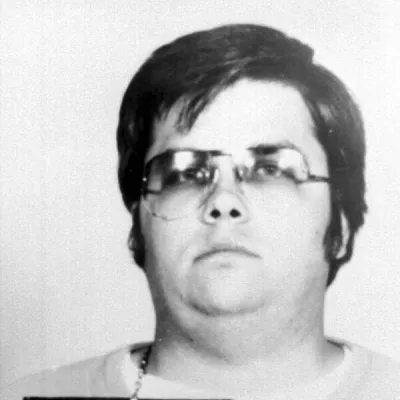
Mark David Chapman
Human Design Chart
Biography
Chapman was born to David and Kathryn within a year of their marriage. His father was an Air Force sergeant and his mother was a nurse. The family moved to Indiana where David enrolled at Purdue University for a degree in electrical engineering. His mother worked for three years while his father took care of him. His mother recalls that as an infant, he rocked and shook the crib to the point they had to take off the casters. When he was 12 he told his mother about his friends, "the little people."
The family moved to Decatur, Georgia where his father worked for an oil company. In 1964 his IQ was measured at 121, the lower end of the gifted scale. He had lots of friends, worked in the school library and filled his free time with projects. He collected coins, started a neighbourhood newspaper, opened a shop in the garage where he would oil and wash bicycle for 50 cents. He attended Sunday school, liked music and became a devoted Beatles fan.
Mark described his mother as "dreamish and moody" and afraid of getting old. His experience of his father was that of an unemotional, shy and reclusive man. He got involved in drugs the late 1960s and rebelled. He ran away from home, returning two weeks later. Chapman had a record of arrests from 1972, most recently 19 March 1980 for armed robbery and abduction. He had gone through life periods in which he was extremely religious and would not play Beatles' records because they had been considered more popular than Jesus. In August or September, 1975, he lost his virginity to a refugee worker. His parents were divorced in 1978.
He worked as a security guard while battling bouts of depression and thoughts of suicide.
Human Design Analysis: Mark David Chapman as Projector 1/3
Projector 1/3 — Design at a Glance
Mark David Chapmans design points to an extreme focus and penetrating perception. As a projector, his aura was like a focused beam of light that immediately revealed weaknesses or dysfunctions in his environment. This mechanism is not just about observation but directly pointing out what lies hidden or wrong within others' systems.
The challenge for this type is that such direct addressing of faults can often be perceived as aggressive or unpleasant – akin to shining a bright light into someone's face. The projector's strategy, however, is to wait for an honest invitation and attract through their own harmony rather than actively correcting.
Chapman lacked a defined Sacral Center, meaning he had no constant intrinsic energy source. Instead, he experienced phases of high activity followed by necessary rest periods for regeneration. If a projector ignores this rhythm or their invitation strategy, it leads to a specific non-self-experience in Human Design: Bitterness. This emotional quality arises from the feeling of not being valued or recognized despite having identified a 'fault in the system.' Chapman's configuration thus shows potential for a sharp, systems-critical perspective that can easily slip into resignation and bitterness without the protective strategy if not invited externally.
Splenic Authority
Mark David Chapmans design points to immediate, instinctive reactions stemming less from rational planning than from a deep bodily alarm system. His inner authority lay in the defined Spleen Center – the center for health and survival intelligence. With both Emotional and Sacral Centers open, this fine, spontaneous intuition could act. It signaled in the moment whether a situation or environment was harmful. This first impulse served to delineate against negative influences and protect personal well-being. However, this spleen impulse is very subtle and comes only once; it could easily be overshadowed or ignored by external stimuli, requiring high vigilance. Long-term planning was difficult for this design as the inner truth only revealed itself in the present moment. Flexibility and freedom were necessary to avoid suffocating rigid structures that contradicted spontaneous flow. The challenge lay in perceiving this quiet inner call before other voices drowned it out, and staying true to it despite possible short-term changes.
The 1/3 Profile — Investigator / Martyr
Mark David Chapmans design points towards radical experimentation driven by the need to test theoretical knowledge through practical experience. As a 1/3 profile (Researcher/Experimentor), his nature was geared towards learning through trial and error; line 1 could tend to get stuck in planning out of fear of ignorance, while line 3 urged active action and making mistakes.
This dynamic was reinforced by specific energies: Line one brought an evangelical drive to share new insights, undermining established values and breaking rules. Simultaneously, the energy of the third line, marked by dissatisfaction and rejection of old structures, led to rejecting outdated principles often without sensitivity for existing commitments. The combination of a need for expansion and readiness to destroy old orders shaped an attitude that broke away from traditional norms. For Mark David Chapman, judgment about the validity or falsity of an idea was only trustworthy if it had been tested both theoretically and practically – a process inevitably linked with breaking conventions.
Single Definition — Defined & Open Centers
Mark David Chapmans design predisposed him towards uninterrupted, conceptual engagement. His defined Ajna Center kept his mind perpetually active; he processed data and creativity in a consistent, trustworthy manner. This mental energy flowed directly into his defined Throat Center, linking his communication closely with his thoughts: He spoke out what he conceptualized. Additionally, his defined Spleen Center acted as an intuitive instance in the here and now, making spontaneous judgments about health and well-being.
Simultaneously, Chapman was heavily influenced by several open centers, making him susceptible to conditioning from his environment. His open Head Center received mental pressure and questions from others, which made him prone to confusion; he tended to question whether he had the right answers or needed inspiration to quiet inner noise. The open G Center meant a lack of firm identity; he often adapted to his surroundings and sought direction by checking if a place or relationship felt correct. Furthermore, his open Heart Center was driven to prove its worth, which could lead into cycles of promise and disappointment. His open Sacral Center absorbed foreign energy, leading to overload, while the open Solar Plexus Center amplified emotions from the environment, making him emotionally vulnerable. Finally, his open Root Center took on external stress, often putting him in a cycle of adrenalized pressure that he couldn't escape.
Channels for experimental mastery and assimilated insight.
Mark David Chapmans design inclined towards extreme precision and perfecting specific skills. This attitude was reflected through Channel 48-16, connecting the Spleen Center with the Throat Center. Gate 48 seeks deep, intuitive information while Gate 16 experimentally tests and refines new possibilities. Together they transform raw skill into talent through repeated practice. However, this process often requires years of dedication to achieve mastery and thrives when the talent receives recognition and resources.
Parallelly, Channel 23-43, linking Ajna Center with Throat Center, was at work. Here Gate 43 receives spontaneous insights which are assimilated and expressed through Gate 23. This creates a unique perspective that promotes efficiency and can change thought patterns. The challenge lies in communicating these innovative ideas clearly enough for collective acceptance; poor timing risks rejection or feelings of being an outsider.
Additionally, other gates shaped this profile: Gate 49 steered the emotional wave and principle loyalty in Solar Plexus, often linked with readiness to sacrifice for the tribe. Gate 4 developed logical formulas for future security and handling suspicious patterns. Visual memories and collective ideas flowed through Gate 11 while Gate 12 promoted creative mutations and poetic expression in Throat Center. Gate 45 brought willpower and material attraction on tribal level, supported by continuity and protection of material success through Gate 32. Finally, Gate 50 ensured traditional values and protective reflexes as well as Gate 62 for patient detail work, logic, and pattern recognition that translated facts into comprehensible frameworks.
Individual Circuitry — Circuit Signature
Mark David Chapmans design inclined towards a strongly structured but isolated internal logic. His simple definition connected Ajna Center (thought formation) directly with Throat Center (expression) and Spleen (survival intuition). This configuration created a closed loop: thoughts were immediately translated into actions, guided by a subjective, often impulsive perception of what was 'right' or necessary.
The Knowledge Circuit contributed by linking Ajna with Throat Center (Channel 43-23), promoting the structuring of individual ideas into concrete expressions. Chapmans design showed pulsating energy that urged him to express unique identity aspects acoustically and directly, without emotional maturation steps or external validation.
Parallelly, the Understanding Circuit worked through Channel 16-48 ("The Wavelength"), connecting Throat Center with Spleen. This gave his expressions a focused visual quality and the conviction to share logical insights. As Solar Plexus (emotion) was not involved, the natural delay through emotional wave movements was missing. The combination of structured idea (Ajna-Throat) and intuitive survival-focused focus (Throat-Spleen) resulted in action readiness based on personal, unmediated truth-seeking – an energy that entered the world directly without external filters.
Right Angle Cross of Explanation 2
Mark David Chapmans design carries the structure of the right cross of statement two, a configuration often associated with a deep, almost fateful attachment to certain truths or beliefs. This archetypal orientation tends to push the individual into a role where their identity is strongly defined by what they consider absolutely correct – regardless of external circumstances or counterarguments.
In Human Design, this cross does not describe flexible adaptability but an inner determination that feels like an unchangeable law. It's not about mere opinions one can change but an existential certainty. Those carrying this structure often experience their beliefs as part of their essence; doubting means more than intellectual uncertainty but a threat to the self.
This mechanism creates a strong internal pressure to live and enforce one's truth consistently without compromise. A dynamic emerges where the individual is prepared to take extreme steps to make this inner order visible externally or defend it against resistance. The energy of this configuration seeks not dialogue in the traditional sense, but confirmation or enforcement of a reality felt as sacred.
Saturn Return · Uranus Opposition · Chiron Return · 2nd Saturn Return — Life Cycles
Mark David Chapmans design showed a tendency towards extreme and irreversible turning points that often manifested through sudden, definitive actions. This structure does not appear as gradual development but as an abrupt sharpening where internal tensions peak in one single, life-changing act.
This mechanism became active in 1980 at the age of 25: the murder of John Lennon in New York marked his first Saturn Return. In Human Design mechanics, this cycle represents the first major test of one's structure and confrontation with ego limits. Years of internal conflicts condensed into a viable yet destructive outcome. The event was not an accidental outburst but the logical consequence of a configuration that under pressure leans towards ultimate clarification. The Saturn Return served as a catalyst bringing hidden patterns to the surface and manifesting them in an irreversible act – not in the sense of Manifestor energy, but as a fateful realization of inner pressure. The deed itself was the moment when the abstract tension of the design translated into real historical impact.
Projector · Splenic Authority — Synthesis
A central red thread runs through the design: the deep necessity to recognize and understand what does not work (Channel Wavelength, Gate 48), followed by offering potential solutions based on self-discovered insights (Profile Researcher/Experimentor). This ability to identify errors in the system is inseparable from an inner authority based on spontaneous impulses and physical well-being. The defined Ajna Center strengthens this process through constant conceptual thinking, while the knowledge circuit fuels a drive for transformation and expression of individuality.
The central paradox lies in the tension between the Projector type – destined to bring light into darkness for others – and the Spleen authority that requires careful boundaries against harmful influences. The natural inclination to recognize errors and offer solutions collides with the necessity to listen to one's instincts and protect oneself from overexertion. This contradiction is further emphasized by the documented event: confrontation with a profound break (death) seems to have catalyzed an understanding search and willingness to experiment.
2 Defined Channels
Incarnation Cross - Right Angle Cross of Explanation 2
Solar Return
The Solar Return shows the moment when the sun returns to its exact birth position - your personal solar year.
Life Cycles
Discover the life cycles with a detailed triple view (birth chart, cycle chart, composite).
Human Design Profile
- Type
- Projector
- Strategy
- Wait for the respectful invitation
- Authority
- Splenic Authority
- Profile
- 1/3 - Investigator / Martyr
- Definition
- Single Definition
- Incarnation Cross
- Right Angle Cross of Explanation 2
- Date of Birth
- 10.05.1955 19:30
- Place of Birth
- Fort Worth, TX, United States
Frequently Asked Questions
What is Mark David Chapman's Human Design type?
What is Mark David Chapman's Profile?
What authority does Mark David Chapman have?
Which incarnation cross is active for Mark David Chapman?
When was Mark David Chapman born?
Discover your own Human Design
Are you also a Projector? Find out in a personal reading how to unfold your leadership qualities and recognize the right invitations.
More Personalities
Back to overviewSissy Spacek

Alain-Fournier

Anémone

Ann-Margret

Bourvil

Hergé