
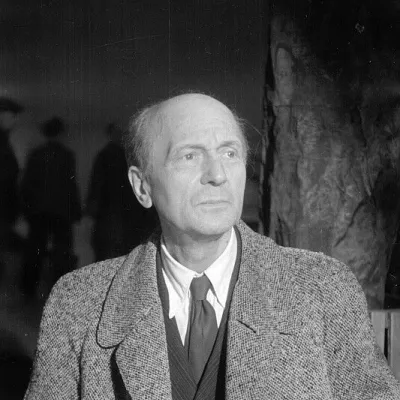
Paul Bildt
Human Design Chart
Biography
Paul Bildt — Generator with Profile 5/1
Generator 5/1 — Design at a Glance
Paul Bildt's design revealed a tendency towards great endurance and persistent strength. As a Generator, he had abundant sacral energy that made him seem like a strong workhorse – provided this power was used for tasks truly close to his heart. His life force could not be initiated by sheer will but only ignited in response to external impulses. The strategy involved waiting until an inner signal gave a clear yes before acting from the gut.
This mechanism protected him from two specific risks: first, exhaustion through activities that found no resonance and thus wasted energy; second, interruption of his heart project due to external pressure or premature cessation. When Paul Bildt acted in harmony with this reactive strategy, it led to deep satisfaction and a sense of true fulfillment. Ignoring the inner signal or trying to initiate against his nature resulted in frustration accompanied by a noticeable lack of energy. His design thus showed that genuine productivity did not stem from constant initiative but rather from consciously responding to life around him.
Sacral Authority
Paul Bildt lived as a Generator whose decision-making was marked by sacral authority. This internal instance replaced intellectual analysis with direct physical reactions to external events. His strategy involved waiting and then answering – not initiating. This happened through a noticeable 'gut feeling' or sudden surge of energy. His body signaled agreement through sounds like grunting, humming, or a soft hmm; disagreement showed as groaning or a negative hm-hm.
This mechanism allowed him to act vital and enthusiastic when his sacral motor kicked in. He then had inexhaustible energy and approached his tasks with joy without compulsive purposefulness. His design also included a supportive instance: the active spleen center. This gave him the ability for quick, spontaneous reactions and reliable access to instinctive perception as well as physical wellbeing. The combination of sacral and spleen centers enabled Paul Bildt to make decisions not only energetically but also intuitively precise. He learned to orient himself towards these physical signals, which characterized his life path through satisfaction and a natural alignment with life itself rather than external validation or rational planning.
The 5/1 Profile — Heretic / Investigator
Paul Bildt's design was marked by a specific tension: between the magnetic call to offer solutions for others (Line 5/Hero) and the compelling need to withdraw for knowledge deepening (Line 1/Researcher). As a 5/1, he possessed the trait that other people automatically sought his answers. This projection could quickly lead to exhaustion if clear boundaries were not set – comparable to an expert answering questions for hours and ending up drained.
The central life task thus lay in learning to say 'No'. This served as a protective mechanism for his own energy and ensured the quality of his contribution. Line 1 required withdrawal and collaboration with stronger forces for mental growth; without this protection, the process sank into the wave. By setting boundaries, Paul Bildt could maintain the balance between service (Line 5) and his own research process (Line 1). His contribution worked best when it was time-limited and performed according to his inner authority – not through constant availability but targeted engagement followed by withdrawal.
Single Definition — Defined & Open Centers
Paul Bildt was characterized by a massive, constant internal structure. His defined G Center gave him a reliable self-identity and a clear sense of his life mission; he knew who he was and where he was going. This inner security allowed him to love others and show new directions without being dependent on them. Simultaneously, his defined Heart Center determined a strong will: He liked to control his resources, keep promises, and seek recognition for his contribution. As a Generator type, the defined Sacral Center drove him – a permanent motor full of vitality that only provided energy when responding spontaneously with a yes or no to external requests. This combination of identity, will, and energy created a strong presence.
In contrast, Head, Ajna, Throat, Solar Plexus, Spleen, and Root were open. This meant that mental clarity, emotional stability, or spontaneous intuition was not constant but situational, absorbed from the environment. His open Head Center made him vulnerable to mental pressure and confusion; he tended to seek inspiration to answer questions that weren't his own. The open Ajna Center allowed his mind to be flexible but also unstable in concept formation. Emotionally, his open Solar Plexus Center acted like a barometer: It absorbed the feelings of others and amplified them, leading him to avoid confrontation or personalize emotions that didn’t belong to him.
His open Spleen Center carried a fundamental fear of survival; he was programmed to seek security from those with defined spleens, which could lead to unhealthy dependencies if he followed impulsive decisions. Finally, his open Root Center absorbed environmental stress, putting him under adrenalized pressure that he didn’t generate himself and often tried to escape through hyperactivity or flight. The challenge was to use his inner authority to avoid falling into the conditioned traps of these open centers – mental confusion, emotional over-identification, or stress-induced exhaustion.
Channels for pioneering spirit, universal love and persistent determination.
Paul Bildt's design tended towards deep individualization driven by competitive impulses that always culminated in universal love. This dynamic was significantly shaped by the Initiation Channel 51-25. Here, the competing ego energy of Gate 51 connected with the Higher Self's ability (Gate 25) to recognize beauty in everything. This gave him the natural gift to trigger consciousness expansion through authentic challenges – what is known as the “shock”. Crucial was the condition of invitation: Only when asked could he skillfully carry out this initiation; forced processes led to bitterness. His triumph served as a bold example for others to live their unique individuality.
Parallel to this, the Discovery Channel 29-46 required a deep commitment through strategy and authority. This channel connected the Sacral Center (Gate 29, saying yes) with the G Center (Gate 46, direction of Higher Self). Paul Bildt had to let go of expectations and fully immerse himself in experience to be at the right place at the right time. By persistently affirming his sacral energy, he made significant insights for the collective, even if the meaning became clear only later. Control played no role here; instead, patience with processes that could take years was essential.
Additional layers from Gate 8 (Contribution/Promotion) and Gate 14 (Power/Direction) underscored his ability to individually advocate for group goals and handle power with grace. Gate 55 brought emotional mutations and mood swings, while Gate 59 represented a genetic strategy of attachment. This configuration marked him as someone who gained deepest insights through authentic living and letting go of control and shared these.
Individual Circuitry — Circuit Signature
Paul Bildt's design set an inwardly directed, individualistic basic attitude. His Centering Circuit connected the Identity with the Heart Center (Channel 25-51). This connection created solid convictions and a strong self-worth. Paul Bildt acted courageously in his own individuality but encouraged others more quietly than verbally as he lacked the Throat Center connection. His deepest values were often hard to put into words, showing through quiet affirmation of others' uniqueness.
Parallel to this, his Meaning Circuit connected Identity with the Sacral Center (Channel 46-29). This directed energy towards emotional experiences from the past. Paul Bildt reflected events in waves, sought meaning behind old events and used these felt insights as a basis for action.
Although both circuits touched on the Identity Center, they formed two separate energetic segments within Paul Bildt. The inner strength of the Centering Circuit and the emotional reflection of the Meaning Circuit existed side by side without directly flowing into each other. This simple definition created a clear yet dual-directional structure: one side was silent individual affirmation, the other cycled through past emotions for meaning seeking.
Left Angle Cross of Uncertainty 1
Paul Bildts design laid the groundwork for a life characterized by navigating uncertainties and consistently seeking answers. His Inner Cross, the Left Cross of Uncertainty 1, defined this fundamental structure: It was not about achieving immediate certainty but rather enduring uncertainty as part of the process. This configuration described a life task where constant confrontation with non-knowledge served as a driving force for development and gaining insights. In this system, uncertainty was neither a deficit nor a lack of clarity, but rather the natural state of learning itself. Paul Bildt thus lived in a dynamic that compelled him to engage with the unknown without prematurely solidifying it. The mechanics of his design showed that true insight often emerges in the space between answers when one is willing to endure the tension of not knowing. This shaped his approach to engaging with the world: less through definitive conclusions and more through an ongoing, active stance towards what remains unresolved. Uncertainty was thus no obstacle but rather the very material of his inner work and growth.
Saturn Return · Uranus Opposition · Chiron Return · 2nd Saturn Return — Life Cycles
Paul Bildts design set a tendency toward structural solidification in his mid-twenties. This phase often marked the transition from experimental search to stable life foundations where internal values became visible externally. The first Saturn return functions as a mechanism for maturation in Human Design: It condenses years of groundwork and impulses into stable forms that give an individual support and help define their role in society. This is not merely about aging but rather laying the foundation of one's existence structure through conscious or unconscious integration of earlier experiences.
This process was evident in Paul Bildt's life in 1910 when, at age 25, he debuted on screen and entered a new phase of his professional identity. For his design, this moment was typical: Saturn energy acted as a catalyst that transformed his previous artistic or personal impulses into a concrete career step. His film debut did not stand alone but represented the structural manifestation of his inner dynamics outwardly. It was a moment of anchoring where his potential manifested in a visible and socially relevant form – without ignoring the underlying mechanics often accompanying such transitions.
Generator · Sacral Authority — Synthesis
Paul Bildt lived a life deeply influenced by the dynamics of a Generator. His sacral energy and ability to work through impulses defined the red thread of his actions. The combination of a defined G Center, Heart Center, and Sacral Center points to strong self-identity, willpower, and a natural inclination to immerse himself in activities that truly fulfilled him – as long as these were initiated by sacral reactions. The Channel of Initiation (51/25) further strengthened this impulse by giving him the natural gift of inspiring and transforming others once he was set into motion. The connection between intuition and the need for authentic self-actualization shaped his creative work and engagement with what drove him.
At the same time, a central paradox in his design revealed itself: openness of his centers to mental consciousness (Head/Ajna) and emotional perception (Solar Plexus/Root). This openness made him receptive to external influences while lacking internal filtering mechanisms to process them. This led to tension between the need for individuality and the risk of being swept away by others' emotions or driven into actions that did not align with his true nature due to external pressure. The Channel of Discovery (46/29) underscored this dynamic further, guiding him on a path of deeper self-discovery which always depended on maintaining inner clarity and authenticity.
2 Defined Channels
Incarnation Cross - Left Angle Cross of Uncertainty 1
Solar Return
The Solar Return shows the moment when the sun returns to its exact birth position - your personal solar year.
Life Cycles
Discover the life cycles with a detailed triple view (birth chart, cycle chart, composite).
Human Design Profile
- Type
- Generator
- Strategy
- To respond - wait for something to respond to
- Authority
- Sacral Authority
- Profile
- 5/1 - Heretic / Investigator
- Definition
- Single Definition
- Incarnation Cross
- Left Angle Cross of Uncertainty 1
- Date of Birth
- 19.05.1885 13:00
- Place of Birth
- Berlin, Germany
Frequently Asked Questions
What is Paul Bildt's Human Design type?
What profile did Paul Bildt have?
What authority did Paul Bildt possess?
What incarnation cross did Paul Bildt have?
When was Paul Bildt born?
Discover your own Human Design
Are you also a Generator? Find out in a personal reading how to use your sacral energy correctly and discover deep satisfaction.
More Personalities
Back to overviewSissy Spacek

Aaliyah

Alexia

Anémone

Angèle

Ann-Margret
