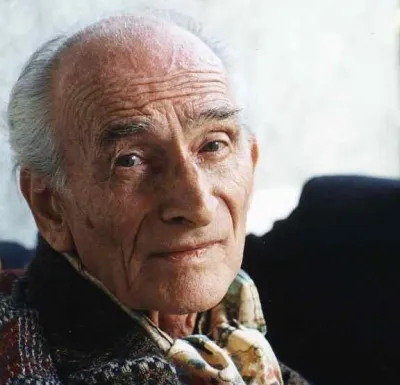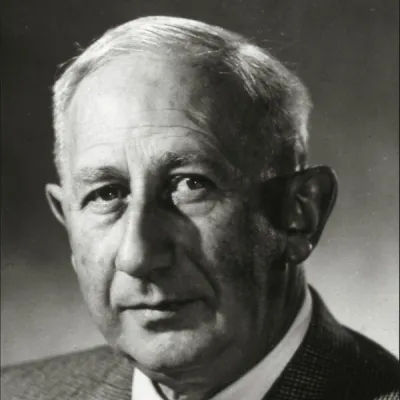
Walter Baade
Human Design Chart
Biography
He studied the Andromeda Galaxy and recalculated the size of the known universe, doubling the previous calculation made by Hubble in 1929. He announced this finding in 1952.
Together with Fritz Zwicky, he identified supernovae as a new category of astronomical objects. Zwicky and Baade also proposed the existence of neutron stars, and suggested supernovae might create them.
Beginning in 1952, he and Rudolph Minkowski identified the optical counterparts of various radio sources, including Cygnus A.
Walter Baade died on 25 June 1960, aged 67, in Gottingham, Germany.
Walter Baade as a Manifesting Generator 1/3 in Human Design
Manifesting Generator 1/3 — Design at a Glance
Walter Baade's design features a hybrid nature: the speed of a manifestor paired with the constant energy of a generator. He was someone who could skip steps and achieve quick results. This configuration described a type that belonged to the generator group but also carried manifestor traits due to a connection between motor centers and throat center.
However, this structure harbored specific risks. Walter Baade tended to move too quickly and overlook important stages, forcing him to backtrack later to fill in gaps. This often led to frustration, which is the non-self theme of this type. Additionally, he was prone to multitasking; he responded to multiple impulses simultaneously and started various projects at once. Without inner consent, his creative drive could quickly turn into dissatisfaction.
Therefore, the strategy 'reacting rather than initiating' was crucial for him. He had to wait until life gave him an impulse before acting. Only when his sacral center responded with a clear 'yes' – constant confirmation – could he effectively use his energy. When applied correctly, Walter Baade found deep satisfaction in his work. He then enjoyed working on multiple things simultaneously, driven by variety and a playful mode that provided the necessary joy and affirmation.
Sacral Authority
Walter Baade's design inclined him to not make decisions in his head but wait for direct physical resonance. As a generator, his inner authority was sacral authority, identical to his strategy: waiting for an external impulse followed by the body's response. This mechanism greatly simplified his decision-making process as he did not have to choose between conflicting internal voices but listened to a clear signal.
This signal appeared as 'gut feeling' – audible through grunts, hums or loud affirmations like 'Mhm'. When this resonance occurred, Walter Baade felt an energy surge and sudden vitality. The prerequisite for this was his open emotional center ensuring that the sacral response wasn't distorted by emotional waves. If his sacral motor engaged with something, he had virtually inexhaustible energy and tackled tasks with great enthusiasm. He lived in the powerful execution of activities that internally 'clicked', fully immersed in action without obsessive purposefulness. This configuration described a person marked by joy and satisfaction as long as they trusted physical signals rather than intellectual planning. The direct physical resonance served him as a true compass guiding him through life.
The 1/3 Profile — Investigator / Martyr
Walter Baade's design inclined towards learning through active experimentation. His Profile 1/3, the Researcher and Experimenter, combined theoretical recognition with practical implementation. Line 1 (Gate 17) promoted openness to various opinions and the ability to perceive reality through a broad spectrum, forming the foundation of his perceptive thinking. Simultaneously, Line 3 (Gate 58) urged him to experiment independently. This energy was independent of external validation; it allowed him to self-stimulate and learn from personal experiences.
The dynamics between the desire for theoretical security in Line 1 and the impulse for direct action in Line 3 shaped his path. When theory dominated, fear of insufficient knowledge could arise, but Line 3 urged experimentation. Mistakes were not failures but necessary parts of learning. Walter Baade's judgment gained value when based on this synthesis: insights he tested both theoretically and practically were especially trustworthy. His design showed readiness to reveal opinions and validate them through personal experiments, enabling him to act independently from the collective while still learning from shared experience.
Single Definition — Defined & Open Centers
Walter Baade revealed himself as a person with immense inner sovereignty. His design was characterized by almost complete definition: the Throat Center, G Center, Heart Center, Sacral Center, Spleen Center, and Root Center were defined. This gave him a firm identity, clear willpower, and vital energy from which he acted autonomously. His communication was direct and manifesting, guided by these stable sources.
At the same time, his open Head Center, Ajna Center, and Solar Plexus Center revealed his flexibility. He absorbed mental impulses and emotions from his environment but did not use them as a basis for personal decision-making. This openness allowed him to take in ideas from various directions without binding himself to any single theory.
The dilemma lay in dealing with the emotional openness of the Solar Plexus Center. Walter Baade tended to internalize other people's moods and wonder if he should avoid conflicts to prevent friction. However, his defined structure provided an anchor: He could observe these absorbed emotions without personalizing them. While his open Head Center was exposed to mental pressure that made him waver in doubt, he relied on the stability of his G Center for direction and his Sacral Center for energy. Thus, he protected himself from exhaustion by others' expectations and maintained his inner clarity even when the environment was emotionally turbulent. His strength lay in holding silence within while reflecting the noise of the world.
Channels for rhythm, precision, logic, pioneering spirit and care.
Walter Baade showed himself as someone who felt the natural flow of life and actively cared for its long-term order. His design was marked by the Rhythm Channel 5-15: Gate 5 held onto firm habits, while Gate 15 integrated the diversity of society into this flow. This gave him intuitive timing that magnetically drew others into a shared energy flow and propelled group processes forward. Parallel to this, the Preservation Channel 27-50 was at work. Through Gate 27, he practiced selfless care, while Gate 50 defended traditional values. This combination attracted trust and supported his structures through clear responsibility for the community.
His essence lay in the Sun in Gate 17, which secured succession and logically organized for the future. Here, serving leadership was central; doubt belonged to his healthy process. This sun-influenced orientation was supported by the Wavelength Channel 48-16: Gate 48 sought life-critical intuitive depth, while Gate 16 perfected skills. This allowed the refinement of talents to mastery. Additionally, the Judgment Channel 58-18 was at work. Gate 58 drove a desire for vibrancy, while Gate 18 corrected patterns. This helped him find optimal solutions and distinguish between what worked and what did not. Finally, the Initiation Channel 51-25 promoted competitive individualization. Gate 51 aimed to be first, connected with Gate 25, the spirit of self, which eased initiation shock moments and strengthened him in crossing boundaries.
Collective Circuitry — Circuit Signature
Walter Baade's design tended towards individual centering and inner stability. The Centering Circuit linked his Identity and Heart Centers for him. This connection created a closed loop of self-worth and divine identity that marked him as a stable personality with strong internal convictions. Since this circuit did not connect to the Throat Center, these firm values often remained unspoken; the energy was inwardly directed, melancholic-creative, and primarily reinforced his own 'I am who I am'. Parallel to this, the Understanding Circuit worked in two separate parts: on one hand, it linked Throat, Spleen, and Root Centers for logical structure and focus, while on the other hand, Identity and Sacral Centers. This promoted sharing rational insights free from emotional conditioning as well as a future-oriented strategy. Additionally, the Archer Circuit connected his Sacral with the Spleen Center. This ancient connection emphasized themes of protection, preservation, and care for one's genetics or family. Walter Baade thus showed himself to be someone who, through these combined energies, cultivated deep inner individuality while also thinking strategically clearly, focusing on maintaining and defending what was important to him without necessarily having to articulate it aloud.
Right Angle Cross of Service 1
Walter Baade's design deeply oriented him towards service. His inner compass was not primarily driven by the desire for individual recognition or power, but rather by a dedication to something greater than himself. This configuration, known as the right cross of service, shaped his existence as a path of self-sacrifice for the good of all. It was less about a conscious choice of specific roles or actions and more about the fundamental attitude that defined his life. The motivation lay in self-giving; he found his identity in serving others or a higher cause. This energy often worked unconsciously as a driving force behind his decisions and life path. It did not define him by what he achieved but rather by how he related to his environment: as someone willing to step back and give, to support the greater whole. For Walter Baade, this readiness to serve was not an external appendage but the core of his human expression. His design showed that his deepest fulfillment lay in being part of something larger and contributing through self-giving to make that whole function. This created an inner stability born from the certainty of living true to his essence – as a servant in the broadest sense.
Saturn Return · Uranus Opposition · Chiron Return · 2nd Saturn Return — Life Cycles
Walter Baade's design was marked by three clear phases of professional and scientific deepening. In 1931, at age 38, he received a call to the Mount Wilson Observatory. This fell during the Uranus opposition cycle, often marking a fundamental reorientation or sudden shift in life path. Here, there was a willingness to leave old structures behind for new horizons.
Ten years later, in 1942 at age 49, he first resolved the core region of the Andromeda nebula into individual stars with a 2.5-meter mirror. This period corresponded to the Chiron return cycle between ages 49 and 51. During this phase, one's incarnation cross increasingly unfolds; those who have followed their strategy experience a flowering time where meaning and purpose become tangible. Baade's discovery was such a moment of realizing his specific potential.
The last significant point came in 1952 when he, at age 59, established that galaxy distances were at least twice as large as previously thought. This occurred during the second Saturn return cycle (around ages 58 to 60). This period serves for consolidation and building long-term structures based on earlier experiences. Baade's correction of cosmological scales emerged from years of precision and now culminated in a stable, recognized foundation. His life path thus followed a pattern of renewal, central realization, and structural affirmation.
Manifesting Generator · Sacral Authority — Synthesis
Walter Baade was a person shaped by his combination of defined sacral authority and the profile of researcher/experimenter. His life seemed guided by a deep inner rhythm (Channel 5-15), driving him to engage intensively with topics through repeated experimentation (Line 3) until he reached true expertise. This blend of instinctive reaction and relentless drive for knowledge points to someone in deep harmony with their inner energy source, using it continuously for learning and refinement. The defined throat center (with connections to motor centers) amplified this impulse by enabling him to express his insights clearly and purposefully.
At the same time, his design revealed a central paradox: the tension between the need for control and the ability to deeply connect with others. A defined heart center indicated strong willpower and a desire to shape one's life independently, while an open solar plexus center made him particularly sensitive to the emotions of those around him. This combination likely generated an internal conflict between striving for independence and the capacity to connect emotionally on a deep level with others – a tension that spurred him both to explore his own boundaries and to investigate connections to the world around him.
5 Defined Channels
Incarnation Cross - Right Angle Cross of Service 1
Solar Return
The Solar Return shows the moment when the sun returns to its exact birth position - your personal solar year.
Life Cycles
Discover the life cycles with a detailed triple view (birth chart, cycle chart, composite).
Human Design Profile
- Strategy
- To respond - wait for something to respond to
- Authority
- Sacral Authority
- Profile
- 1/3 - Investigator / Martyr
- Definition
- Single Definition
- Incarnation Cross
- Right Angle Cross of Service 1
- Date of Birth
- 24.03.1893 12:30
- Place of Birth
- Bad Essen, Germany
Frequently Asked Questions
What was Walter Baade's Human Design type?
What Profile did Walter Baade have in Human Design?
Which Authority guided Walter Baade?
Which incarnation cross was active for Walter Baade?
When was Walter Baade born?
Discover your own Human Design
Are you also a Manifesting Generator? Find out in a personal reading how to unfold your multi-talents and direct your energy wisely.
More Personalities
Back to overviewAldair

Alizée

Angeli

Arletty
Artus
Balthus